
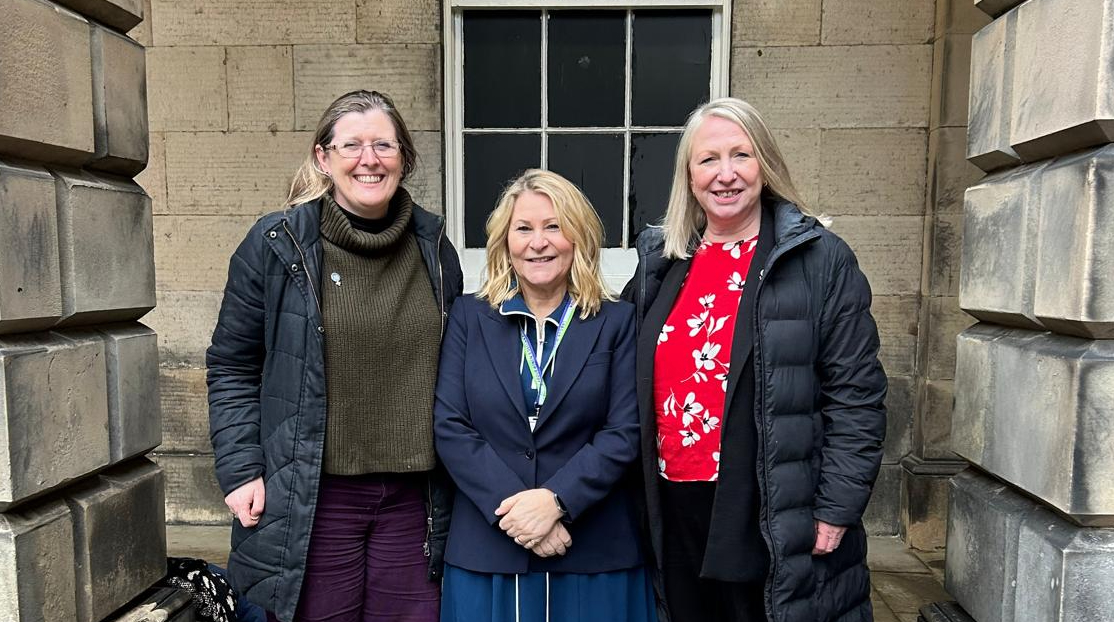
Today brought a range of textures and styles from the learned folk arguing the toss in Edinburgh’s Court of Session. There was a lot of tedious guff, briefly enlivened – mainly by Janys Scott KC, who spoke for the Equality and Human Rights Commission as an intervenor (you can download their submission at the bottom of this piece).
But let’s go in chronological order. First out of the traps was Tony Convery, the second person to speak on behalf of For Women Scotland. FWS say the guidance by which Scottish Prison Service staff are required to consider putting trans-identified males into the female prison state is unlawful. The Scottish government (or, technically the Scottish Ministers), don’t accept that a Judicial Review is the right forum in which to make these arguments, nor do they say that the FWS Supreme Court ruling is the right law to apply to the SPS guidance.

Convery took the judge, Lady Ross, to the SPS Policy for the Management of Transgender People in Custody’s Operational Guidance. The document says: “This guidance document provides the operational direction for staff when managing and making decisions about someone who has transitioned or is in the process of transitioning to a gender which is different from that associated with their sex assigned at birth.”
The guidance requires something called a case conference, which, when a transgender person presents to the prison authorities (bearing in mind this might happen at any time to someone already in custody) they can all have a meeting “to allow staff and transgender individuals the opportunity to discuss their placement, accommodation, and other aspects of their management while on SPS custody.”
The “key decision” to be taken at this conference, according to Convery was “the estate in which the prisoner is to be accommodated”. And this, “operational direction” was requiring SPS staff to act unlawfully.
Or in summary FWS contends that:
- the law prohibits men, trans-identifying or otherwise, from being placed in women’s prisons.
- the prisons guidance as a whole is premised on the possibility that there might be circumstances in which that’s lawful.
- SPS employees are thus materially misdirected as to how they should accommodate prisoners claiming the protected characteristic of gender reassignment. They are led to believe that, sometimes, biological men can be accommodated in the estate for biological women… This is an error.
- the prisons guidance is unlawful in terms that undermines the rule of law in a direct and unjustified way.
Aidan O’Neill then stepped back into the breach to address the proxy war going on for large chunks of today, which was whether or not For Women Scotland have brought the right case to the right court. Mr O’Neill was very much certain they had. The afternoon would be given over to arguing they hadn’t. Before we got to that, it was time for…
The Intervenors
The first intervenor was Kenny McBrearty KC from the Scottish Human Rights Commission. Before McBrearty came to his submissions he wished to stress two points. The first was that the SHRC “have sought only to deal with human rights issues which are raised in these proceedings. We do not deal with, of course, the Equality Act, [its] interpretation, nor do we even deal with the interface between the Equality Act and convention [ie ECHR – human] rights.”
The second point answered Aidan O’Neill’s criticisms yesterday when he obliquely hinted that the SHRC’s submissions were skewed either by their ideological perspective or loyalty to their paymasters, the Scottish government. McBrearty said whilst it was possible he was being “overly sensitive” about the “observations made yesterday” the SHRC “are not in the pocket of either the petitioner, nor the respondent. They do not see the issues… through any particular ideological lens”, and any suggestion to the contrary was rejected “in the strongest possible terms, and it’s important, I think, that I say that publicly.”

The points McBrearty wished to make were hobbled somewhat by only considering one angle – Human Rights – and he accepted that. Nonetheless he argued strongly that there was nothing in the European Convention on Human Rights which stopped, or didn’t stop a transgender prisoner being housed in a prison estate different from their birth sex. So rather than have a blanket rule “it’s important to look at everyone affected. It’s not merely a question of a trans prisoner’s rights. It’s important to take account of the effect of the placement of a prisoner on the woman prisoners with whom they will be placed. It would be important to consider the psychological profile, any vulnerabilities of women prisoners with whom a trans prisoner might be placed, important to take account of their risk profile, their offending history, and on the flip side of it, if one is considering the trans prisoner, how their placement might impact upon others.”
He went on “It might be important to have account of how long they have lived in the acquired gender, whether they have undergone gender reassignment surgery, their physical appearance, whether they have gone through puberty in their assigned gender, their index of offences, their broader offending history, their risk profile, their conduct in prison, and of course, any vulnerabilities that they have.”
The SHRC’s opinion therefore was that “When one looks at the particular circumstances of a trans prisoner being placed in one estate or the other, whether there’s a breach of one party’s convention rights or another, would depend on a scrutiny of all of those factors.”
McBrearty did say the SHRC had some issues with the SPS transgender policy wording. He told Lady Ross “the policy does not direct decision makers to have specific regard to any particular convention rights of any of the affected parties. There are, for example, a number of unspecific references to the rights of transgender prisoners. They’re not specified. Perhaps more fundamentally, there is no reference to the rights of any other affected party, albeit there are general references to the safety and safety and welfare of staff and other prisoners.”
On top of this, McBrearty, said decision-makers “are not directed by the policy to conduct any form of structured balancing exercise. And they’re not offered any guidance on both rights and of which parties are engaged and required to be balanced. And there is no expression of even exemplar criteria, which might be relevant to the conduct of that balancing exercise… One would have hoped that it would have been framed in a way which expressly recognised all of the rights that were engaged, named them, and gave some guidance as to the manner in which the balancing exercise should be carried out.”
The mixed sex problem
The most important point of the day was made by Janys Scott, for the Equality and Human Rights Commission. Unlike the SHRC, the EHRC (which covers Great Britain and therefore Scotland) is concerned with the Equality Act as well as Human Rights.

Scott noted the Scottish government was beholden by its own 2011 legislation (post-dating the Equality Act by a year) to provide sex segregated prisons. She then pointed out that “as soon as you place a trans woman into a female prison, it becomes a mixed sex prison.”
On top of being de facto unlawful by Scotland’s own 2011 legislation, this would potentially allow any male to seek to be relocated to a mixed sex prison, and could claim discrimination (on grounds of sex) if they were refused. This is the Scottish Ministers’ hard problem.
Scott gave an example: “if one pursues the [SPS transgender] guidance and starts putting biological men into the female estate and ends up with a mixed sex facility, we then get the situation where… a man could say, I would like to be in that prison because it’s near to my family. And you can’t be told, well, you can’t be in that prison because it’s a female prison – because it’s become mixed sex through the introduction of biological males through the [SPS transgender] policy, which is being exercised by the Scottish government.”
Scott said the EHRC believed “the Scottish prison service [and] the Scottish ministers have got themselves into a position of some difficulty in terms of the equality legislation.” She also pointed out that European human rights did not act as a trump card.
“In the context of prison accommodation,” said Scott “the provisions of the 2010 [Equality] Act relating to discrimination are not superseded by the requirements of the Human Rights Act, which is where I think the Scottish ministers seem to be going.” The Equality Act 2010 was drafted after the Human Rights Act, and “is logically considered to be an outworking of convention rights, giving effect to convention rights…. it would be extremely surprising if there was a clash such that one couldn’t implement the Equality Act because of the Human Rights Act. It just wouldn’t make sense in terms of the structure of the legislation.”
The Scottish government makes its case
After lunch we found out exactly where the Scottish Ministers were going in a two hour peroration by Lesley Irvine whose tortuous abstract legal points were at least delivered with some gusto and good humour. The basic premise was that whilst FWS might have standing, their argument still fell down on a big legal technicality, which was that there was no individual female prisoner bringing a case, and that was necessary for a judicial review against a policy.
Or as Irvine had it “the delictual* provisions of the act, which are the only provisions in issue in this case, are fact-specific. They require conduct to be established by an individual, they cannot be invoked by a corporate body against a policy, or on a hypothetical or generalised basis, unless the policy can be said to be inherently unlawful. We do not accept that the policy is inherently unlawful, and so we say the case against it, is fundamentally irrelevant.”
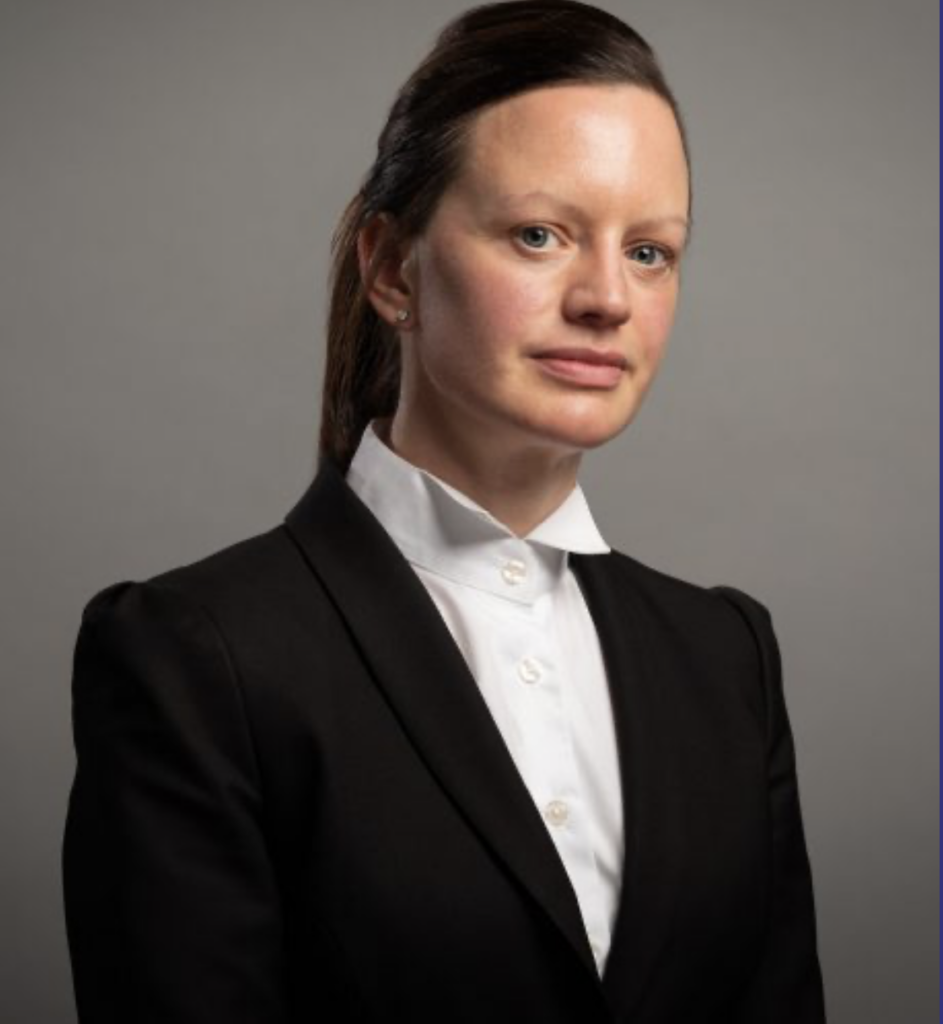
The other point I think will be harder to argue. “Much has been made… of the decision of the Supreme Court in For Women Scotland”, said Irvine. “The ministers accept the ruling. If the answer to this case was considered to lie in that decision, the Scottish ministers would have applied it. We are here because the answer is not considered to lie in that decision.”
The idea that the Supreme Court ruling in April 2025 does not affect SPS transgender prison guidance is quite something, and advancing this proposition required some very difficult-to-follow legal argument. Whilst it might have been a sparkling piece of water-tight advocacy, I don’t trust myself or my notes to be able to repeat what was said in oral argument with anything approaching coherence. So let’s cheat and look at the written argument.
In their written Note of Argument, the Scottish Ministers say: “Examination of the supposed underlying unlawfulness [of the SPS guidance], and questions of competence, necessarily require consideration of the duty of the Respondents under section 57(2) of the Scotland Act 1998 to act compatibly with Convention rights. Convention rights are fundamental to the issues in this case. A blanket rule of the kind advanced by the petitioner that a transgender prisoner can only be placed in the prison according to their biological sex would violate the rights of some prisoners under at least Articles 8 and 14. There is also a contradiction in the petitioner’s argument when the position of a transman is considered. Prima facie, on the petitioner’s argument a transman must be held in a female prison, but the Supreme Court judgment contemplates that a transman of masculine appearance may have to be excluded from a female facility. Presumably the petitioner supports that analysis but it contradicts the petitioner’s principal argument: biology is not the sole determining factor in such a case. To require that a transman be held only in a female prison on account the single factor of biological sex (i.e. omitting any consideration of risk) would violate that person’s rights under Articles 8 and 14; and to exclude him from free association solely on account of his masculine appearance would be a further violation of that individual’s Convention rights.”
They have a subsidiary argument, which runs as follows: “The placement of prisoners pursuant to section 10 of the Prisons (Scotland) Act 1989 is a ‘core’ public function (not the provision of a service) to which section 29(6) of the 2010 Act applies. That function may lawfully be exercised, notwithstanding it gives rise to sex discrimination or harassment, where that is required by another statute: paragraph 1 of Schedule 22 to the 2010 Act. Sex segregation is permitted and required by rule 126(1) of the Prisons and Young Offenders (Scotland) Rules 2011/331 (“2011 Rules”), subject to the requirements of reasonable practicability in rule 126(2). The placement of transgender prisoners in a prison of the opposite biological sex may be required by section 6(1) of the Human Rights Act 1998 and separately section 57(2) of the Scotland Act 1998, where such placement is necessary to avoid a violation of the prisoner’s Convention rights. The Guidance permits SPS staff to act in a way which is consistent with the law as just set out. The Guidance is not unlawful in terms of the 2010 Act because Schedule 22 authorises what is being done. In giving guidance to give effect in this way to the 2010 Act and the Human Rights Act 1998, the Scottish Ministers do not act outside devolved competence. The Prisons Guidance is accordingly not unlawful in terms of the Scotland Act 1998.”
Hence the Supreme Court ruling does not apply? Maybe I’ve got that wrong.
At the end of the day, Gerry Moynihan KC, lead counsel for the Scottish Ministers, gave us a little cameo to tee us up for tomorrow. He summarised what he saw as the flaw in the simplicity of the FWS case:

“The proposition is that a man cannot be held in a woman’s prison. And what we say is… where do we find that opposition as a statement of law? And that’s why we say, that the case is one where we apprehend that schedule 3 [of the Equality Act] is being used, but converted from a defence into a positive provision. And even that’s incomplete, because of course, schedule 3 would also say that a woman cannot be held in a man’s prison. But my learned friend [Aidan O’Neill for FWS] says he doesn’t care about that. So we are here to discuss the proposition that a man cannot be held in a woman’s prison. So where is that as a matter of law?
Moynihan said “if we’re dealing with direct discrimination, then the specification of the legal duty against which the policy is measured, would require to show less favourable treatment of an individual… it’s not simply a case of saying, for example, a man and a woman are being treated differently. It is necessary to show that that difference in treatment entails less favourable treatment. That is what is absent in this case for the petitioners.”
There will be more of this tomorrow.
If you would like to read For Women Scotland’s Petition and Note of Argument in this case, you can find them here. If you would like to read the Scottish government’s Answers and Note of Argument, you can find them here.
The SHRC’s submission can be found here.
The EHRC’s submission can be downloaded below.
If you would like to read all my live tweets from today you can find them formatted into one web-page here. Thanks again to everyone who donated. I appreciate it.
* a delict is a civil wrong, consisting of an intentional or negligent breach of duty of care, that inflicts loss or harm and which triggers legal liability. So there.
Please note I do not have the copyright ownership of any of the images used in this piece. I therefore cannot give you permission to lift or use them, but this blog post can be shared in its entirety in the normal way.
Comments are moderated. Please keep it interesting and informative rather than abusive and defamatory. If you would like to support my work with a one-off donation and receive the Gender Blog newsletter in your email inbox you can sign up here. Your email address will be stored securely and confidentially, never given to a third party and will only be used to inform you about things I think are interesting.


Leave a Reply