
Sex Matter claim the CPS guidance on consent when it comes to Sex by Deception is unlawful
121 tweets
Hello and welcome to an already sweltering Court 3 of the Royal Courts of Justice for Day 2 of Sex Matters v CPS. Live tweeting follows.

If you want to read my report from yesterday's hearing, it's here:
genderblog.net/is-the-cps-guidance-on-sex-by-deception-lawful-or-not/

If you want to read the live tweets from yesterday's hearing, they are here:
x.com/nickwallis/status/2074788610063130717?s=20
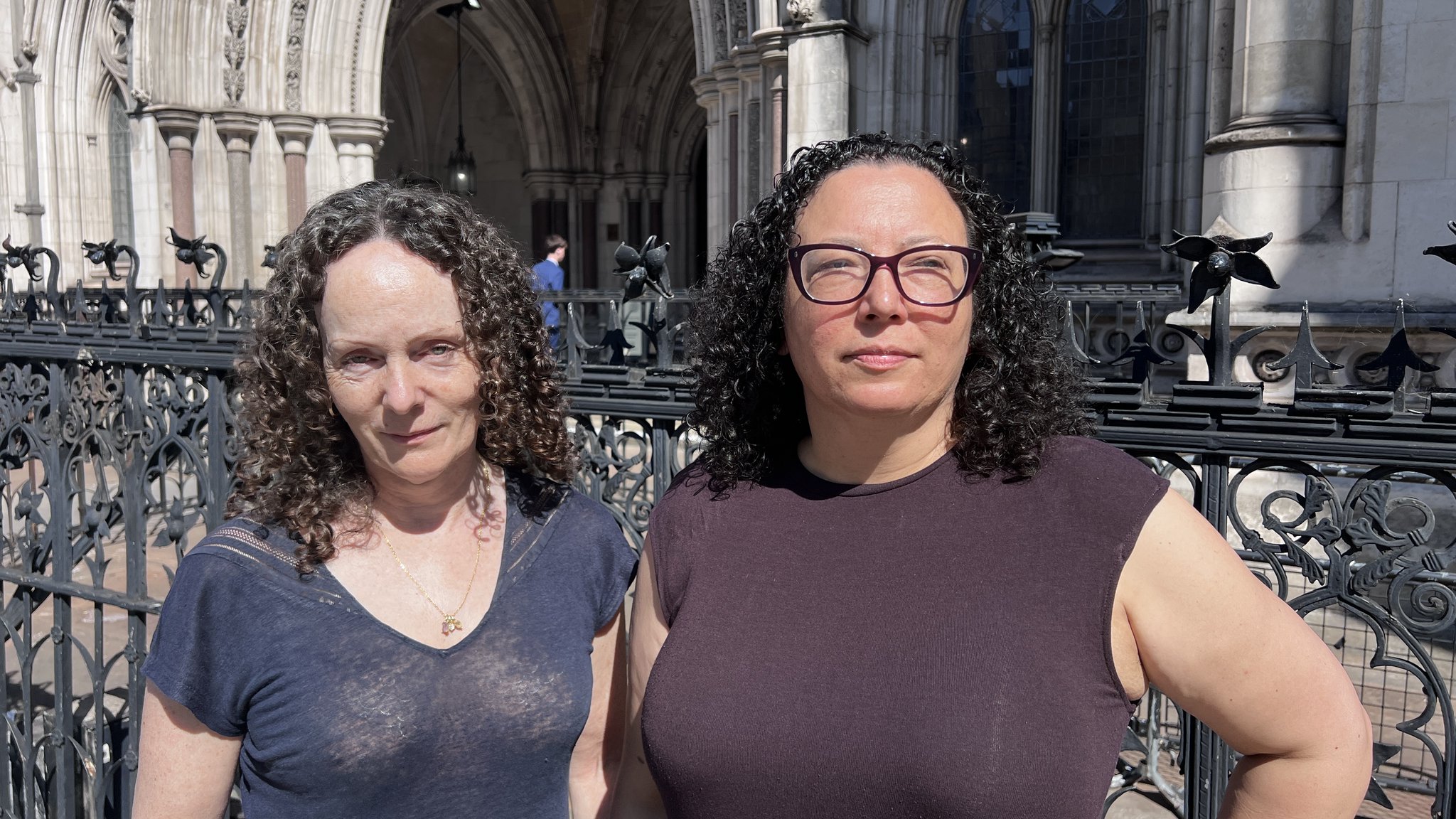

Welcome to Court 3 of the Royal Courts of Justice where Sex Matters (represented today by Maya Forstater and Fiona McEnena – see pic) are attempting to have a Crown Prosecution Guidance on the crime of Sex By Deception ruled unlawful via Judicial Review. Live tweets follow.

If you want to read a searchable, beautifully-formatted collation of that tweet thread on the GenderBlog website, go here:
genderblog.net/livetweets/sex-matters-v-cps-on-sex-by-deception-guidance-day-1/

If you want to send a link to your friends who don't have an X login to today's live tweets, you can find them here:
genderblog.net/live-tweets/

Before we start, I'd like to plug the outstanding @tribunaltweets who are documenting what sounds like a very difficult tribunal in Leeds, involving a trans-identified man call Samantha Tempest. You can read their work on this case in previous days here:
tribunaltweets.substack.com/p/tempest-vs-defra-and-rural-payments

Okay court is in session. Clair Dobbin KC is on her feet. There are fans (mechanical ones) in court which whilst welcome for the judges (who have two), it makes hearing what's going on harder.
PLEASE NOTE NOTHING I TWEET IS A DIRECT QUOTE UNLESS IT IS IN "DIRECT QUOTES". Everything is a summary or characterisation of what is being said and happening in court.
If you can see your way to supporting my work, and the GenderBlog website (I am here purely on crowdfunding), please consider a small monthly donation. More info here:
tribunaltweets.substack.com/p/tempest-vs-defra-and-rural-payments
Oh sorry – that was @tribunaltweets! Do support them financially too. My payment widget and subscription info page is here:
genderblog.net/donate/

CD – Clair Dobbin KC for the CPS (Crown Prosecution Service)
DPP – Director of Public Prosecutions (head of the CPS)
J – President of the Kings Bench Division Dame Victoria Sharp (pictured)
J2 – Mrs Justice Heather Williams
SM – Sex Matters
SV – Sarah Vine KC

(SV is counsel for SM as is…)
CK – Chris Knight KC
P – prosecutors
C – claimants or complainant
D – defendent or defence
That should do for now. CD has picked up where she left off talking about the relationship between the various clauses in the Sexual Offences Act 2003 (SOA)
CD the DPP is not going in to the ins and outs of this argument but there are profound q's about the SOA which seem to remain at large.
CD turning to the Proscutors' Guidance (G) [this is the CPS document which SM say is unlawful]
[I have been informed we are scheduled for a lunchtime finish. Don't let that stop you making a monthly donation – I'll spend the afternoon writing this up for you…]
J where is the schedule as to which version of the guidance (G) we are looking at?
CK we gave you a list
CD we do have a table if there is no objection
CK no that's fine.
[it is handed up]
CD Ms Shrimpton [her instructing solicitor] is incredibly thorough and has put in all the versions. We don't need to see them all.
CD as we understand it there are 4 complaints about G. These traverse grounds 1 and 2 (G1 G2)
CD the first complaint appears to be
CD the more convincingly someone presents as the oppo sex, the more honest they have to be so they don't commit a criminal offence. The implication is because G doesn't say this needs to happen in terms makes F unlawful. Per Nicklinson – it's not the funtion of G to provide a
"framework for living" – the law does not say this is required.
That's a sep point from C's principled arg that a deception as to gender can never vitiate [negate] consent. We say gender may be different because it goes to the C's orientation. In McNally she understood she was in a relationship with a "man"
In H she thought she was in a rel with a man. The C's case is that in H the "man" was a fiction or shared delusion, but obvs that was not C's position in H. This is where we say C's subs shift onto ideological grounds – that if you are a trans man who has had gender surgery (GS)
your sex remains immutable. Monica is diff, but without wishing to detract from her experience – the deception went to his occupation, not whether he was a man or a woman.
the DPP can't resolve the sorts of ideological issues which are raised by the complainant and
are highly contested. That's why we got more than 400 responses to the consultation over G. And we can't make a judgment on this and neither does this court have to. There is no decided case which establishes bright lines when it comes to Gender Identity (GID).
A third complaint as about a portmanteau where G refers to "sex or gender" – that does not mean you treat people differently according to sex. We just say cases like H are about gender, not sex.
Fourth point is that G is unduly sympatico towards trans people. Before we go to the G I think there's a risk of over-analysing it and we need to see the bigger picture. G is seeking to operate in a framework where some of the cases relevant to these issues have not been decided
In McNally a woman was deceived by a woman pretending to be a man. is that the same as a transwoman who has lived as a woman for 10 years, who has had hormone treatment, whose family treats them as a woman and who might see themselves as a woman – is that the same as McNally?
If two young people meet at a disco and a trans woman kisses a man in the way young people do without any conversation – is that a deception?
J that's looking at it from the point of the D
CD that's my point – these sorts of issues have not been decided
and we don't know whether that would constitute a crim offence. It hasn't been decided. If G were coming down one side or another that might be an issue. It's not saying don't treat this as criminal. It's simply flagging up that in the context of these cases these are sits that P
might be confronted with. and it's not saying these cases should not be P'd. it's emphatically not saying that.
Looking at the G itself and starting at p53
genderblog.net/wp-content/uploads/2026/07/TCG2-JAF20260708130913955.pdf
The guidance does say that if you deceive someone it might be a criminal offence. G also says that your identity might have you wearing clothes of another sex and that that might not be regarded by themselves as a deception in itself
J2 the text is more dogmatic than that it reads as if it is not a deception
CD it says it "may" – its not being a dogmatic – it's saying some people who are trans may not see it as a deceit – they're not trying to deceive people if they dress as someone of the other sex
And some trans people may be wary of revealing their bio sex. That is understood in society. People might be worried about disclosing it. If G said that means its not in the public interest to prosecute that would be one thing, but that is not what the G is saying.
That submission can't stand, when we come to p58 and the consideration of mcnally
[trying to find a link to the latest G – published this June with corresponding page numbers]
Here it is w/o page numbers:
www.cps.gov.uk/prosecution-guidance/rape-and-sexual-offences-prosecution-guidance-full-page-version
CD on p60 it is v clear "Depending upon the circumstances of the case, a trans or non-binary person (including those who have a GRC and / or have had gender reassignment) may deceive a complainant as to their sex if they choose not to disclose that they are trans / non-binary, or if they make a deliberate false assertion or lie in respect of their sex and / or gender identity."
It couldn't be making it clearer that that conduct could fall within the ambit of s74 of the SOA [ie a crim offence]. But the G cannot go further and describe the precise conduct which could lead to that scenario.
CD quotes "By reference to section 74, the test to be applied is whether the non-disclosure or representation is so closely connected with the sexual nature of the relevant act that it deprived the complainant of their freedom to choose whether to have sexual relations with the suspect."
[CD then goes to an agreed par which was going to be withdrawn from G which the DPP wants to reintroduce]
[I'm a bit lost – there are lots of vs of G in play here – not just the published Jun 2026 one]
CD G is only reflecting the case law and the approach that has been taken in different cases.
CD the point is repeated again "Evidence that the suspect failed to disclose their sex and / or gender identity may be
sufficient, depending on the circumstances of the case. But other evidence may be
necessary."
CD the G is not unduly sympatico to trans (T) people when you look at those statements. It's only saying to P this is what you might be confronted with. They might get someone say "but i'm a woman… that's what I regard as my sex", and that's what Ps have to work out.
The G is not saying "That's not an offence" – that's emphatically what it is not saying. So whilst there may be these much bigger profound qs – the disco eg whcih has not been answered by any of these cases – the G is not trying to pre-empt. It makes it clear that if you don't
disclose your sex or your GID, that may be sufficient [to cross the crim thresh]
CD and in terms of where the C fits in – the focus is the first stage of the test – what were the conditions of their consent?
In p64 – 65 it goes to C's characteristics and life experiences; "The complainant’s particular characteristics and life experiences, and how
these may have impacted on their relationship with the suspect and their
understanding of the suspect’s gender identity or sex. For instance, a
complainant who is young, immature, vulnerable, suffering from learning
difficulties or neurological differences including autism, or inexperienced"
CD so it is reflecting those experiences taken into account in a case like Jheeta.
J2 I think I'm right in saying that SV said some of these bullet points in 64/65 are irrelevant – obvs they're in teh G so you think they're relevant – could you expand that?
CD these are all quite sensible things that one might want to look to. They may go in either direction. eg "Many of the factors listed above at stage 2 may be relevant. For instance, even
though the suspect fails to disclose their sex and / or gender identity they may
reasonably believe the complainant consented due to: the degree to which the
sex, trans or non-binary identity of the suspect is apparent;"
That's just common sense.
The use of a prosthetic device – that might be an offence in itself. but if it's said to be a penis and it's not – that's a deception as well. Its just something Ps need to look at.
CD when it comes to the third limb of the test "did the suspect reasonably believe…" – there's very little that can be argued about. These are things P might want to take into account.
CD the detail of this is also set out in our skele as well – the closer contextual analysis.
[read it here: genderblog.net/wp-content/uploads/2026/07/Defendant-Skeleton-SM-v-DPP-24-June-2026-25-JAF20260625110952082.pdf]
None of the factors set out in p65 are in the Public Interest section – it's not at all suggested that they are relevant consideration there.
"So my ladies in respect of G – it's oriented towards specialist Ps – there is no clear case law regard GID – it says a P could be brought on the basis of GID. It allows for a fact-sensitive assessment. It's making clear that not disclosing your sex or GID might be an offence"
CD " it's making that clear… it a matter of fact-sensitive assessment – that reflects the law as it stands in a field in which there are no bright lines and a body of law that can't be reconciled."
CD may I touch briefly then on the Public Law (PL) which applied in this context. May I briefly then go to the A case. [gives bundle ref. Not sure whether I found A online yesterday – goes to par 46]
CD this is where the court analyses Gillick in detail…
… in result of challenges
[Found it: "Applying Gillick, the Supreme Court identified (in ex parte A, at [46]) three types of cases in which the content of a policy may be unlawful:
‘(i) where the policy includes a positive statement of law which is wrong and which will induce a person who follows the policy to breach their legal duty in some way (ie the type of case under consideration in Gillick)
(ii) where the authority which promulgates the policy does so pursuant to a duty to provide accurate advice about the law but fails to do so, either because of a misstatement of law or because of an omission to explain the legal position; and
(iii) where the authority, even though not under a duty to issue a policy, decides to promulgate one and in doing so purports in the policy to provide a full account of the legal position but fails to achieve that, either because of a specific misstatement of the law or because of an omission which has the effect that, read as a whole, the policy presents a misleading picture of the true legal position.’"]
CD in Thomas Guest's (TG) Witness Statement (WS) he says "The guidance seeks to assist prosecutors with what the law is in areas which
are of particular complexity, sensitivity and/or where challenges have arisen
with prosecutorial decision-making in the past. In some cases it is necessary
to address a point which is likely to come up in CPS casework but which
has not yet been settled by the courts."
[now she's going to an authority where there was a challenge to a different G which meant that people were being detained unlawfully due to bad G – that meant it was a cat A Gillick type situation]
CD it's merely guidance
J what about par 10 where it says you have to follow
the G
CD well yes they have to follow it – but it's not the be all and end all
J yes its guidance
CD but this is for trained crown Ps not non-legally trained detention staff
CD even if a test were to be fashioned for this policy – it's a high threshold before a G can be said to be unlawful. It's not as if it can be better drafted or there's a risk it might be misapplied – it has to fit within the test set out in 3.
CD the law is set out accurately in this G – it reflects there are no decided GID cases. It permits a fact-sensitive assessment and it makes clear a deception as to sex or GID or failure to disclose may be a crim offence.
"My respectful sub coming back to the ground between C and D is that G should go much further – the more convincing you appear as a man – the great ob on you to say what your birth sex is. My sub is that the G achieves…"
"… that by saying that if you fail to disclose your sex or GID that might make you criminally liable. That's the correct balance given the nature of this guidance and that its not there to act as some guide for how people should conduct themselves."
CD can i assist you any further
J if you arg is that this is not an A situation – what approach should the court adopt where there is a public challenge
CD on behalf of the DPP if you are agreed there is an error of law
J2 in so far as the principle you don't want to get
into that territory
CD you can sidestep systematic illegality – if there is a wrong statement of law, that is sufficient [to quash this guidance]
[we are having a ten minute break before SV has her reply to CD's submissions]
[I made a faux pas earlier by describing Ms Shrimpton as CD's instructing solicitor. Ruby Shrimpton is a barrister from the same chambers as CD and CD paid tribute to her work on this case…
… before the judges rose, which is when i worked out I'd got it wrong. apologies.]
[so it does look like we're heading for a reasonably early bath on this]
[we're back]
SV it's emerged in this case that the DPP says GID is a qualifying condition with regard to consent. It's worth therefore goign back to how GID is defined for Ps "how a person is perceived or experiences themselves."
SV when seeking to ID a test case, my learned friend placed almost exclusive emphasis on a case which turned on whether someone had had gender surgery. We accept of all the diff manifestations of GID surgery is the strongest basis on which conditions can be met.
THat is not defence for the formulation of this guidance. G treats sex and GID as the same as can be seen from the "sex and/or GID" throughout the G. There are two separate and distinct chars, a deception which equally is capable of vitiating consent. However there is also, says
G an overlap between the 2, but the G does not explain to P at which point one stops and the other begins. It creates a "problematic obscurity" in what the G is actually telling Ps
G tells Ps that GID can be "fluid" on p55. on p56 says GID can be "speech, dress, mannerisms" etc. So partly this is how a person is perceived. Should you need it, there is evidence in Maya Forstater's statement about trans people who [?]
J what is the proportion?
[pause]
J come back to it
SV it's certainly a percentage in single figures.
SV to defend the premise of this G and the direction it is giving. Not that there may be a subset of cases within GID which could satisfy the Lawrance and BBA test because of surgery
but that any and every case involving a deception of GID on the basis of G's defs
G cannot meet this test because GID cannot meet the test
The sub has been made about the difficult uncertain nature of how case law has evolved and may be unsatisfactory. There is some force in
that. Partic when one considers consequences of STIs and risk of unwanted pregnancy. That does not occupy this context. The point is (and we agree on this) – the test itself is settled. Lawrance and BBA have provided the definitive statement at this point. So until the SC
says otherwise, we know the q to be posed to Ps
It's puzzling for the DPP to emphasise this uncertainty – as this is a compelling arg for him to say it would be unwise for him to say where the test is met in an untested area where there are so many diff subsets to be considered. We are here because DPP chose to produce guidance
and this was not where he was MADE to come up with a policy. He chose to. He said a deception as to GID could meet the test, despite their being no authorities. It's for the DPP to explain how could someone's GID be
sufficiently closely connected to the sexual act and address that form of subjective belief
J what about someone who has had gender surgery fit into your submissions
SV the G does not make it clear that gender surgery cannot be equated with GID because GID is the wider set and within it is the smaller and smaller set – the smallest of which is likely to be surgery
SV so if surgery is a condition which might vitiate consent, the DPP needs to make that crystal clear. It is capable of independent verifcation. DPP should not allow that to be elided with many other factors, chars, forms of behaviour – not to allow or promote an elision
between those two things. We don't accept that surgery is capable of meeting the test, but that is the strongest ground for the argument that there is anything in the arena of GID which may be capable of [?]
If I can go back to the comparison I drew yesterday- – it would be like saying if circumcision may be a qual condition on consent, it would be like advising Ps that religion is a qualifying condition on consent. That is a fair comparison.
So the DPP has to be able to answer the q and has to do it in the context of G as to how deception by the accused about GID will be a test of proximity. "Its common ground that the qs in the G are posed correctly. The prob with G is that it fails properly to answer the qs"
"in a way that will enable CPs to make recommendations in accordance with the legal framework". CD obvs take the pos she would do that GID is closely connected, but the reasons for saying that are v limited.
In partic re H case, CD said the GID belief was important to the victim and also she said it is "important to who they are" – I took that to mean its important to how the assertor of GID sees themselves.
"That sounds plausible at the level of abstract generalities but starts to dissolve when it hits reality"
J in H the perspective of the complainant was about her belief about the surgery
SV I might be mixing the two up
CD I retraced the ground today because it was so hot
yesterday I may have inadvertently mixed the two up
SV ah it was in that case me who was addled by the heat
J I think we all were
SV [reverts] the line we drew between the subj belief in H and Monica – there was a deception there about a shared belief
SV J asked CD in what way is a belief about GID diff from a belief about env activism. Myunderstanding was that CD described that belief being something that was important to the C that D held that belief, but before we get there we have to look at what it is about
GID
JS didnt she go further and say it went to her sense of sex orient and sex ID – that was the gist of it
SV the position we say is this – the importance of a suspect's GID to themselves is nothing to the assessment of nature x x of the sexual act. The sincerity and depth
of a suspect's asserted GID is no closer to the nature, purpose and performance of the sex act than the sincerity of the suspect's religous or political ID which
was contested unsuccessfully in Monica. Consent under the SOA cannot be concerned with philosophical or metaphysical sense of their own IDs
It has to be narrow to the prox of the sexual act or you would over-criminalise. The case law recognises that the greater array of those matters cannot be allowed to vitiate consent. So if we test it by ref to the case of H as D advised…
… if we could put aside the assault by penetration as there was a deception. C says being penetrated by anything other by the pseudo-penis would vitiate consent. The deception the D in H perped on the victim
was a) the lie she was in some non-corporeal way a man b) she lived in a way that was consonant with that non-corporeal ID
J not to the world at large – to the C
SV yes. c) that she had undergone surgical mod so her body resembled a man. that's a further lie.
Those lies were antecedent to close her eyes to the knowledge that ID was a man. She made a conscious decision to perceive H as a man in order that she could
experience or perceive sex acts with another woman as heterosexual. DPP says injury in H was like the injury in McNally. In McNally is was a violation of victim's sexual orientation.
On our analysis there are two counts of sexual assault in the form of oral sex. The fact framework is that V received from H on two separate occasions performed by a person she knew was a woman, performed
precisely by the body part she was expecting in a form she was expecting. She knew she was engaging with a woman. So where is the sufficiency of the connection to the sexual activity in those counts. This is NOT McNally
where McNally led the V to believe that she was a boy. This was a woman making a decsioin she was happy have sex with someone she knows is a woman because she sufficiently resembles a man. So what deception is
operative there and how close is it so the sexual nature of the act. The sex nature of the act is sex with a woman. She knew she was pretending she was a man. It
is too remote in our submission to the act.
[and the unsaid corollary to that is that H was a miscarriage of justice]
SV re our sub that the more you pass the more you need to disclose – we don't say that should be in the G – we just say it is something people need to be aware of.
SV The nature of deception must be analysed neutrally of any moral judgment – it must be uncoupled from its motive.
[SV goes to the bundle. Pre-action correspondence between DPP and SM where the parties were cooperating as far as possible to try to find amendments to the G]
[SV goes to the last 2 of 4 props posed by SM at that stage.]
SV at par 23 – D took no issue with prop 3 and 4. And prop 4 was that everyone knows their birth sex. The prob with the part in the T and NB section and I pause to ask rhetorically if that is not to be taken into acc in a P's assessment of a case – what is it there for. It says people can present as the opp sex without it being a deception. The problem there is that it conflates sex and GID. Given the G is on its title is a deception as to sex and the auths say D as to S can be qualifying, "CD's position seems to suggest that a suspect does not commit a deception if that suspect's def of sex can be expanded to incorporate GID. That is a cat confusion into which CP's cannot afford to fall"
SV a man who feels he has been born in the wrong body. He believes it. He wishes to be a woman and present as a woman. He undertakes efforts to align his appearance with his belief. "This section of the G excuses that as being not a deception. It expressly says the expression of a T ID may not be a deception. That is NOT a consideration for a CP. It is cert not a decision if they are making a decision as to whether there has been a deception as to sex"
SV GID is reliant on self-reporting. So in circs where CPs are being advised that sometimes a man will look like a man and a woman will look like a man and that may not be a deception. In partic when that person has made a conscious effort to present as another sex that that may not be a deception is a serious undermining of the function of deception in the legal text. it's not for Ps to have philosophica discussion about what is or isn't a deception. For eg – every morning I perpetrate a deception when I put make up on. "I do not look like this when I wake up, hard tho it may be to believe." There are deceptions in nature. That's why you have to uncouple the emotion of deception from its nature. The q is the perception of the V. A woman may present in a very masc way – may incidentally deceive some people as to her sex. The moment that is explained, any poss of crim liability falls away. There would have to be more.
"Almost everything in the "T and NB experience" [ie as written in the G] serves to undermine a suspect's culpability. This is not repeated in the PI test, but the tone of them is without further direction entirely consistent with a lowered culpability"
Sv My ladies – having been taken through the auths and admission of diffs of reconciling and uncertainty – "we say it is positively hazardous to intro to that an unknown quantity and to introduce it in such a way that it elides with a known quantity"
SV finally before Ck addresses you on standing, may I take you to our skele to deal with the issue of cat 3
Skele here: genderblog.net/wp-content/uploads/2026/07/Sex-Matters-v-DPP-Skeleton-16-June-2026-JAF20260616144843634.pdf
SV coupled with the fact Ps are directed to go to the G it's diff to see how it could not be a cat 3.
J thank you
CK on standing. First CD took you the GLP case and the form of Div Court's obvs there. Thats why I took you to way standing has been formulated by SC and CoA
The GLP case must be read in the context of SC and CoA and the specifics of the GLP case – the context of the issue claiming standing on corporate objects litigating any form of public law error. There's no read across to this claimant.
CK CD said SM could not have PI standing as not everyone agrees with its views on Sex and Gender. That is surprising. No one commands uniform public agreement – in their work nor in JRs
J one could see what they are doing as an activist or pressure group activism or pressure
CK precisely my lady. Pursuing their views is well within the public interest. The DPP's idea that there might be any other pressure group fell away in CD's idea as she coalesced around the idea that this should be brought by an ind which no group can
CK CD said any and all CPS could not be assessed in the abstract – it had to have a factual matrix so the case could only be decided with an individual claimant – that only washes if the case can't be understood in the abstract
An ind claim would be a diff claim. It would be to the decision in their particular case. Diff challenge, diff test. The G would not be the focus of the challenge. The distinction is a challenge to the policy rather than the application of a policy.
The former is still legit. This goes to relief. If the claim fails on its merits then the issue of standing doesn't arise, but the acid test is that the CPS has to say that if SM is right it is in the PI for the claim to fail solely because they don't have standing.
CK CD did not say this. There was no attempt to do so. It would be an unsustainable argument
[ah I wondered about this yesterday – basically if the PI is good – it can't fail on standing]
J we will be reserving our judgment
J please organise an order prior to the handing down, there will be no reason to attend for the hand down. This will be one of my final cases. It's been a huge
pleasure to hear subs of such quality an clarity in a diff case recording [?] diff issues. The bar is in safe hands having heard from all counsel in the way we've been addressed both yesterday and today.
[court rises. show's over]
Thanks for reading this far. Pls consider a small monthly donation. Subscribers will get the report first to their email inbox and the GenderBlog newsletter to alert you to things that are going on in the wider gender wars:
genderblog.net/donate/
I am going to find some aircon to write all this up.