
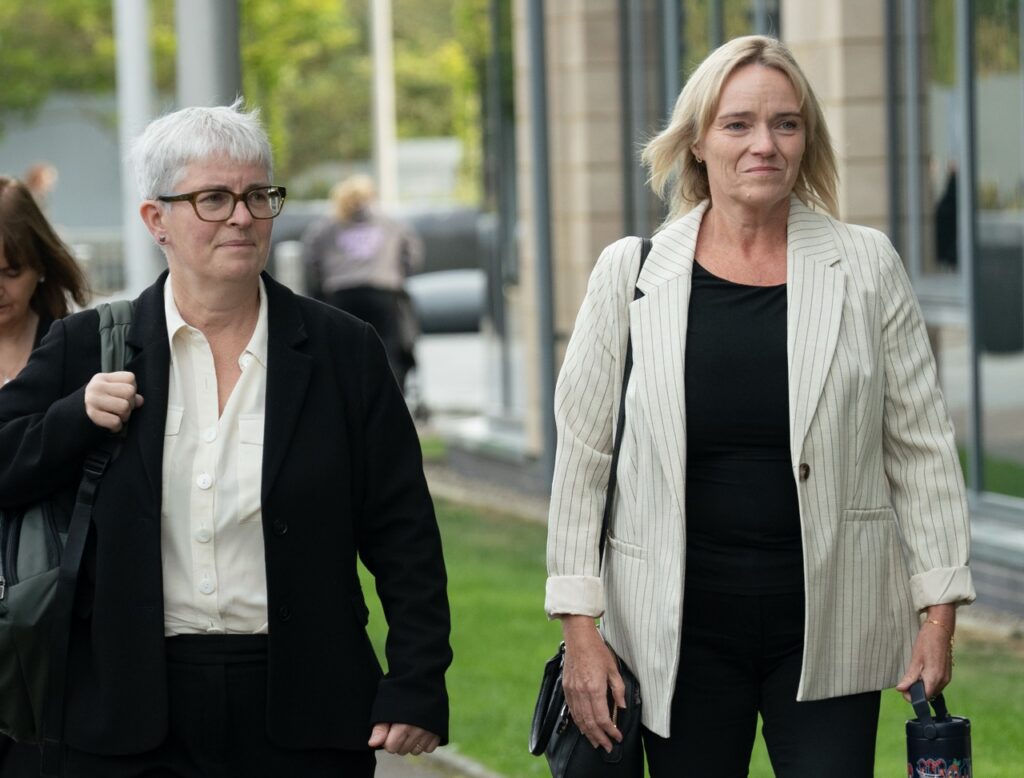
The witnesses who gave evidence today were not directly connected to Sandie Peggie’s case, but they all had direct experience of dealing with the Royal College of Nursing. They painted a picture of a union which had happily waved gender ideology into their organisation, and when it started causing chaos, appeared both institutionally and intellectually incapable (or unwilling) to deal with it.
The first witness was Lisa Mackenzie, who worked part time for RCN Scotland as a policy officer in Edinburgh between 2017 and 2019. Mackenzie told the tribunal prisons were part of her policy portfolio. In her previous job at the Howard League for Penal Refordm, she had found herself fielding the occasional call and email about the Scottish Prison Service’s strange practice of putting trans-identifying men in female prisons.
At the RCN, Mackenzie found herself “reflecting” on this odd policy and “quietly reading” around the subject. She also began taking an interest in a proposed legislative change to the Gender Recognition Act which was going through the Scottish parliament – effectively self-ID. Mackenzie could immediately see the problems this would cause. She already knew Kath Murray and Lucy Hunter Blackburn from working with them whilst she was at the Howard League For Penal Reform.
The three women were in the habit of meeting up to discuss interesting public policy areas and decided they would submit a paper to parliament outlining their concerns about the forthcoming legislative changes to the Census Act, which appeared to conflate sex and gender to such an extent the data might be worthless. To do this they founded a “policy analysis collective” called Murray Blackburn Mackenzie (MBM). Lisa started to find other like-minded souls on the Edinburgh scene including Marion Calder from For Women Scotland. She also made contact with the team at Woman’s Place UK – a group of gender critical women who had formed out of the trade union movement.

In 2018, Mackenzie told her RCN line manager, Rachel Cackett, about the existence of MBM. In November that year she submitted a Declaration of Interest form to the RCN in London. This was in anticipation of a meeting she had been invited to join between For Women Scotland the Scottish Chief Medical Officer about the way recording gender can skew data collection. Although the RCN didn’t have a policy on data collection, Mackenzie thought it possible she might come into contact with the CMO with her RCN hat on at some point in the future, so she wanted to do things properly.
It was a febrile time. Mackenzie’s sober, carefully stated policy concerns were socially and politically taboo. The potential danger she faced for being associated with them was brought home when she attended a feminist event at the University of Edinburgh in June 2019. Julie Bindel gave a speech about male violence against women. Lucy Hunter Blackburn presented a draft MBM paper called “Losing Sight of Women’s Rights: the unregulated introduction of gender self-identification as a case study of policy capture in Scotland”
There were noisy, aggressive protestors outside. Julie Bindel was “lunged at” by a man as she left the building. Bindel was only saved from being physically attacked by a security guard. Overnight, Mackenzie’s mother-in-law had a catastrophic stroke.
The next morning, Mackenzie had a meeting at the RCN with Rachel Cackett. She told her about her mother-in-law’s stroke and the terrifying experience of the previous evening. Mackenzie was particularly concerned because a trans-identified man called Ellie Aradia Mulreany was sending violent tweets about gender critical women. In one he exhorted his followers to:
“Punch Nazis, threaten TERFs, kick fascists, stab racists” and “kick the ever living fuck out of anyone who’s [sic] central political motivations are the dehumanisation and annihilation of an oppressed group. And be proud of it.”
Another said:
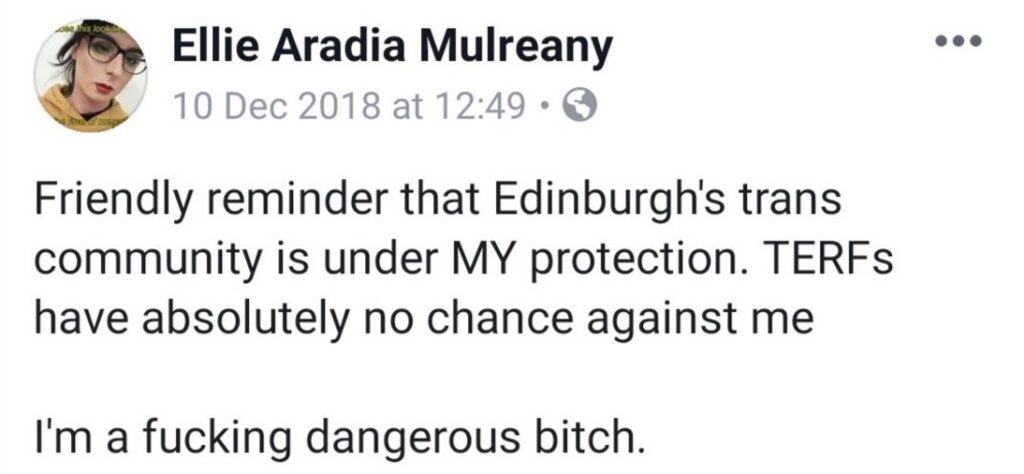
It appeared Mulreany was an RCN member. Mackenzie was worried that Mulreany “would have access to my place of work”. In the meeting she reported her concerns to Cackett who seemed to take them seriously. She also offered to show her boss a draft copy of the “dry piece of policy analysis” she had co-written with the MBM team, which seemed to have brought violent trans activists out onto the streets.
Losing Sight of Reality
The next week Mackenzie brought the “Losing Sight of Women’s Rights” in for Cackett to read, then she took some time off to visit her mother in hospital. When she returned Mackenzie was told she was under investigation for possible breach of contract and failure to declare a conflict of interest.
Mackenzie describes this as “the worst experience of my working life to be under investigation by my employer… I remember crying in a meeting”.
Although the investigation was not progressed, it did find her in technical breach of contract for not asking permission to author the article and for failing to update her conflict of interest form. She was never told if Mulreany was an RCN member and had access to the building.
What followed was a nightmarish ostracisation process during which Lisa Mackenzie struggled to find out exactly what she was supposed to have done wrong. No one at the RCN could point to what was in MBM’s Losing Sight paper that might be said to be “damaging” to the RCN. Mackenzie told the court that during one meeting, when she repeatedly asked what it was about her report which might cause an issue, an RCN manager called Eileen McKenna said “well if one of our members read it…”
Her line manager Rachel Cackett told her the problem was “you define a woman as a biological female”. To say this in polite circles was utter heresy during the peak trans madness of the late twenty-teens. Mackenzie was going to be made to suffer.
As part of the disciplinary outcome Mackenzie was required to undergo a “Meeting of Concern” with Cackett, who told her she would, from henceforth have to inform the RCN of:
“Any person activities you are or expect to engage engaged on a personal basis whether there is a potential for a conflict of interest. Any position/messages you are promoting as part of the policy collective, with any other group of organisation, or in your capacity which will may or could be perceived to being in conflict with RCN policies or stated values and/or could bring the RCN into disrepute. How do you intend to mitigate the potential for actual or perceived conflict of interest in a dynamic environment in the activities you are, or expect to be, engaged in. How you will ensure that I’m kept up-to-date with changes in your activities or statements whether there is, May, or could be perceived to be, a conflict of RCN policies or state values and/or could bring the RCN into dispute.”
Mackenzie found this scrutiny of her work “intrusive” and “overbearing” especially as she kept going “round in circles” with Cackett who could, or would not specifically tell her what it was about her work outside the RCN which was problematic.
Eventually Cackett told Mackenzie “to write out a statement about my values”. In what became her final meeting with Cackett “she asked me to reflect on my values and whether they reflected the RCN’s values”. Mackenzie was deeply offended.
“I was really upset with what she said… it felt like a sleight on me… I had reached the end of my tether. I was very upset. I remember crying.”
Mackenzie resigned shortly afterwards. During cross-examination, the RCN’s barrister David Hay KC pointed out that Mackenzie had not brought a claim against the RCN for their treatment of her even thought she was perfectly entitled to. During re-examination, Naomi Cunningham asked MacKenzie why.
“I didn’t have the stomach for it, to be perfectly honest”, she replied, as it would be an “intensively intrusive process”. In the intervening years, Mackenzie told the court she had seen what Maya Forstater, Jo Phoenix and Sandie Peggie had been put through by bringing their legal claims. She called those women “exceptionally brave” but decided it was not for her. She would rather leave “and continue doing the work I wanted to do”.
The Madness Continues into the Next Decade
The afternoon witnesses included two nurses who have their own employment tribunal claims against the RCN. Jennifer Wilmot and Pauline Fox both attended two separate online “sessions” on 24 and 25 June 2025 which the RCN ran on the (then relatively recent) For Women Scotland Supreme Court judgment. The judgment tied the legal definitions of men and women to biology. “As your trade union and professional body,” ran the RCN blurb, “we want to understand how this judgement affects you in your role and your workplace.” This would be conducted in a “safe, inclusive space for you to share your thoughts.”
Perhaps naively, Wilmot and Fox thought the so-called safe space was going to be safe for them, so they signed up to the sessions in good faith. Jenny Wilmot is a leading light in the Scottish Lesbians group. The Scottish Lesbians formed part of the Lesbian Intervenors collective who contributed to the For Women Scotland case at the Supreme Court.
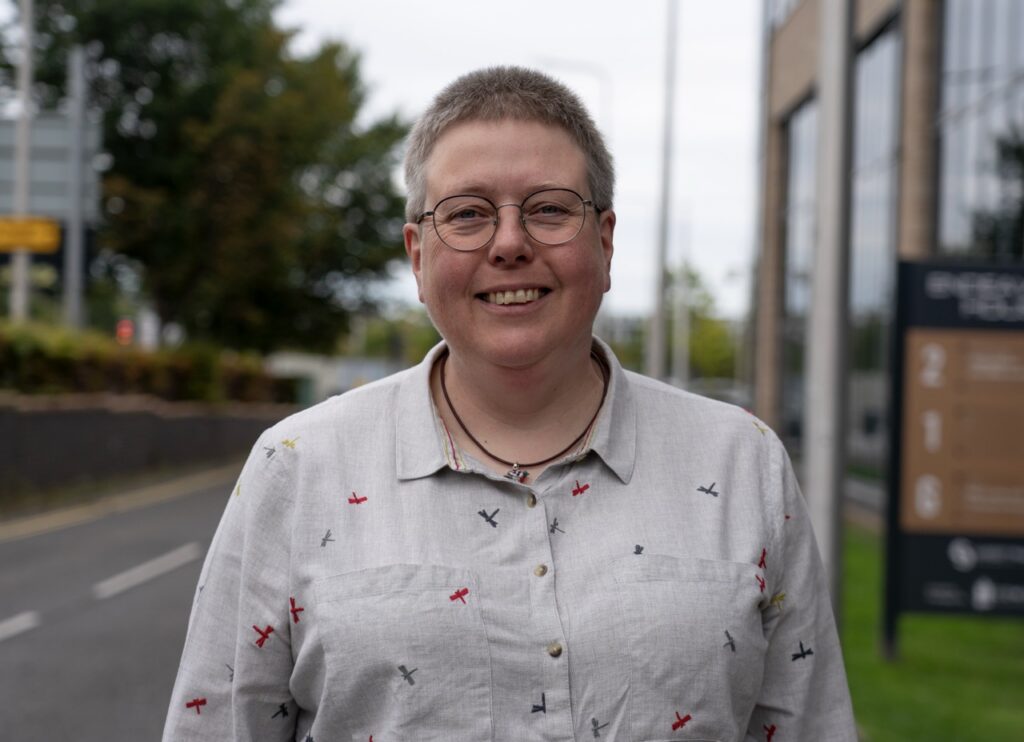
Prior to the sessions, Wilmot had written to the RCN in the light of the FWS judgment and offered her expertise in helping shape professional guidance for nurses via the RCN. Either the email didn’t reach the right people or it got ignored. Wilmost told the court, “I got an automated reply saying they’d be back in touch in 5 days, which they weren’t. I never heard from them.”
Undeterred, Wilmot attended the RCN online session on 24 June. There were “4 or 5 women officers from the RCN all in senior positions” present and “30 to 40” attendees. The meeting started with the facilitator Christine McKenzie saying this was about what members “might need in terms of assurance” from the RCN. There followed a long section on psychological safety including what to do if attendees felt unsafe or overwhelmed. Then McKenzie warned that if the session were to “touch on the boundaries of safety” then it might be brought prematurely to an end.
After a sober analysis of the judgment from Joanne Galbraith-Marten – the senior legal counsel within the RCN – Wilmot put up her hand to explain her background and say she felt “relieved” by the judgment “because it gave a very clear definition of what a lesbian is. It’s a same sex attraction. You can’t opt into it.”
Immediately, the attacks in the meeting chat started. “Are we hearing the trans voice today as well?” asked one.
“Diversity of thoughts?” wrote a commenter called Hazel, “Shall we invite Tommy Robinson to consult next?”
Hazel turned out to be a trans-identified male. He was given the floor and most of the chat to make his feelings felt, apparently cheered on and supported by most of the rest of the attendees. Hazel wrote several messages attacking Wilmot and including calling her a “bigot”.
Wilmot and another attendee signalled their disquiet at the tone of the discussion and made their feelings known. The chat was closed down, but at the end of the meeting Hazel was given the floor to say “we are a minority group. Any other minority group – if we were saying, oh I don’t want to share wards with black people, I don’t want to share wards with gay people, I don’t want to share wards with migrants, Muslims… We wouldn’t say we need to have an open safe discourse. Why is a platform being provided to exclusionary people… ? … It is very very harmful.” Wilmot had the wherewithal to record this “for my own protection”.
Her recording captures McKenzie’s response, which was: “thank you Hazel. We do recognise the potential for harm there which is why we’ve taken the appropriate action to close the chat”. Wilmot sees this as the RCN endorsing Hazel’s position, or at the very least, failing to challenge either Hazel’s tone or argument.
Wilmost told the court that after the meeting “I felt I’d been ambushed, to be honest. I felt it had been quite the kicking. It had been a pretty unpleasant experience. I was quite upset and I am generally a resilient person, but I was left feeling… pretty wobbly”.
Fox in the Box

Pauline Fox then took to the witness box to explain her experience of the next day’s online session. The memory of it evidently still affects her as she welled up a little at the beginning of her evidence when being asked to consider what happened that day. Fox is a retired nurse and couldn’t quite believe what she was seeing. Once again, a TIM got to dominate proceedings. This time a retired nurse called Liz began by “talking freely about the emotional and psychological impact of the judgement and described it in terms of a devastating loss of rights for trans people.” Fox saw that “some others including the chair Christine [McKenzie]spent time empathising with Liz and reassuring her.”
Then the meeting was told that the RCN had been consulting with a lot of groups to discuss the best way forward particularly “stakeholder engagement in the policy practice and guidance updates”. Fox took note of all the groups. They were all trans rights groups. It seemed to her not a single other group representing any other protected characteristic had been approached. She put a message in the chat asking “how are the RCN engaging with women?”
The message was not published in the chat, but Wendy Irwin, the RCN’s director of policy, told Fox to message her privately. Fox was astounded. “Sorry are you telling me you are not engaged with women?” she wrote back. Irwin just told her to email again.
Whilst this was going on in the chat, chaos was breaking out in the meeting, with people talking about “how important gender was” and the need to protect trans people. Before she retired Fox had taken an interest in and worked on policy areas and was acutely aware that badly defined language creates bad policy and bad law, so she wrote in the chat:
“Gender is not a protected characteristic under the quality act, gender assignment is as we need to be careful here as a profession that we operate within the law and developing policy and guidance. Gender self ID is not law in the UK”
This was read out by Patricia Hughes, the RCN’s director of policy, who suggested Fox’s comment was a matter for “reflection”, rather than as Fox saw it, something “pretty mundane”. The meeting kicked off. Fox said the “tears and snotters” came out. Her claim form against the RCN says a uniformed nurse attending the session “made a sharp intake of breath, put a hand over her mouth and started to show signs of distress, crying and saying how upsetting this was.”
The RCN management team began empathising with the histrionic reactions. Fox thought the whole thing was a shambles. “I was really upset by the calibre of the leadership I was seeing. I was seeing people being able to ventilate their upset about something which really wasn’t happening.”
At one point, she told the tribunal “I thought I have arrived in the wrong movie. I thought I had landed on another planet and I didn’t know what was happening” Fox said she “felt quite alienated by the whole performance, because it felt very much like theatre that I was watching” rather than her professional body executing their professional duties.”
Fox was so astounded by what she had witnessed and the abuse and mistreatment she said the RCN were complicit in, she went to Sex Matters to see if she had gone through the looking glass on her own. She found that she wasn’t alone and was soon put in touch with Jennifer Wilmot. The RCN are contesting Wilmot and Fox’s claim and deny any wrongdoing.
Sandie Peggie’s final two witnesses, Bethany Hutchison from Darlington Nurses and Jennifer Melle – a nurse from Surrey will not be giving evidence until Monday. Because the tribunal is a day ahead of schedule and neither Hutchison nor Melle can make it tomorrow, the RCN have agreed to allow their first witness, Norman Provan, to give evidence instead.
Peggie v RCN preview interview
Peggie v RCN Day 1: Getting Taken Seriously
Day 1 Live Tweets Collated
Day 2 Live Tweets Collated
Thanks to everyone who has contributed to help fund my reporting of this court case. I will live tweet each day in court and publish reports after each day’s proceedings. Subscribers will get a special subscriber-only newsletter after each day’s hearing (once I’ve got a report up on the website).
If you would like to receive the GenderBlog newsletter and blog posts in your email inbox for a small monthly or one-off donation you can sign up here. Your email address will be stored securely and confidentially, never given to a third party and will only be used to inform you about things I think are interesting. If you have a story, please use the contact form. All messages go directly and securely to my email inbox and will be dealt with in the utmost confidence.


Leave a Reply