
The arguments advanced by the Scottish government in court today boiled down to a simple proposition: banning men from women’s prisons puts transgender prisoners at increased risk of suicide, and that is “unacceptable”.
Gerry Moynihan KC, acting for the Scottish government, told the judge, Lady Ross, that a blanket ban on men in women’s prisons would be an “artificial constraint” on the Scottish ministers. Even worse, it would “add an extra pressure” to a small number of people who might take their lives. It was therefore not acceptable “to promote a rule for the preservation of the privacy and dignity of one class of people at the expense of either creating or increasing the risk of suicide of even one person.”
The subtext was clear. By attempting to have men banned from women’s prisons, For Women Scotland are trying to kill trans people.
Gaslighting
Moynihan developed his argument. Trans-identifying men (TIMs) are not really men, they’re just “classified” as men. And if FWS got their way, TIM prisoners – through a designation they did not choose – could be damned to co-exist with other men. “Even though they live their lives as a woman”, said Moynihan. He called this sex classification “a fundamental denial of their choice of gender, and it’s a fundamental denial driven only by semantics.”
The suicide issue was banged hard to the extent that at one point, Lady Ross called it the Scottish government’s “showstopper”. Moynihan’s logic went as follows: the right to life is a human right, specifically Article 2 of the Human Rights Act. A legal “bright line” which banned all biological men from women’s prisons created “hard cases”. A hypothetical hard case was a placid, no-risk male prisoner who had lived in his acquired gender for many years and was so traumatised at not being able to be placed in a woman’s prison simply because he was male, he risked taking his own life. As Moynihan had it “No one would wish unnecessarily to add pressure to any individual person where the possibility is suicide.”

Moynihan stuck to his theme. Holding a TIM in a male prison when they would be deemed “otherwise suitable for the female estate” both “challenges their mental health and might… create a risk of suicide”. Scottish Ministers, said Moynihan, “cannot run that risk.” Turning a human being into “collateral damage” for the sake of a “general rule” was “wholly unacceptable”.
This was why the Scottish Prison Service should retain the right to place TIMs in the female prison estate. Over the course of the day, Moynihan’s hypothetical suicide risk crystallised into a racing certainty. “If I could be blunt”, he ventured. “It could never be said that it’s acceptable to kill one person for the dignity of another.”
“Nobody’s talking about killing”, admonished the judge.
Moynihan withdraw the remark, but the gaslighting continued.
Sex: the “artificial parameter”
Alongside the Article 2 right, there was a lot of talk about Articles 8 and 3 of the Human Rights Act. Article 3 is freedom from torture and inhuman or degrading treatment. Article 8 is respect for private and family life as well as the right to freedom of expression – including the right to express one’s identity howsoever one chooses. The UK’s Human Rights are sometimes known as Convention rights as they were borne out of the European Convention on Human Rights.
Moynihan drew attention to the percentage of trans-identifying male prisoners currently being held in the male estate. On Tuesday Aidan O’Neill, the FWS barrister, said it was 80%. Today Moynihan started at 80% but retreated to 75%. The point he was making was that the vast majority of TIM prisoners, for a variety of reasons – including their danger to women – were held in the male estate. This essentially proved the system was working. As part of the current assessment process “if… the presence of a trans person, in any particular prison would threaten the Article 8 rights (let alone the Article 2 or 3 rights) of any other prisoner, a fair balance has to be struck. You cannot simply say we’re importing this transgender prisoner, no matter what. So a balance has to be struck. And that is what is meant by a case by case approach: an attempt to achieve that balance.”
Why be so cruel as to put Scottish ministers in a “straightjacket”? All they wanted was to “protect the flexibility… to achieve the objectives of managing prisoners safely and in the public interest.” Instead, For Women Scotland and their supporters would have those guardians of the public good “constrained by an artificial parameter that they must define a man as a man and a woman as a woman, without exceptions.”
Moynihan returned to the 75% statistic: “The Scottish Ministers’ approach is the need to balance the rights of all – including staff – and not an automatic assumption that trans people are held in the present of their acquired gender.”
The situation now was therefore one where women’s rights were being fully engaged. “There is no part of my submission”, said Moynihan, “that ignores the rights of women…. The rights of women have to be respected. But they have to be balanced. Because equally the rights of a transgender person are entitled to respect, and the difference between the two competing positions is simply the Scottish ministers ask for that balance.”
Yeah, but women’s prisons?
The “English solution”, as Lady Ross styled it, is to put TIM prisoners in segregated wings*. Why, she asked, could that not happen in Scotland?
Moynihan had thought this “very complex question” through, and decided it wouldn’t work.
“The difficulty about a separate unit in Scotland” he claimed ” is the low numbers.” He gave the example of trans-identifying females (ie women who believe they are men). “There are relatively few of those”, he said. “Going down the route of a transgender unit would… create a significant risk of an end result of segregation”. In other words, at any given point in time, there was a possibility there might be only one trans man in the unit. Inhumane and a possible Article 3 breach.
There would also be the fact that this unit might be a long way from someone’s home, creating transport problems. “It would be a small unit… it would be in one location…. So a prisoner who’s from Inverness, who might, in other circumstances, be held in Inverness because they’re close to their family, is in fact sent to a trans unit in Glasgow.”
Moynihan accepted the idea of a third space was a “convenient possibility”, but, he said, the idea presented “fundamental challenges”. Not just in terms of logistics, but if it had the effect of putting someone in solitary there were questions as to whether it were “legally… sustainable”.
A tale told by idiots
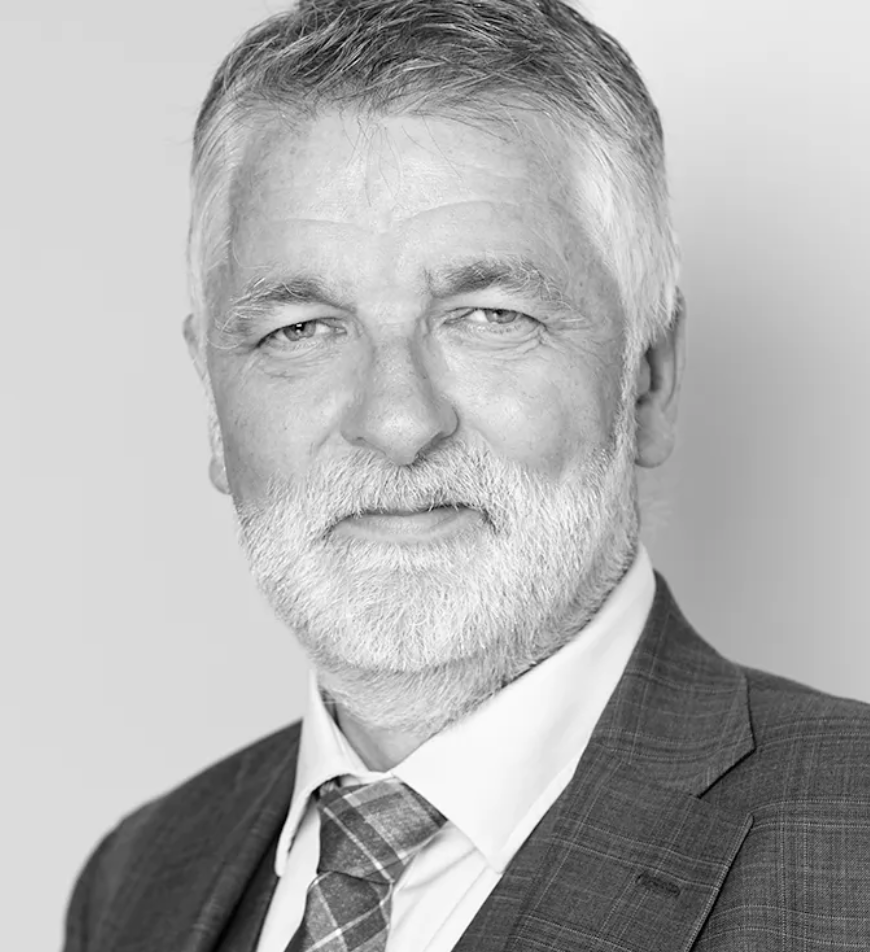
The last hour of the day was given over to Aidan O’Neill, who was, once more, entertainingly exasperated. On Tuesday he had paraphrased Orwell’s Animal Farm. Today he started on MacBeth, remembering the quote: “life is a tale told by an idiot, full of sound and fury, signifying nothing”.
He ruminated.
“I’m not quite sure why that phrase came to mind…”
The judge interrupted. “Orwell, Shakespeare, all of that… terrific. But I really want the law.”
“You’re going to get a lot of that in the next hour”, replied O’Neill.
“Good. Let’s get going”, said Lady Ross, briskly. And so we did.
O’Neill started by pointing out that Articles 2, 3 and 8 of the Human Rights Act do not give any TIM the right to be transferred to a woman’s prison. He noted “everything that Mr Moynihan has argued, has been on the basis… that a trans-identifying man has a Convention [ie HRA] right to be in a woman’s prison.” This argument fell down, he said, because the case law states the opposite.
“The rights to gender identity” he said, are rights “in terms of respect for your pronouns, not to have your previous, original name used, to wear women’s clothing if you’re a man….” That was all well and good, according to O’Neill, but that still didn’t give any TIM prisoner “the right to be moved into the women’s estate.”
In fact, the 75% of TIMs who weren’t in the female estate still enjoyed and exercised all their rights in the male estate. Of the 25% in female prisons, O’Neill wanted to know – “what it is about them?” Why could they not “act out” and “have their gender identity respected somewhere other than in a woman’s prison?”
O’Neill turned to what he called the “frankly insulting” claims about suicide. He noted that Article 2 put a responsibility on the state to take reasonable steps to protect somebody’s life, particularly if they are in custody. “Absolutely no doubt about that”, he said. “But remember, it’s reasonable steps. It’s not whatever steps the person says have to be taken other or else they will commit suicide.”
Otherwise it became a “get out of jail free card” which could lead to someone saying “if you don’t let me out of jail, I’m going to commit suicide”. O’Neill asked “Why does the threat of suicide give you a power to direct the prison authorities as to how you should be treated?”
Bluebells in Wonderland
O’Neill said there was no evidence to suggest that trans prisoners were at any greater risk of suicide than old, young or female prisoners, and that suicide prevention was something to manage across the estate rather than saying “well, let’s just give up on single sex prisons”.
The FWS barrister characterised the Scottish Ministers’ position on potentially disapplying the Equality Act when it came to trans prisoners and single sex prisons as “a fantasy journey in and out these dusty bluebells, leading us nowhere”.
He suggested the idea there was some kind of obligation to house TIMs in female prisons turned the obligations of the Equality Act on its head. This gave Scottish Ministers a public duty to “sexually harass, victimise, or discriminate on grounds of sex against women so long as it’s required under the Convention.”
Lady Ross observed this was a “tendentious” argument. O’Neill replied he was only trying to follow the logic of the Scottish Ministers’ argument, which was leading him “down the rabbit hole, through the looking glass, into Wonderland”.
At the end of proceedings the judge warned that due to “the arguments that have been advanced and the complexity of some of the underlying issues” her ruling will take “a little while… I would not want there to be any expectation that this will be out very rapidly.”
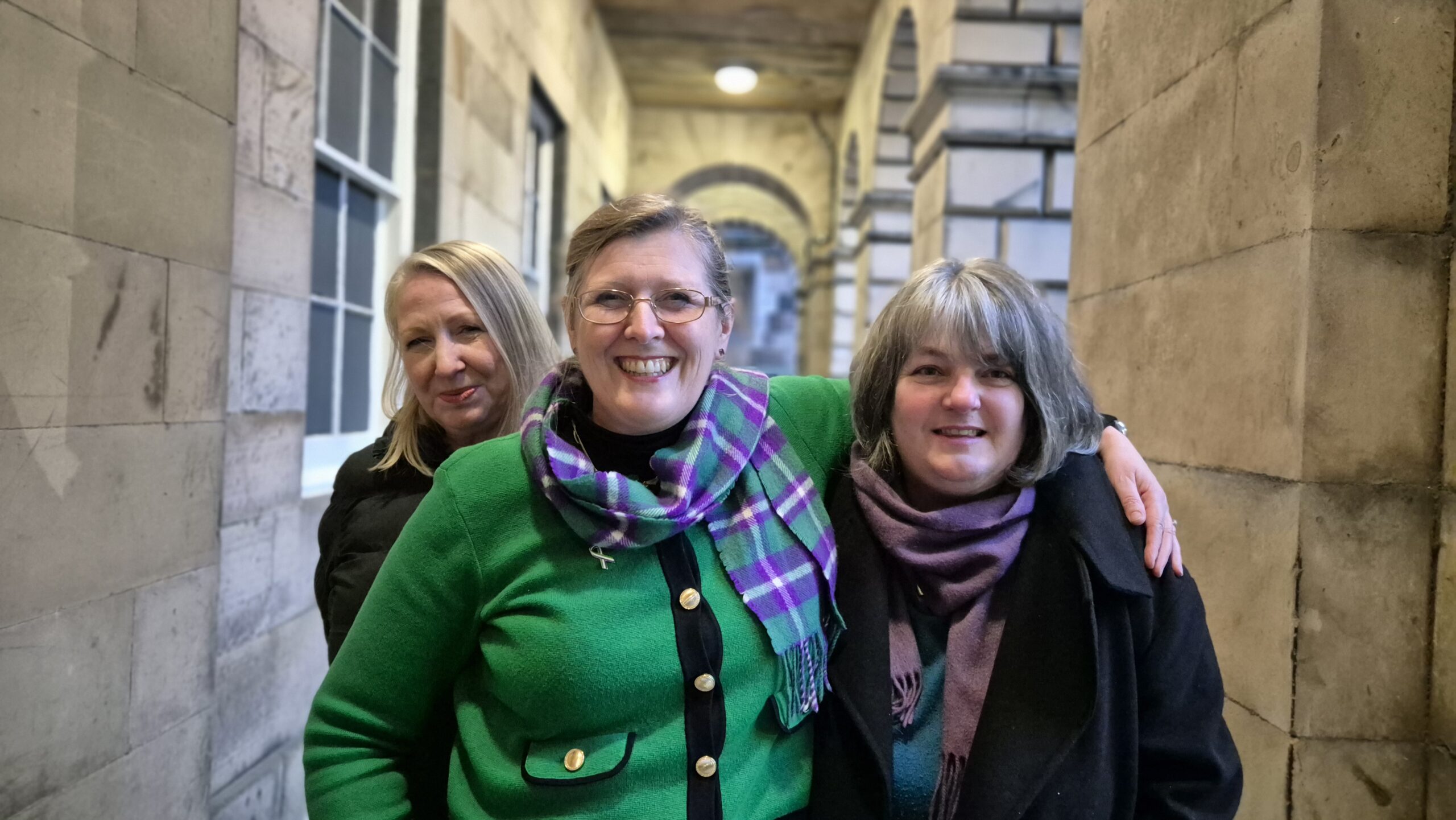
Marion Calder, Trina Budge and Susan Smith from For Women Scotland were in court today. Susan Smith said despite listening to several hours of argument from the Scottish government she was still “none the wiser as to the legals basis of their claims”. She added that it was “also depressing to see the lengths the government will go to elevate the demands of trans identified men over women’s safety.
Marion Calder thought the Scottish Government had thrown “everything” at this three day hearing. “They must really despise women”, she said. “Not the ones with penises though. They have special rights!”
When asked for a comment, an SPS spokeshuman said: “Our staff work hard to support the health, safety, and wellbeing of all people living and working in Scotland’s prisons. As this is subject to proceedings it would be inappropriate to comment.”
My write-up of Day 1 is here. My write-up of Day 2 is here.
* Though on segregated wings in a female prison, rather than somewhere in a male prison.
For Women Scotland’s Petition and Note of Argument in this case, you can find them here. If you would like to read the Scottish government’s Answers and Note of Argument, you can find them here.
Rhona Hotchkiss’s affadavit can be found on the For Women Scotland website here.
You can download Linda Pollock’s affadavit on behalf of the Scottish Ministers directly below:
The SHRC’s submission can be found here. The EHRC’s submission is available right at the bottom of my write up of Day 2 as a downloadable document.
Murray Blackburn Mackenzie have done some superb background work to this case. You can read that here.
Thanks to everyone who has supported my work over the last three days, especially for the suppliers of the photographs, legal/info/logistical helpers and of course everyone who has donated and subscribed. I deeply appreciate it.
Please note I do not have the copyright ownership of any of the images used in this piece. I therefore cannot give you permission to lift or use them, but this blog post can be shared in its entirety in the normal way
Comments are moderated. Please keep it interesting and informative rather than abusive and defamatory. If you would like to support my work with a one-off donation and receive the Gender Blog newsletter in your email inbox you can sign up here. Your email address will be stored securely and confidentially, never given to a third party and will only be used to inform you about things I think are interesting.


Leave a Reply to Norma Hurley Cancel reply