
“This data is shocking, but they’re carrying on. Chelsea and Westminster are training up new surgeons.”
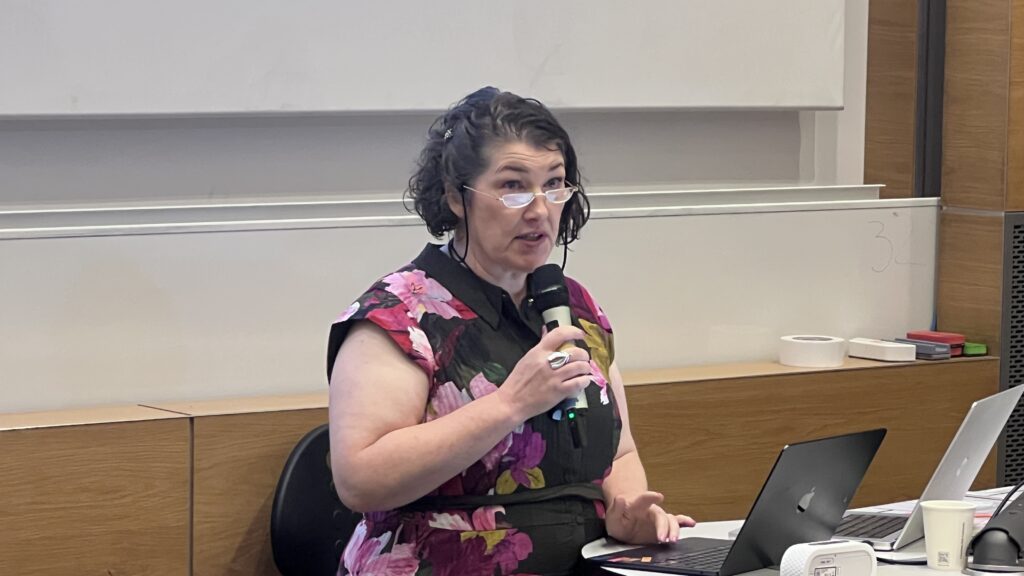
One of the bigger scandals surrounding gender treatment concerns the long term effects of both hormone use and surgery. A particular aspect of it was brought home this week at a Rethinking Youth Gender Medicine conference* by Elaine Miller – a self-described “fanny physio”.
Miller has a nice sideline in pelvic floor-based stand-up comedy and is also the woman who famously flashed her merkin at Nicola Sturgeon in the Scottish parliament’s debating chamber in 2022. Her account of the stunt and the planning which went into it is my favourite chapter in The Women Who Wouldn’t Wheesht.
There is a serious side to Miller, as befits a Fellow of the Chartered Society of Physiotherapists . She has just finished an academic research study with Professor Ruth Parry from Loughborough University called the “Unwanted Effects of Transgender Related Hormones and Gender Surgery on Urinary and Sexual Functioning”. Miller presented this for the first time at the Rethinking… conference.
Odour Control
Miller’s initial interest in the subject was piqued by a spike in referrals in young female people presenting with incontinence at her clinic. They had symptoms which would have been “familiar with menopausal women” but they were happening “thirty years earlier”. All the young women were on cross-sex hormones, specifically testosterone.
Miller reminded the conference that continence problems can be devastating. “If you worry that you are going to wet yourself in public, it affects everything that you do, and everything that you think”.
People who suffer from incontinence tend to “stop exercising, stop being intimate with their partners and become very worried about odour control. They change what they wear… and their sense of self is impacted.”
Miller went looking for advice about incontinence in literature produced by gender clinics and “couldn’t find any information… funnily enough”, but what she did find was a study conducted in 2024 which stated that 69% of trans adolescents on testosterone reported pelvic pain. In other words, “the cross-sex hormones we’re giving young girls makes them sore”.
Some of the young people in that study reported that their pelvic pain was linked to sexual function. Miller said one female told the report’s authors “if she has an orgasm, she then has crippling pelvic pain… for three days.“
Miller decided to get together with Professor Parry (who is a physio herself and an academic specialising in systematic literature reviews and video studies of healthcare communication) to do a proper study into the physical therapeutic needs of people who have undergone transgender hormonal and/or surgical interventions.
Their study involved speaking to male and female adults who had transitioned (including detransitioners). They also mined existing published studies for useful information. “We were struck” said Miller, “about how little in the literature includes the voices of the people that are affected by this stuff”, so they resolved to ensure individual voices featured heavily in the study, even giving the people they spoke to sight of and input into their recommendations.
The Findings
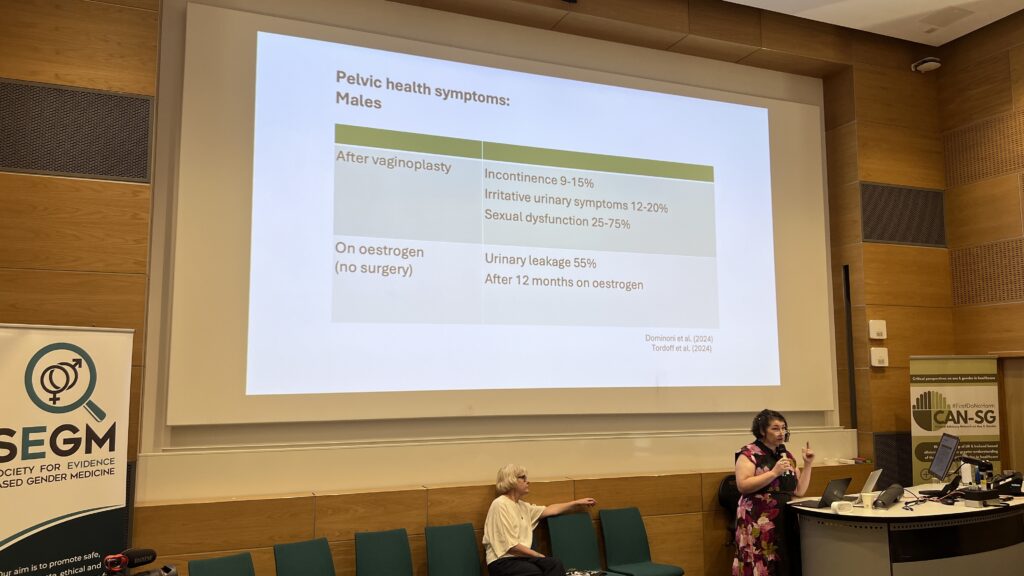
Are not good. After vaginoplasty (an operation not for the faint-hearted), up to 15% of males reported incontinence with a further 5% reporting urinary problems (eg desperately needing a wee and having to drop everything to do so). 75% reported sexual dysfunction.
“That’s not a good outcome of surgery”, said Miller. “These are things which reduce somebody’s quality of life”.
For males who had not undergone surgery, 55% on prolonged oestrogen use reported “urinary leakage”.
For females, the outcomes are worse. Up to 50% of women who undergo phalloplasty (an even more gruesome process than vaginoplasty) are left with urinary incontinence. 54% reported sexual dysfunction. “This data is shocking”, said Miller. “But they’re carrying on. Chelsea and Westminster [NHS Hospital Trust] are training up new surgeons.”
Miller said she felt it was unlikely many of the younger women who were seeking phalloplasties knew much about sex (“they are disproportionately likely to be neurodiverse [and] socially awkward”) and therefore may not have properly understood what they they were signing up for: a so-called penis (in reality a tube of fat and skin harvested from their arms, stomach or legs, sewn into their genitals), with little idea of how to use it.
25% of females who elect for metoidioplasty (in which clitoral tissue is detached from the labia and ligaments around it are cut so it protrudes forward) along with urethroplasty (in which the urethra is rerouted through the clitoris to allow urinating whilst standing) report difficulty urinating. Some require help from “continence nurses” and end up “self-cathetising” because the surgery has caused strictures in the urethra, which means the bladder can’t be emptied efficiently.
Shame and Stigma
Miller said their research found that gender clinics were largely “ignoring” the continence problems reported by their patients or weren’t accurately recording them. Miller felt there were parallels with the NHS mesh scandal where patients reporting pain were ignored by their doctors.
The headline figures might not represent the true scale of the problems trans people are facing. “Shame and stigmas is a big factor in these conditions”, Miller told us. “Even in a urology clinic people will minimise the symptoms they are experiencing, and we know that people with previous trauma under-report even more.”
Miller and Parry tried to find out if anyone had already looked at whether pelvic health physiotherapy might help people who were undergoing gender treatment. The available data was “really thin”, said Miller, calling this “a surprise, given how many of them are experiencing complications.”
After dealing with pelvic matters, Miller touched briefly on other rehabilitative failures after gender surgery. She noted that most women who received bilateral mastectomies due to cancer were routinely offered physiotherapy to prevent “post-operative shoulder dysfunction” – eg a frozen shoulder. There is, however, no NHS physio provision for women having their breasts removed for gender-related reasons. In fact, the surgical protocols say the arms should not be lifted above 90˚ for “anything between six weeks and six months” after surgery. Miller said this was because the protocols were written by plastic surgeons who are basically just interested in the scar – “they’re concerned that if [patients] move an arm too much, the scar will widen and be less aesthetically pleasing”.

Miller said a disproportionate number of trans-identifying people seem to have persistent pain and chronic fatigue, but we don’t know why. A feature of any trans gathering is multiple mobility aids. Miller said “from a physio point of view, if you give somebody a mobility aid, you should have an exit strategy”.
And they should fit. “You don’t give them a wheelchair that you’ve bought off Argos that they’re all slumped in, that doesn’t fit their leg length.”
Miller told the conference that when you see a group of trans-identified people together, their mobility aids are often “very jazzy and match the person’s outfit.” This suggests they’re purchasing them themselves “which means there’s no rehab plan”. Miller cited the example of a 23 year old she spoke to who had bought herself a wheelchair. She had no physio plan in place to get her out of it.
Miller said there were wider problem with gender patients in possession of physio referrals. Clinics can and do often refuse to take patients on the basis that – and Miller says she was told this directly – “we don’t treat gender here”. This, according to Miller, is because health professionals are “nervous” about taking on gender patients. “They don’t understand them, they’re worried about using the wrong words, and upsetting the person or being accused of a micro-aggression or worse.” This, said Miller, was not good enough. “If we wouldn’t reject a referral for a woman [with] pelvic floor disorder who’s been de-oestrogenised because she’s menopausal, we should not be rejecting young people who are de-oestrogenised because they’re on cross-sex hormones.”
It is, of course, a possible solution for gender clinics to offer their own physio, but some people with negative outcomes from gender treatment (especially detransitioners) might not want to go back to a gender clinic, so Miller and Perry advocate physiotherapy for trans patients in standard settings as well. This requires physiotherapists understanding the effects of gender treatmen and building therapeutic relationships within the trans community because “they don’t trust us”.
It might hopefully also cause the wider NHS and patients themselves to question the benefit of gender-related treatments in the first place.
* the conference was jointly organised by the Clinical Advisory Network on Sex and Gender (CAN-SG) and the Society for Evidence-Based Medicine (SEGM).
My work on this website is entirely funded by donation. If you would like to make a one-off or regular monthly contribution and receive the Gender Blog newsletter and blog posts in your email inbox you can sign up here. Your email address will be stored securely and confidentially, never given to a third party and will only be used to inform you about things I think are interesting. If you have a story, please use the contact form. All messages go directly and securely to my email inbox and will be dealt with in the utmost confidence.


Leave a Reply