We are used to hearing shocking tales from various industries steeped in gender woo. Education, healthcare, journalism, the charity sector and the civil service have some of the biggest problems. The arts world is undoubtedly the worst. Groupthink remains almost absolute. Speaking out can be career-ruining, if not ending.
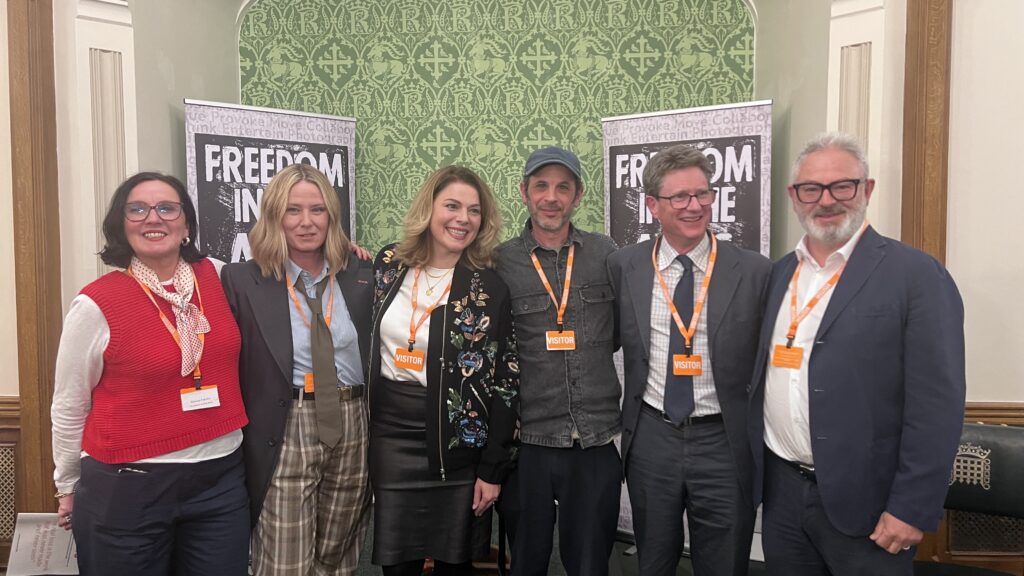
In its latest attempt to work some of the tiniest cracks, Freedom in the Arts (FitA) took to the Churchill Room in the Palace of Westminster to launch its report The New Boycott Crisis (and an accompanying Art Beyond Boycott Toolkit) on Monday evening. The undoubted star of the show was singer Róisín Murphy, giving her first formal speech since being cancelled by the music industry (including, allegedly, the BBC).
“After I spoke my mind about puberty blockers and current social trends around gender,” said Murphy “I watched the machinery kick in fast: pressure to recant, threats to pull promotion, leaks to the press, venues dropping bookings, colleagues stepping back. The message was clear: conform, or risk your livelihood.”
Murphy described being cancelled as hard. “I won’t sugar-coat it. The world goes very dark, very quickly. Everyone and anyone who was ever going to disappoint you, does so, all at once. Networks of interwoven friendship and career that took years to build – collapse overnight. All the hypocrisy, frailty, and hidden disloyalty gets exposed at once. It’s bewildering and it’s a bitter pill.”
Misogyny
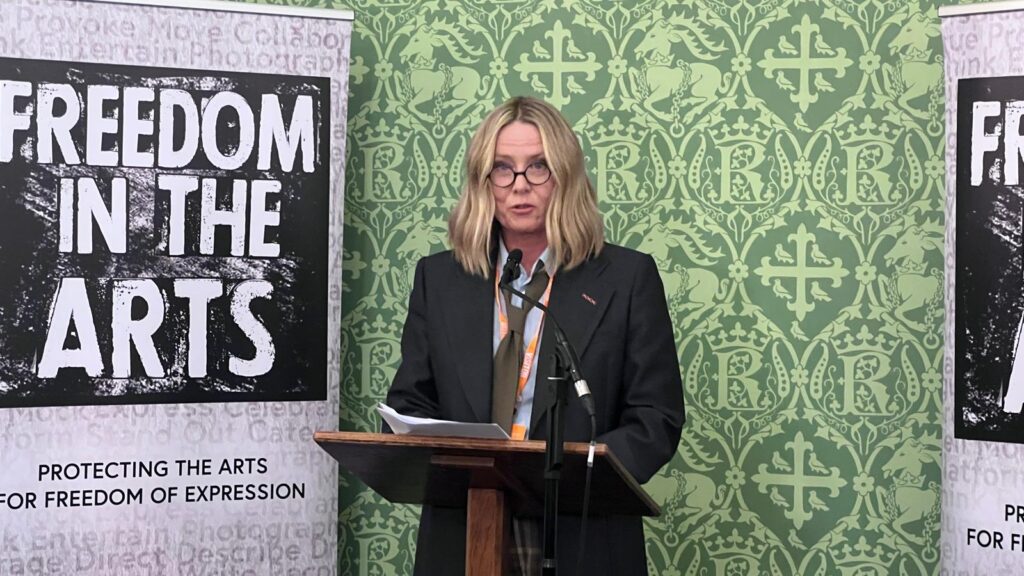
Murphy noted one element of the abuse which will be familiar to many people who speak out – the rank misogyny. “As a woman in her 50’s with a black mark against my name, stepping out into any sort of public discourse, making myself visible in any form invites not only attacks on my morality and my work but inevitably on my appearance and on my age too. These are nasty childish tactics designed to make me afraid to speak up, or even be seen at all, and it can be extremely difficult to take.”
The singer evoked a culture of fear. “Today, too many creators feel they must weigh every word, every image, every subtext. Questions irrelevant to the creative process itself – flood the mind. Will this offend the wrong people? Will I lose my funding? Will the media turn on me?” The thinking gets baked in. “Young creators learn early: play it safe or be stained. Established voices hold back in podcasts and interviews, playing a political game. For performers, the precious flow state vanishes when part of the audience is scanning for a thought crime.”
Murphy took aim at the UK’s cultural gatekeepers, who control the flow of cash to the arts. “Public funding – meant to support excellence regardless of politics – has become an ideological points system. Projects that question the current line on sex and gender, for example, find doors closed, while those that affirm it flow with support.” Murphy calls it “patronage with strings attached so tight they strangle the critical thinking it takes to invent anything.”
She finished with an appeal. “The creative soul of this country, and of Europe, has always thrived on discomfort, on the freedom to be wrong, to offend, to pivot, and to surprise ourselves. Without that freedom, we don’t get better art. We simply put artists in a chokehold and suffocate life out of our culture. We need free inquiry and open debate. The arts must breathe freely again.”
Something Has Gone Badly Wrong
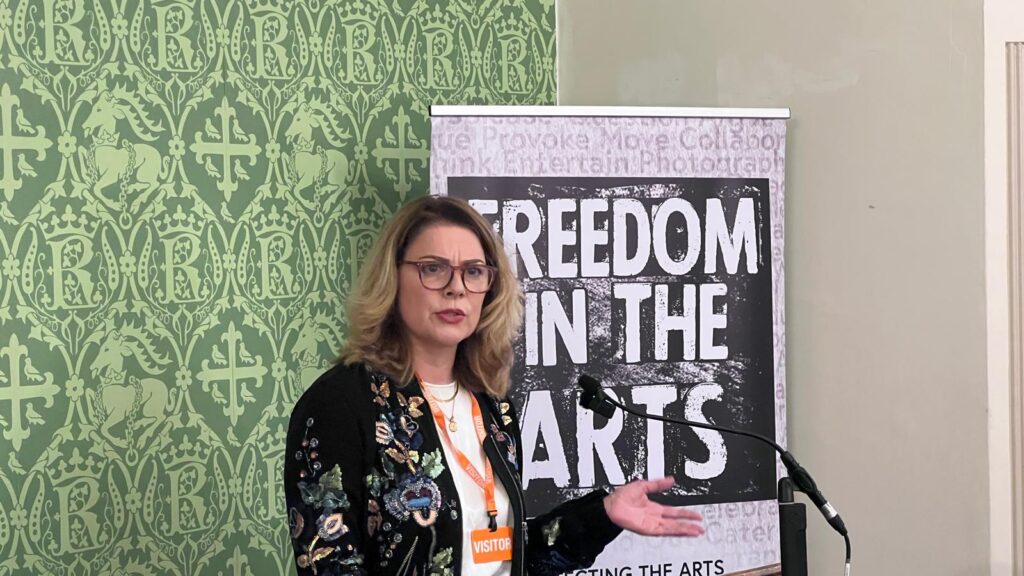
FitA’s co-founder Rosie Kay spoke specifically about The New Boycott Crisis: “Too much of what this report describes has been allowed to happen quietly, or to be brushed off as just another arts row,” she said. “But really, we are here because something has gone badly wrong in the arts.”
Kay, a choreographer who founded FitA after being cancelled for pointing out that men and women are different, was blunt about the mechanics of what the report documents. “Once fear becomes normal, people begin to adapt to it. They lower their expectations. They say less. They risk less. They quietly edit themselves. Institutions start making decisions not because anything has happened, but because they are frightened of what might happen. A possible backlash becomes enough. A rumour becomes enough. A handful of emails becomes enough.”
The report identifies a pattern of political pressure, cancellation, professional exclusion, harassment and what it calls “compelled positioning” – a growing atmosphere in which artists, venues and organisations feel they must calculate risk before they speak, programme, publish, perform or even associate.
Whilst Rosie and Roisin were cancelled for their statements on gender, Kay and her co-writers’ report highlighted another massive problem – antisemitism.
“Jewish artists and Jewish cultural life have become especially vulnerable to exclusion, scrutiny and silence,” said Kay. “Not always through a dramatic public row. More often through the slow withdrawal of support, the coded language of sensitivity, the feeling that Jewish identity itself has somehow become too contentious, too political, too difficult to deal with.”
Oy Voi
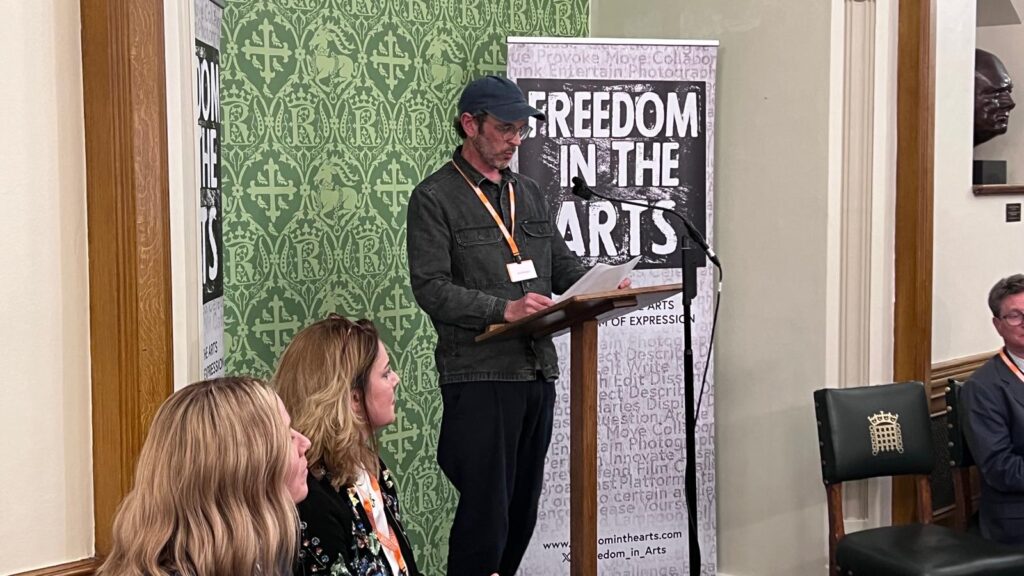
Josh Breslaw, drummer in the British-Jewish band Oi Va Voi, brought his personal perspective to the subject. Oi Va Voi played some European dates last year and had four gigs booked in England. After playing without incident in Holland, Belgium, Hungary and Turkey, their Bristol night was called off by the venue. There had been complaints from a pro-Palestinian group objecting to Oy Va Voi for playing in Israel and to the presence of an Israeli guest singer. The venue sided with the complainants. Breslaw described it as “devastating”.
The band’s Cambridge and London shows went ahead, but the Brighton gig was also cancelled. “This is where I live”, said Breslaw, “it’s where my children go to school.” He described being shunned in his hometown as “a very oppressing experience.”
Breslaw said the decision to cancel their bookings in Bristol and Brighton was “both racist and xenophobic. My band was pulled up, questioned and cancelled because of our Jewish heritage. That’s racist.” He added that he prefers the word racist to antisemitic, “because that’s what it is.”
Breslaw described the broader condition facing Jewish artists in cultural spaces: the expectation that they take public positions on issues demanded of them, and the consequences of not doing so. “If you decline to take a public position… then a position will be taken for you. You will then be judged on that position, someone will call you out. And the most likely outcome is that you’ll be publicly cancelled.”
Not Very Funny
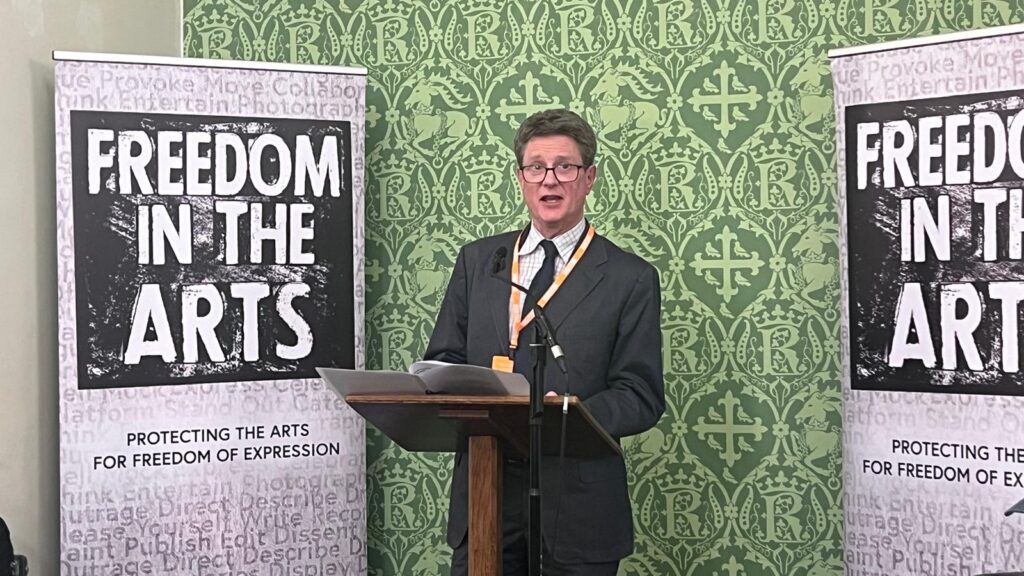
Mark Tughan, founder and chief executive of the Glee Club – the largest group of mid-sized comedy venues in the country – said that live comedy is still “by and large a happy place” and less unmoored than “music and perhaps publishing”. But, he reminded his audience, “one of the biggest cancel stories ever involves one of our own, namely comedy writer Graham Linehan… the man has been vindicated a thousand times over and it’s a source of regret (to me at least) that some of his peers in our industry still can’t seem to find the strength to acknowledge any regret for the way he was treated.”
Tughan described (with some amusement) being the subject of a fatwah issued by someone in the Smallheath area of Birmingham. His crime was booking Dutch comedian Hans Teeuwen. Teeuwen had allegedly mocked Islam. West Midlands Police (who have previous) advised Tughan to cancel the show. Tughan refused. WMP declined to commit to providing any presence on the night. Thankfully, it went ahead without incident.
Tughan spoke about Andrew Lawrence, a controversial comedian. Tughan found that staff had decided to pass on him. “A member of my team tried to brush aside his tour booking request. First it was – he’s not funny. Then it was what about a backlash? Then it became what about the staff? It has also become: what about [his] audience of deplorables – what if THEY abuse the staff? It was abundantly clear that this was being presented to me as just too much hassle, let’s just leave it. And that is what angered me, and made me think…”
Tughan realised his own people were either acting as self-appointed gatekeepers to what was deemed funny, or just paralysed by the fear of being targeted, or the whole thing becoming an HR nightmare due to staff complaints. “We could be, and I suspect we were, declining shows pre-emptively… censoring ourselves and some acts without it even being known. No paper trails, no proof.”
Tughan described this as “insidious… quietly swerving a show means we’ve already surrendered or lost the argument for free expression because it’s assumed – pre-ordained even – that such a booking will end up causing so much grief, that it’s just better not doing it in the first place.”
And, of course, we all suffer. “If you don’t take risks, it gets dull, it gets safe, it gets a bit boring. For me this is about regaining the confidence to take risks again, bringing the public with us (which | think we can do) and in the end winning a bit of trust back from consumers.”
Coward
I’ve had a minor but depressing brush with all this. I had a booking to talk at a venue about the Post Office scandal. Reasonably sure the evening would sell well, I asked if I could have the matinée to try out a talk on gender. I proposed discussing the history of the gender wars, and, in the second half, interviewing a detransitioner, who had expressed an interest in coming along. I thought it would make for a fascinating afternoon with plenty of audience interaction. The answer was a straight no. The venue had recently been targeted by activists for putting on a Jewish act. They didn’t want to go through something similar again.
I would call them cowards, but you notice I’m not telling you who they are. I don’t want them to cancel any future talks I might give. I am therefore complicit in that chain of cowardice. Part of me is hoping the venue might (sooner rather than later) understand, as Tughan says, a gatekeeper’s “responsibility to the wider arts world to ensure that we don’t just swerve and avoid controversial or alternative shows because of fear of backlash, or HR hassle”.
Maybe, in the light of FitA’s latest report, they might start to be persuaded, but I doubt it. This is going to take a long time.
My work on this website is entirely funded by donation. If you would like to make a one-off contribution and receive the Gender Blog newsletter and blog posts in your email inbox you can sign up here. Your email address will be stored securely and confidentially, never given to a third party and will only be used to inform you about things I think are interesting. If you have a story, please use the contact form. All messages go directly and securely to my email inbox and will be dealt with in the utmost confidence.


Leave a Reply