
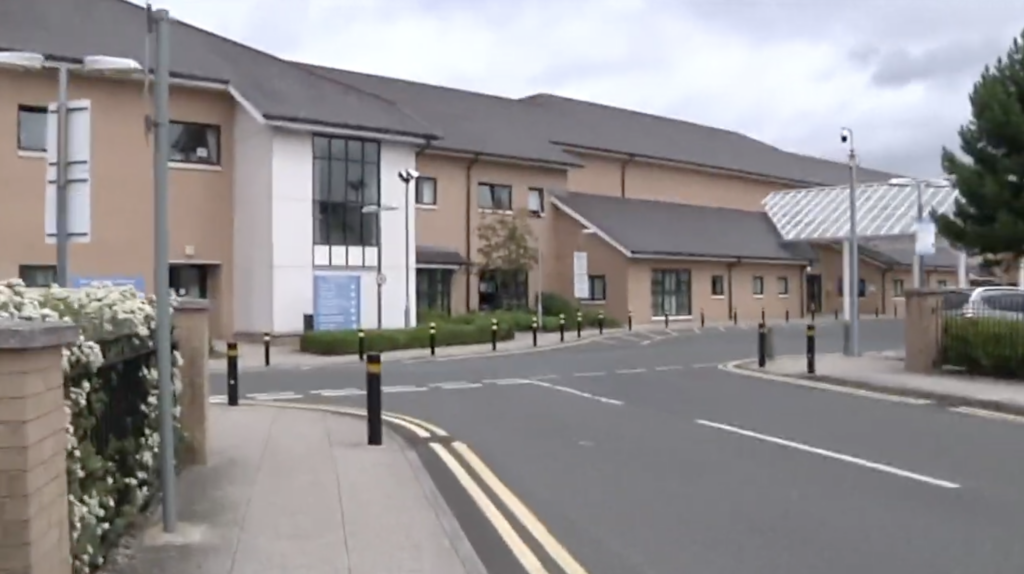
The Welsh Gender Service is an interesting outfit. It is the only NHS clinic in Wales taking adult referrals from GPs. It is run by Dr Sophie Quinney, who was last seen in April, grabbing a camera out of a videographer’s hand, and allegedly having to be restrained by the police.
According to information released via Freedom of Information (FOI) Act requests and documentation shown to me, the Welsh Gender Service:
– does not collect information on the number of patients it recommends for cross-sex hormones.
– refers between 3 and 4 times the number of people for irreversible gender surgeries than the UK average.
– was referred by NHS Wales for formal independent review into its practices and clinical competence in July 2024, yet the review has not yet begun.
Natasha Asghar, the Welsh Conservative Shadow Minister for Health and Social Care, has called the information below “incredibly concerning” and said she will be raising this with the Welsh Government.
What is going on?
Dr Sophie Quinney joined the Welsh Gender Service (WGS) in 2018. She can be seen on video as part of a “virtual tour” made in 2020. Here, a youthful Dr Quinney (pictured below) is filmed wearing a pink and blue lanyard. She tells viewers she joined the “movement to improve healthcare for trans and non-binary people” after leaving general practice in 2018. ‘Movement’ is a telling word.
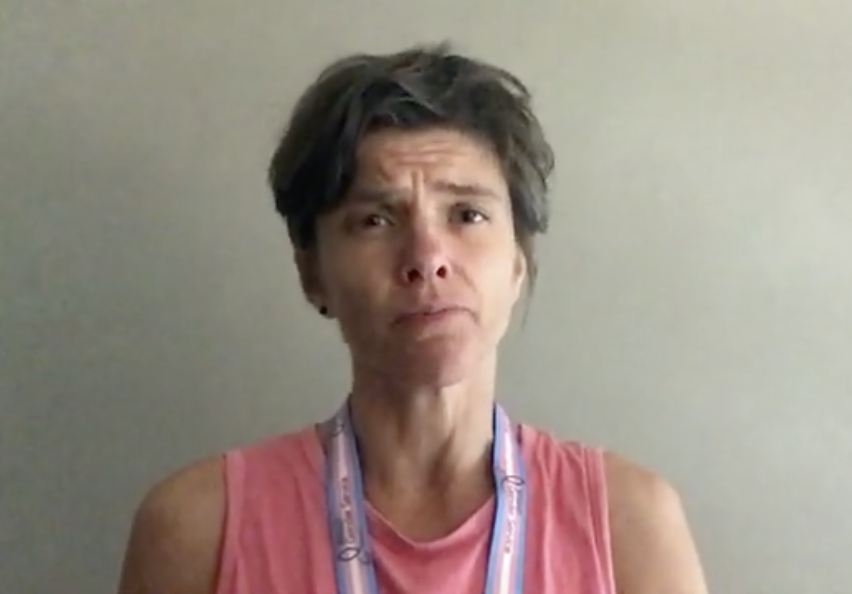
Quinney is open about being an enabler. Talking directly to camera she says “I use a gender-affirmative approach, and see my role as giving you the knowledge and support you need to progress your transition in a way that is best for you. This could cover the social elements of transition, or things like hormone therapies and gender-affirming surgeries. I’ll meet you where you’re at, and help you get to where you need to go in order to live happily and authentically.”
The landing page of the Welsh Gender Service website (owned and run by the NHS) states: “In light of the recent Supreme Court ruling, we want you to know that you are valid, and that our commitment to your dignity and safety is unwavering. This ruling has caused distress, but we want to reassure you that access to our service and the work of local gender teams is not impacted.”
Dr Sophie Quinney is the author of a now archived 2020 training module for the NHS’s “Health Education and Improvement Wales”. In it she put the “exponential” rise in people identifying as trans down to “increasing ease of access to information and representation”. In the same year Quinney described the concept of social contagion as it relates to adolescent gender dysphoria as “poisonous” and “utter tripe”.
In her training module, Quinney says transitioning “can be social, hormonal, surgical, or any combination. The main purpose is to achieve a better alignment of an individual’s gender identity (an internal sense of self) with the physical body and/or social gender role.” Quinney says “for those who embark on cross-sex hormone therapy, gender-affirming treatment will be for the most part life-long”.
Given some of the risks of cross-sex hormones include dyslipidaemia, polycythaemia, hypercalcaemia, blood clots, breast cancer, elevated liver enzymes, heart attack and stroke, compromised fertility and impaired sexual function, putting anyone on them is a risk. The drugs are prescribed off-label. No one inside or outside the NHS really knows what their long term use will do to the body or brain.
Quinney is hostile to the concept of detransitioners. In 2019 she suggested that “less than 1%” of people who transition go on to detransition, opining the reason is “often” due to “social transphobia”. The less-than-1% number is factually incorrect, which she would know if the WGS was properly collecting data. In 2021, the Exeter Gender Clinic, which was the only adult gender clinic to co-operate with the Cass Review, put its detransition rates at 6.9% with a further 3.4% experiencing “some overlap of experience” with detransitioners. Other estimates put the current rate of detransitioners (in the US, at least) at around 13%. We don’t actually know how many people detransition after transitioning across the UK, because the NHS isn’t counting. Nor has it yet put in place “provision” to help detransitioners despite being recommended by Dr Hilary Cass in the Cass Review in 2024.

Predictably, Quinney signed an open letter to the Health Secretary in 2024 expressing a “deep lack of confidence in the Cass Review”. The Cass Review is widely considered to be a gold standard review of evidence for the medical treatment of children expressing confusion about their gender identity.
Quinney believes her affirmative model works best for children. In her training module, she writes “as a rule of thumb, while a child’s self-expression might well change over time, the only way to avoid damaging their well-being is to embrace their identification and how they navigate the gendered world in the moment.” [her emphasis]. I am willing to bet, when she wrote this, Dr Quinney did not have children herself.
Quinney is unable to get her hands on children (metaphorically of course) at WGS. The clinic only accepts referrals of teenagers who are six months away from their 18th birthdays or older. It currently has a two year (plus) waiting list, which means that even its youngest patients are heading towards their twenties by the time of their first appointments.
Over the last three years WGS has seen around 800 patients a year. The average age of those patients is 26. The crucial question is how many of those patients are recommended for cross-sex hormones after one or more appointments. Astonishingly, Cardiff and Vale University Health Board tells me “this information is not centrally recorded or collated”. The WGS doesn’t know what percentage of its intake it sends to the NHS’ Local Gender Teams (run by individual health boards) around Wales for endocrine assessment and hormone prescription.
Cardiff and Vale University Health Board, which appears to be responsible for WGS (there has been some confusion about this in the past) did give me some figures from March 2023 to Dec 2024, which suggested that throughout that period the monthly conversion rate from initial appointment to hormone plan varied between 51% and 88% of patients, though it did also say the data “was manually tracked and entered and so cannot be assumed to be 100% reliable.”
Start Chopping

More concerning, perhaps, is the rate at which WGS refers its patients for irreversible gender surgeries. In 2025 the WGS said under FOI it referred 207 patients for what the NHS calls “Masculinising Chest Surgery” – an umbrella term for the various methods of breast removal and plastic surgery techniques aimed at achieving a facsimile of a male-looking chest.
The minimum confirmed number of referrals for the whole of the UK in 2025 was 1275 (the unconfirmed maximum number was 1291*). Working off the minimum number, Wales accounted for 16.2% of all UK MCS NHS referrals (or 16% working off the maximum number), despite only having 4.6% of the UK population. Put another way, in 2025 whilst the Welsh Gender Service was sending 207 women for Masculinising Chest Surgery, across the whole of Scotland in 2025 the confirmed minimum number was 120 (with an unconfirmed maximum of 136*), yet the population of Wales is 3.19m and the population of Scotland is 5.6m.
2025 was not an exceptional year. In 2024, WGS referred 234 women for MCS. The minimum confirmed number of UK referrals was 1158 (the maximum number was 1174*). In 2024 Wales therefore accounted for 20.2% of all UK NHS surgery referrals (or 20% working off the maximum number). According to population size against the total number of UK referrals that year, the number referred in Wales should have been around 53.
The average percentages for what is euphemistically known as “bottom surgery” are broadly similar. WGS referred an average of 156 men a year for Feminising Genital Surgery (eg Vaginoplasty – read more here) in 2024 and 2025 against a (minimum) average of 837 nationwide (maximum average was 861*) . That’s 18.6% (or 18.1% working off the hypothetical maximum) of all NHS referrals with just 4.6% of the population. Over the same two years WGS referred an average of 51 women a year for Masculinising Genital Surgery (eg Phalloplasty – read more here) against a UK minimum average of 398 (max avg. 434*) people per year, bringing it in at 12.8% (or if you go off the maximum average it’s 11.8%).
Across all three types of surgery in 2024 and 2025, the WGS referred between 3 and 4 times the number of people per head of population than the UK as a whole.
Some would say the WGS is leading the way in helping trans people assuage their dysphoria on the NHS by removing women’s breasts and attaching tubes of skin and fat to their genitals whilst fashioning men facsimile vaginas. Others might be concerned that the NHS in Wales is referring too many vulnerable people for unnecessary irreversible surgeries on healthy body tissue without taking steps to properly consider the alternatives.
Which is it then?

We don’t know. No one knows. According to documents I have seen, in July 2024, the NHS Wales Joint Commissioning Committee (JCC) decided to undertake an independent review of WGS. In September 2024 the Director of Mental Health and Vulnerable Groups within NHS Wales was appointed Executive Lead for the WGS review. It was confirmed the WGS review would be overseen by a “Clinical Expert Group”.
In February 2025, the Director of Mental Health and Vulnerable Groups resigned his post. NHS Wales committed to setting up the WGS review by the end of the year.
In September 2025 NHS Wales said it had got as far as making “initial enquiries with potential members” for its review panel. In November 2025 it confirmed it was in the process of “developing a scope” for the WGS review panel. By January 2026 the scope had not been finalised as NHS Wales were “incorporating” the outcome of the Levy review into adult gender services, which was published in Dec 2025.
By March of this year NHS Wales had still not produced a scope for the WGS review and did not have a date for when the review would commence.
Two weeks ago week I asked Cardiff and Vale University Health Board:
– if it had any update on the progress of the NHS Wales independent review of WGS.
– the justification for not collating crucial information on the percentage of patients WGS refers for cross-sex hormones.
– if it could explain why surgery referral rates for WGS are so much higher than the rest of the UK.

There is also the question – if any patients have been harmed by WGS between July 2024 (when a review of its services/clinical competence was deemed necessary) and where we are today – without even the scope for the review completed – who would be responsible?
Despite chasing, I have yet to receive a response. I turned to the Welsh government, who referred me back to the NHS. I sent the information in this piece to Natasha Asghar, the new Welsh Conservative spokesperson for Health. She told me “these revelations are incredibly concerning… It is alarming that despite the seriousness of what takes place at the clinic, information on the number of patients being put forward for cross-sex hormones is seemingly not collected. The figures showing this service is referring high numbers of people – well above the UK average – for irreversible gender surgery is a serious red flag and warrants closer inspection. Clearly a thorough independent review into the Welsh Gender Service’s practices and leadership is needed and I will be raising this matter with the new Plaid Cymru Government.”
I hope she does.
I am grateful to various individuals who have already published information about Dr Quinney – not least the anonymous people behind this page on the What is a Woman website and the Dyslexic Auditor. Profound thanks to (let’s call him) Pete – who helped crunch the numbers and useful pointers. All mistakes are my own. Please make a small donation if you think this sort of work is worthwhile. It’s how I keep doing it and keep it free-at-the-point-of-consumption.
* the NHS has recently released the figures (under FOI) for the number of “feminising” and “masculinising” surgeries carried out across the UK in 2024 and 2025. Where more than zero but less than 10 people were referred for a specific procedure by a specific clinic, it has simply marked the data field as “less that 10” in order to protect the privacy of the individuals involved. This means the true number of referrals could be anything between 1 and 9,
which doesn’t make a huge amount of difference when recording mastectomies, as they are a much more common operation. Phalloplasties/Metoidioplasties are less common, hence the slightly wider swings in percentages in my article. I tried to keep it as clear as possible, but if you want to go back to the original data (and check my calculations) you can find it here.
My work on this website is entirely funded by donation. If you would like to make a one-off contribution and receive the Gender Blog newsletter and blog posts in your email inbox you can sign up here. Your email address will be stored securely and confidentially, never given to a third party and will only be used to inform you about things I think are interesting. If you have a story, please use the contact form. All messages go directly and securely to my email inbox and will be dealt with in the utmost confidence.


Leave a Reply