
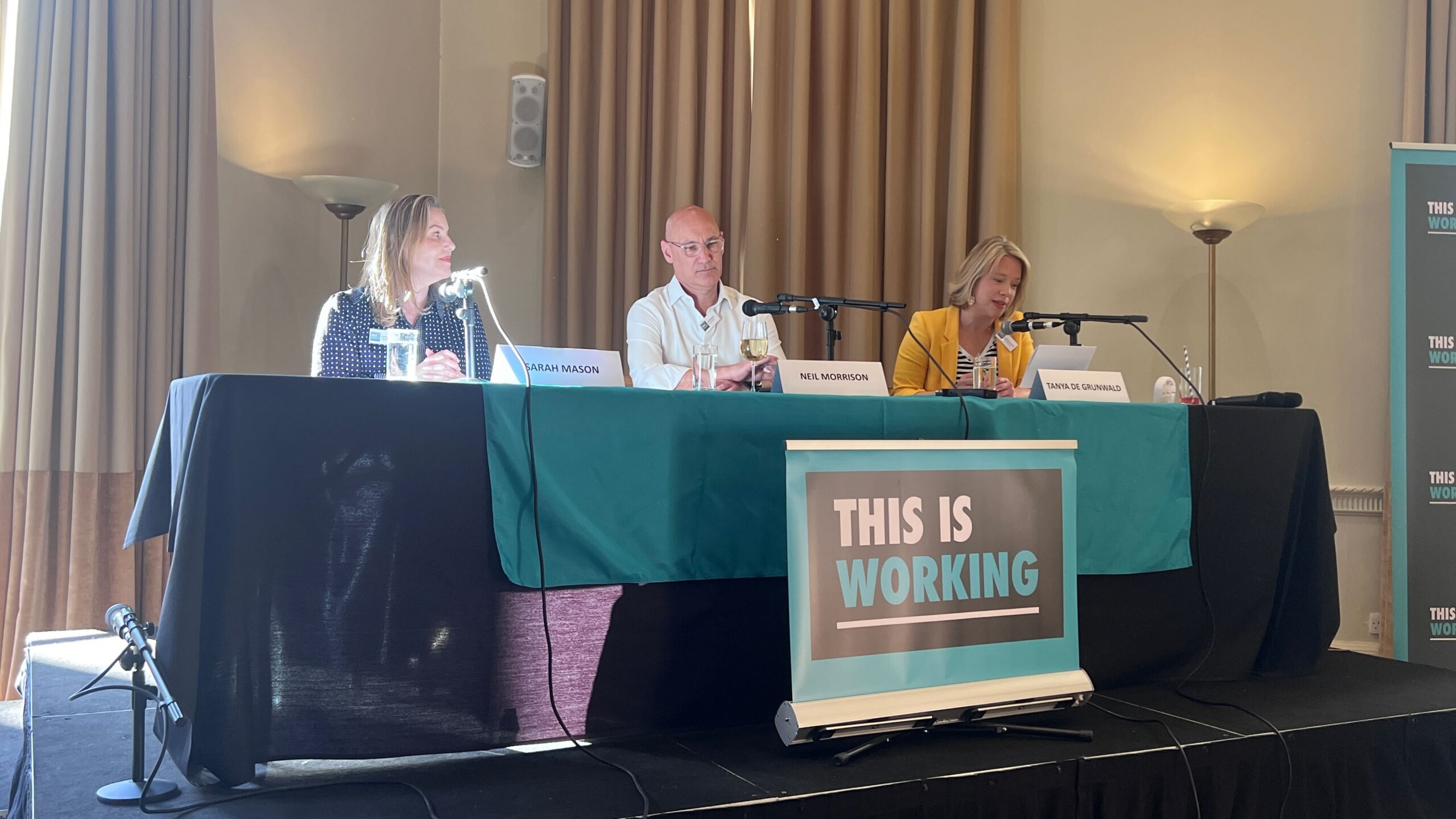
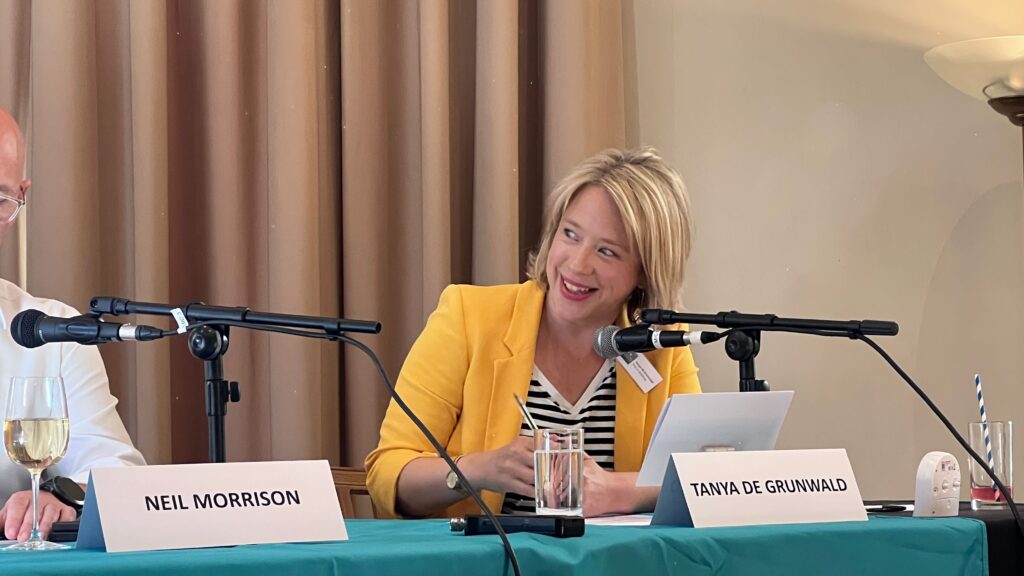
Tanya de Grunwald has a podcast strand called This Isn’t Working, in which she invites business leaders to consider employee activism and the vicissitudes of DEI. Her live events, under the banner This Is Working, are aimed at bringing business leaders together to discuss how organisations can move forward from where we are now.
There were three panel sessions held under the banner Depoliticising the Workplace at Tanya’s summer This Is Working event in central London last night. Panelists were asked to define the politicisation problem, explain how it can affect productivity and the smooth running of an organisation and come up with some solutions. The first (and only one I’m going to focus on in this piece) featured two practitioners (Sarah Mason and Neil Morrison) who hold senior roles in large organisations.
Politics and Productivity
Sarah Mason is Chief People Officer at SThree (a global recruitment company). She saw two problems with current workplace culture: the importation of “what could be seen as social policy rather than something that’s actually lawful or legally robust” and “behaviour that’s possibly inappropriate for the workplace”, citing a certain sense of “entitlement” amongst younger employees.
Neil Morrison is Group HR and Comms Director at Severn Trent Water. He agreed with Mason, adding another problem he’s seen: “organisations… telling people how to think rather than how to behave.”
Tanya de Grunwald asked both execs what they thought has driven so many employers “to drift such a long way from productivity of performance and profit and into this politics and activism?”
Mason felt it was down to the fact “the world is more political and social media gives people a platform to air it” and secondly “the rise of the Employee Resource Group.” These are also known as Staff Networks. Mason said that in the past, discussions about employee wellbeing and the direction of a company traditionally went through unions, which “would probably be mandated by some pretty tight guidance and governance, whereas Employee Resource Groups are coming in and they have… free rein to operate in whatever way they choose. They also attract people with a political agenda.”
Mason also raised the point that “Employee Resource Groups are linked to protected characteristics, and… they do clash with each other. So you’ve got groups… who are driven by a political agenda, who might also be unchecked, not moderated and be conflicting with each other, and that’s going to spell a lot of risk.”
Whilst employee groups and staff networks began as a good idea, they can cause problems when given access to senior management and a budget. “Without clear roles and responsibilities, clear guardrails, clear remits,” said Mason “then you’re going to get a group of people, who might well be clearly one intentioned, but passionate about their agenda, driving something without potentially any knowledge… or concern for wider employees across the group. So unless they are supported by people with a knowledge of employment law and understanding how those groups might clash, it just spells disaster.”
Groupthink
Neil Morrison saw the death of George Floyd in 2020 and the rise of Black Lives Matter as a tipping point. “All of a sudden, there was a stampede to respond to this tragic event in the US… and it was very peculiar because you’d have widget factories in Hull, making a statement about events in the US and feeling that they needed to take a position on it.” Many corporates were caught out by their lack of diversity at the highest levels within their organisations.
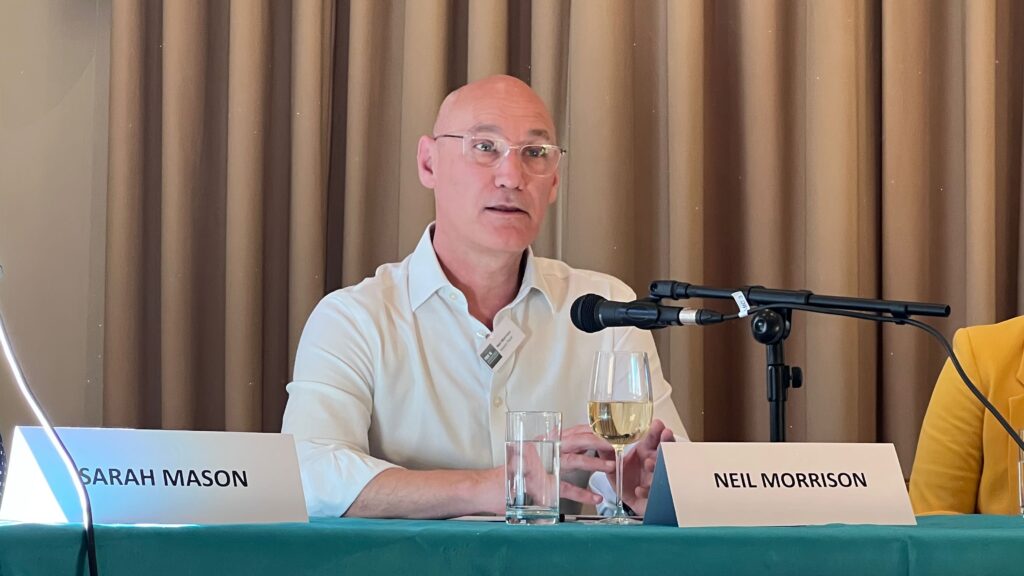
“And with that lack of representation, there was this kind of like, who can advise us on what is the right thing to say on this? And I think what you saw in the back of that was a lack of confidence [among] leaders to deal with some of the challenges that were going on in society. So they delegated that to people within their organisation… but of course, that’s not leadership, and what you get as a result of that is not necessarily expertise, but a passion for a topic.”
Morrison noted that a lack of internal expertise creates a market for consultants to come into an organisation and spread their ideas. He also felt that large corporates can fall victim to “groupthink” and a “herd mentality” because “because it’s much easier to be part of the crowd than it is to stand out and say, I’m going to take a different direction. Those organisations that do are often pilloried.” By example, he said, “How many companies this year will talk about how AI is going to improve their productivity and efficiency in their organisation? Probably about 50% more than actually understand it.”
The problem is “Corporates move in herds. Everybody says we need this. All of a sudden you get a whole bunch of suppliers crop up who are suddenly experts on how you make a more purposeful organisation. Then you get the CIPD saying everybody’s asking us questions about how we deal with this issue. We need to run a conference on it. It becomes almost a self-fulfilling prophecy.”
Morrison said that’s when people lose sight of what their organisation is for, which is “to run our businesses, to drive productivity performance, to drive economic output… and to create safe and meaningful work for the people that come to work.”
Lived Experience vs Expertise
Mason felt the problem could be simplified by staying on the right side of the law. Organisations importing advice in the guise of expertise needed to properly assess its legality before allowing it to spread through an organisation. She also felt empowering the wrong people within an organisation was potentially disastrous. “Healthy HR would be really recognising expertise over lived experience. Absolutely, we should be having representation and listening to people within the framework of employment law, within the framework of how workplaces should operate [but] if we’re putting people into roles because of their lived experience, they may not have an employment law background, but they’re suddenly put into very senior roles, making very senior decisions. It’s very difficult then to say, oh, we’re not going to listen to you. We’re gonna just carry on doing the employment law stuff.“
Morrison framed his solution around ideas and behaviours. “If you allow one idea,” he said “You allow them all. What we’ve ended up with in organisations is only allowing certain ideas and not allowing others. And that is a hugely problematic and divisive way of running your organisation.”
Employers nowadays should “accept that the diversity of views and opinions, whether that is around gender, whether it’s around race, whether it’s around immigration… are so complex now that actually trying to facilitate that conversation within an organisation is beyond the capabilities of most leadership teams. And so it is simpler to say behaviour is the key thing when you are here, because you’re paid to show up to work and deliver an outcome.”
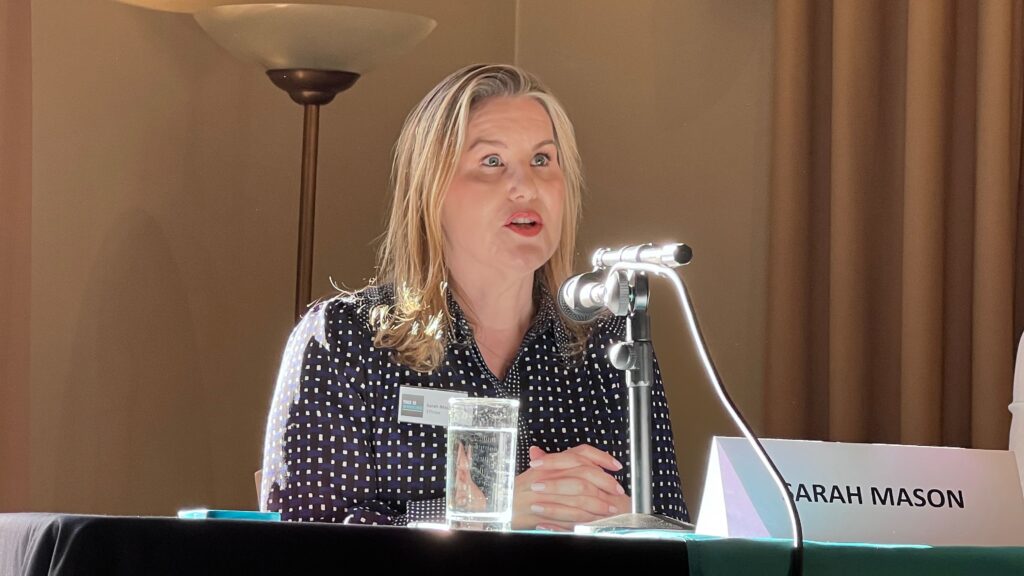
Mason felt it was a matter of helping people understand that an organisation is not a “careers factory”. It has to primarily operate in its own interests, and sometimes in its shareholders’ best interests, within employment law. “I think we’ve almost opened the door to anyone who’s interested [who wants] to have a go, sometimes. And there’s a level of entitlement that comes with that as well. They believe they should be allowed a seat at the table, to make these big decisions because they’ve been invited in and they’ve been given a lot of airtime.”
Mason argued for a “reset”, telling employees “we’ve all got a very clear role to play in an organisation, and it always goes back to driving the company’s performance… that is the job. We get paid to turn up, do a job, and do what is in the best interest of the company. And we just need to remind people of that.”
The above only captures a small fraction of what was an engaging hour long session. It did seem odd that senior leaders advocating for businesses to go back to their core purpose whilst reminding employees why they were at work should feel controversial, but there we are. During a Q&A at the end of the evening, Neil Morrison made a prediction. Soon, he said, “people will want to come into work, where topics aren’t discussed. They can come in, they can do a good job, they can get paid well for it, and then they can go home at the end of the day, and be with their friends and family, and actually have a life outside of work. They will find purpose in their football team, or baking sourdough, or being a Samaritan, or… I don’t know… drinking large quantities of vodka at the weekend.”
Morrison believes work could and maybe should be a refuge from the 24/7 politicisation of society. He claims “It’s absolutely happening now that people are moving away from wanting to be in that environment because that’s all they hear all the time when they’re not in work. And workplaces/organisations that can create that are going to be massive attractors of talent. They’re going to be high-performing as organisations, because people are going to want to come in and be… focussed entirely on their jobs. Smart organisations should be preparing for that right now, because that is the way that it is going to be.”
It’s going to be interesting to see how this strand of corporate thinking develops. If you’re a senior leader and interested in discussing this sort of thing, you can sign up to the This Is Working newsletter mailing list here. Thanks to Tanya for inviting me along last night.
My work on this website is entirely funded by donation. If you would like to make a one-off contribution and receive the Gender Blog newsletter and blog posts in your email inbox you can sign up here. Your email address will be stored securely and confidentially, never given to a third party and will only be used to inform you about things I think are interesting. If you have a story, please use the contact form. All messages go directly and securely to my email inbox and will be dealt with in the utmost confidence.


Leave a Reply