
“Questions of deception and consent may involve more complex issues where the suspect is trans or non-binary.”
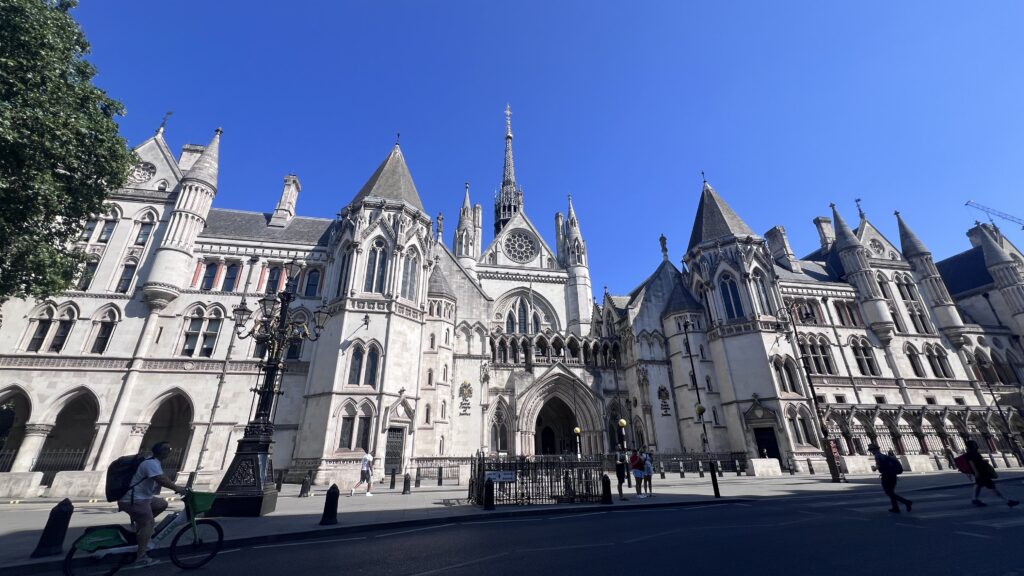
We are half way through Sex Matters’ (SM) legal challenge to the Crown Prosecutors’ Guidance on Sex by Deception. Or as the Crown Prosecution Service (CPS) has it “Deception as to Sex“.
The issue at hand is consent, and whether the Prosecution Guidance (the Guidance) successfully navigates the issues around people who present as, believe they are or pretend to be the opposite sex (or consider themselves “trans” or “non-binary”). Sex Matters contends the Guidance gets it badly wrong, and mis-states the law to such an extent, the Director of Public Prosecutions (DPP) is effectively creating the potential for and possibly even unwittingly endorsing situations which could lead to miscarriages of justice.
It won’t surprise you to know that SM believes sex is fundamental to the matter of consent.
As we have learned today there is a lot of interesting but underdeveloped case law on the question of when, where and under what circumstanes consent occurs and whether or not any deception involved has sufficient proximity to the act of sex to “vitiate” (negate) consent.
Quality Ejaculate
The boundaries can seem arbitrary. In one case (Lawrance), a man who claimed to have a vasectomy deceived a woman into having sex with him on the basis he could not get her pregnant. When the woman discovered the man had not had a vasectomy (and subsequently got pregnant) she claimed she had been a victim of sex-by-deception. In 2019 a jury convicted the man of rape.
It went to appeal. According to the judgment, the appellant’s barrister claimed “the deception in the present case was not so closely connected to the performance of the sexual act that it was capable of vitiating (negating) consent. The act of sexual intercourse is a physical one which comprises penile penetration and usually ejaculation. In this case the complainant had the freedom and capacity to choose and consented to both aspects. The deception went not to the physical act itself but to the quality of the ejaculate and the potential consequences and risks associated with it.”
The judges allowed the appeal. The rape convictions were quashed on the basis the deception was not close enough to the act of sex.
As President of the Kings Bench Division Dame Victoria Sharp said today: “there are some things one could say about that.” Quite.

In another case (McNally) Girl A deceived M (another girl) into believing she was a boy. Girl A digitally penetrated M who was shocked when she discovered Girl A was a girl. In 2012, Girl A pleaded guilty to six counts of assault by penetration contrary to s2 of the Sexual Offences Act 2003.
At appeal, Lord Justice Leveson wrote: “The case for the Crown was that M’s consent was obtained by fraudulent deception that the appellant was a male and that had she known the truth, she would not have consented to acts of vaginal penetration. Mr Wainwright [Girl A’s barrister] argues that deception as to gender cannot vitiate consent.”
[it was agreed by all parties today that when Leveson wrote “gender”, he meant “sex”. He was writing in 2013 when gender was largely used as a differentiator between biological sex (gender) and fun sex (sex). My how times change, quickly.]
The judges rejected Mr Wainwright’s analysis. Leveson wrote: “while, in a physical sense, the acts of assault by penetration of the vagina are the same whether perpetrated by a male or a female, the sexual nature of the acts is, on any common sense view, different where the complainant is deliberately deceived by a defendant into believing that the latter is a male… M chose to have sexual encounters with a boy and her preference (her freedom to choose whether or not to have a sexual encounter with a girl) was removed by the appellant’s deception.”
Girl A’s conviction was upheld, but her sentence was reduced.
A Bugger’s Muddle
Consent in sex is therefore a knotty and difficult thing to define, requiring careful consideration of all the facts of a situation before a prosecutor decides there has been a lack of consent and therefore, a rape/assault. Into this delicate and not-remotely settled area of law barged gender identity ideology.
In 2021 the Guidance for Prosecutors was rewritten, and a section called “Deception as to Gender” [they meant sex] was included under the chapter around consent. At the time, the CPS were Stonewall champions. Sex Matters says the Guidance was re-written in 2022 “following a ‘preconsultation with interested groups’ that included the Government Equalities Office, LGBT charity Galop, Mermaids, Gendered Intelligence, LGBT Consortium, LGBT Foundation, Scottish Trans Alliance and Stonewall, along with organisations concerned with violence against women.”
This version, according to Sex Matters, was a bugger’s muddle. It “confused biological sex and gender identity and presented them as parallel concepts. The section entitled ‘Evidential considerations’ advised that a suspect’s trans identity, if genuine, should be treated as evidence that a deception as to sex was not deliberate, and that trans suspects had no duty to disclose ‘gender history’ (by which it meant their sex).”
Sex Matters and the Gay Men’s Network complained that this was unlawful. In 2024 the Guidance was updated again. This time “Deception as to Gender” had changed to “Deception as to Sex” (not the fun kind, both obviously and ironically) but the fundamental problem remained. Sex Matters says the Guidance still directed prosecutors “to consider ‘sex and/or gender identity’ as though the two concepts were legally interchangeable.” Worse, the Guidance “suggested that [a] suspect’s rights to privacy protected by Article 8 ECHR, the Equality Act 2010 or the Gender Recognition Act 2004 might trump the right of [a] complainant to understand what she or he is consenting to in an act of a sexual nature.”
Freighted With Irrelevance
The CPS’ unwillingness to address the conflation of sex and gender identity in its Guidance is at the heart of this week’s Judicial Review. Sex Matters wants it all made clear – that for a person to consent to fun sex, they must either know (as in, be explicitly told) the biological sex of the person they are about to have sex with, or they must have explicitly waived their right to know, by saying they don’t care about the biological sex of the person they are about to fun sex. Their gender identity has nothing to do with consent.
The CPS disagrees. Its latest Guidance (updated last month), says “Cases in which deception as to birth sex is a live issue may involve either a suspect who is non-trans or a suspect who is trans or non-binary… questions of deception and consent may involve more complex issues where the suspect is trans or non-binary.”
Sex Matters were represented in court by two heavyweight Kings Counsel – Sarah Vine (who focused on the criminal law aspects) and Chris Knight (who focused on the public law aspects).
If you would like to see what I was making of it in real time, you are more than welcome to read the live tweets from today, handily formatted and searchable here on the live tweets page of this website (honestly, its even easier to scroll through than twitter itself).
The gist of it was:
a) the Guidance accepts gender identity as a possible qualifying consideration when it comes to consent without any legal basis for doing so, requiring the Guidance to be struck out as unlawful. And,
b) even if gender identity is found by the court to be a qualifying condition, the Guidance freights a correct statement of the law with irrelevance and misdirection to such an extent it misrepresents the true picture of the legal position, and will inevitably lead to prosecutors making serious mistakes over charging decisions.
If you would like to read Sex Matters’ Skeleton argument in full, click on the tiny link below:
Guest Witness
The CPS case against SM was largely concerned with standing – does SM have the legal right to bring this claim, especially as they are not bringing it on behalf of anyone in particular? Precedent suggests they can, but Clair Dobbin KC for the CPS was keen to point out that the way they were doing it in this case didn’t help anyone, as there was no factual matrix for the judges to look into. This was particularly relevant as consent is such a slippery notion to grasp. Was there a danger of unintended consequences that might spill out of any bright line rule about sex? Who knew? Dobbin also pointed out this was a very niche area. There have only been three cases of sex by deception prosecuted since 2024.
Dobbin also made the point that the Director of Public Prosecutions (the head of the CPS) was not making any hard and fast rule in his Guidance as he did not have the authority to do so – there was no direct case law on this matter, and it was therefore not up to him to lay down the law. That was for the courts.
The CPS have made a lot of hay from a Crown Court sex-by-deception case sentencing notes, referred to as H. This found its way into the Judicial Review via a Witness Statement from Thomas Guest, interim Deputy Director in the Policy Directorate of the Crown Prosecution Service.
H involved two women. Woman A told Woman B that whilst she presented as a man, she was, in fact, female. However, Woman A claimed to have had full gender reassignment surgery and was therefore capable of sexually penetrating young Woman B with what Sarah Vine called her “pseudo-penis“.
Woman A agreed to have sex with Woman B on that basis. They were both about to enter into fun sex consensually, based on the shared fiction that Woman A was a man. Unfortunately Woman A had not had gender reassignment surgery and did not have a pseudo-penis. During sex Woman A penetrated Woman B with something other than her non-existent pseudo-penis. When Woman B found out Woman A was lying about the extent of her gender reassignment, she complained of sex-by-deception. In 2021, H pleaded guilty to two counts of sexual assault and one count of assault by penetration.
Performing Cunnilingus
Today, Dobbin suggested the court might like to use H as a pseudo-factual matrix – a case where Prosecutors might have to consider gender identity, belief and shared fictions where sex was still relevant, but not the only factor – after all, both women knew they were women. They just chose to believe the fiction that Woman A was a man. The deception hinged on consent to be penetrated by an object other than a pseudo-penis. Thomas Guest, in his witness statement, suggests “the victim was therefore deceived not
as to sex – she knew that she was having sex with a person born a female – but gender – she was deceived as to the female now having a male gender identity.”
Sarah Vine disagreed. She said that whether or not Woman A had a reassigned body part, it was still female. There was a record of Woman A “performing cunnilingus” on Woman B. Vine made the point that her tongue was female. Her chest, even without breasts would remain female. Woman B hadn’t been deceived by Woman A’s gender identity. She had been deceived by Woman A’s failure to take part in their agreed shared fiction and by the object which had been inserted into her in lieu of a pseudo-penis.
The main thrust of Dobbin’s argument was that gender identity is real. “It’s fundamental to themselves” she said “it goes to who they are”. It can’t be dismissed as a nothing burger by prosecutors, considering very delicate and nuanced situations around consent.
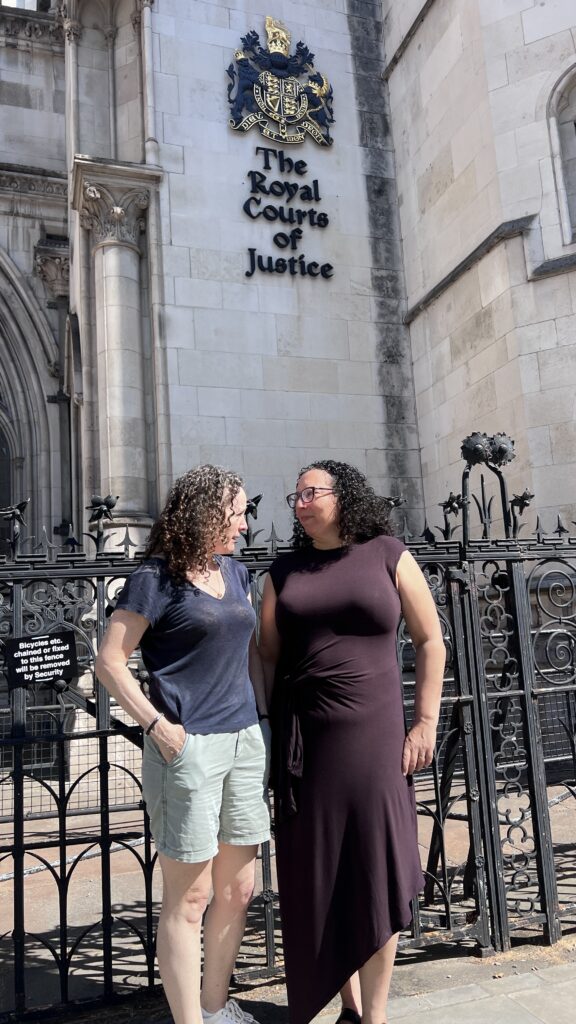
That argument will be developed more fully tomorrow, hopefully in a slightly cooler Courtroom 3 at the Royal Courts of Justice.
If you would like to read the CPS’ skeleton argument and the two witness statements suppled by Thomas Guest and his related exhibits (including the H sentencing remarks) please click on the links below:
My work on this website is entirely funded by donation. If you would like to make a one-off or regular monthly contribution and receive the Gender Blog newsletter and blog posts in your email inbox you can sign up here. Your email address will be stored securely and confidentially, never given to a third party and will only be used to inform you about things I think are interesting. If you have a story, please use the contact form. All messages go directly and securely to my email inbox and will be dealt with in the utmost confidence.


Leave a Reply