

This is part one of my report into Day 4 of Nurse Sandie Peggie’s employment tribunal claim against the Royal College of Nursing. The featured evidence in this report came from two nurses in England who got into difficulties within their NHS Trusts for the crimes of misgendering (Jennifer Melle in Surrey) or complaining about a man in their changing rooms (Bethany Hutchison and her six fellow nurses in Darlington).
Proceedings began with Jennifer Melle setting out her evidence in chief to Sandie Peggie’s barrister Naomi Cunningham.
On 22 May 2024 Melle had a distressing encounter with a patient where she worked at St Helier hospital in Carshalton, South London. The story is written into a letter which can be found in the Peggie v RCN trial bundle. This was sent to her by an unnamed RCN case officer who reported her account of the incident after a phone conference on 7 August 2024:
“You were working a night shift on the 22nd of May 2024. One of the patients was a prisoner who was being nursed in the side room. He had prison officers with him. This patient is identified on his notes as being a “he”. This patient wanted to discharge himself. You called the doctor to discuss this with her. During this telephone call the patient heard you’re referring to him as a “he”. This patient insisted that you refer to him as “her, she or miss.” You advised this patient that you would not do so because of your religious beliefs. You are a born-again Christian and an evangelist. He then became incensed and became racially abusive and called you a “n*gger” three times. You have attended an investigation meeting. You have been moved from your ward to the surgical admissions lounge“.
The patient in question was a convicted paedophile. Melle was on the urology ward (pertinent given the differences in male and female plumbing). Melle told the court today the patient was 6′ tall, had come from the male prison and was designated “male” in his notes. She appeared to know he was trans and clocked that he had a female name, but she “didn’t feel” that she could use female pronouns in front of the doctor, as the patient was male, she was a nurse and a Christian and she would be “deceiving myself” if she referred to the patient as a woman. “I had no intention of upsetting him”, she said “but I was discussing him away from his presence in a corridor and he overheard me.”
Melle was given a written warning, referred to the Nursing and Midwifery Council under fitness to practice concerns and was suspended in May 2025 when she went public with her story. With the help of the Christian Legal Centre, Melle took Epsom and St Helier Hospitals NHS Trust to Employment Tribunal and in April this year. The case was settled without a trial.
This Is Very Insane
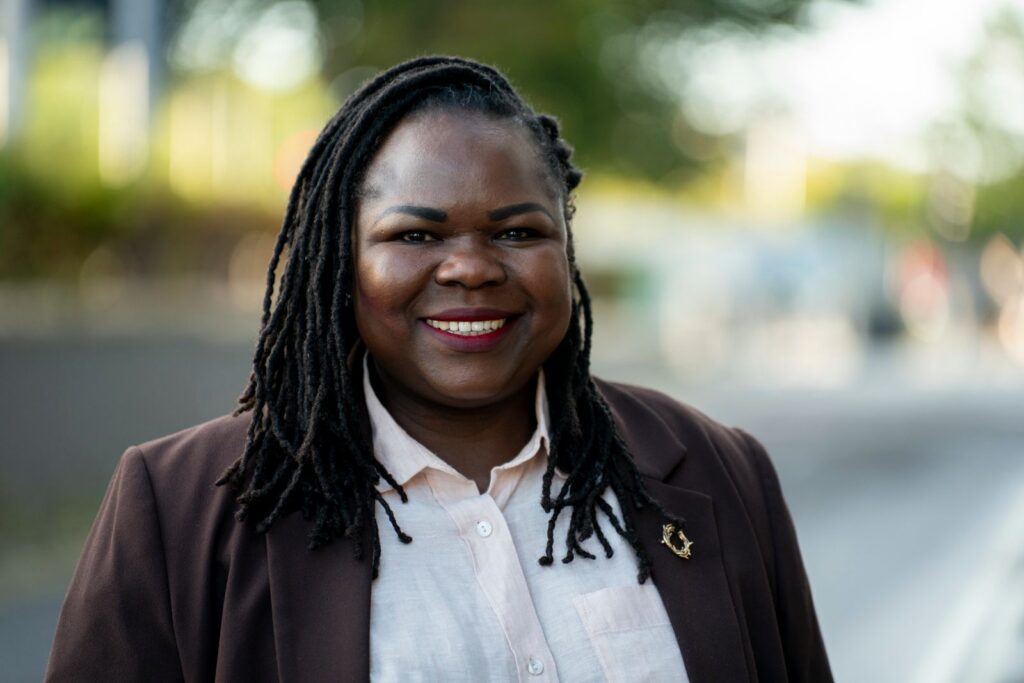
Today, Melle explained in emotional terms why she had ended up with the CLC funding her legal action, rather than her union. It seems that in her hour of need, the best advice that they could give her was not to submit a grievance, do some “reading” and write a “reflection” on her actions in the hope it would help her disciplinary outcome (by demonstrating a similar situation was unlikely to re-occur). Getting to this point took until August, by which stage Melle was in something of a state.
“The RCN were not responding to me”, she told the court. “I wanted to go to the office and get proper help from the RCN. I was very shaken and I had been moved to another department. I said this is urgent… and i was being ignored.”
The RCN’s advocate (Scots equivalent of a barrister), David Hay KC took Melle to various documents which seemed to demonstrate the RCN was supporting Melle with advice, but the long delay in getting her case addressed appeared to be the problem for Melle – she describes being bounced around between call centres and RCN advisors and officers, having to explain the story time and again and no one showing any interest in her main request, which was to come into the RCN offices in London and have a face-to-face conversation with someone who could help her.
“I was very traumatised at the time”, said Melle. Her theory was “they read my statement and they did not want to take this case on board. I believe that nobody wanted to volunteer to support me.”
This sent Melle into something of a spiral. She describes her mental health suffering, due to being on a “final written warning” and being “a single mother” under investigation by the NMC. Melle claimed the RCN were not “even thinking of my wellbeing. My children were scared of losing their mum. And they [RCN] are telling me to write a reflection when I need their help. They didn’t write to my Trust, they didn’t call management, they didn’t see the fact I had a final warning… this is very insane.”
Hay patiently took Melle to the emails she had written in response to the advice and contact she was getting from the RCN. They are polite, (upbeat, even) and don’t in any way suggest that she is unhappy with the service she was getting. Hay asked if Melle had such “deep seated concerns” why she didn’t share them with the RCN.
Melle said she was in a “dilemma”, it seems at the time she saw the RCN as her only hope and, reading between the lines, didn’t want to give them a reason to not assist her. Nonetheless, Hay’s point was made – if she didn’t give an indication she was unhappy, how could the RCN respond to her concerns?
There was another vignette in Melle’s evidence which involved the General Secretary and Chief Executive of the RCN, Professor Nicola Ranger. By October 2025, the Christian Legal Centre was backing Melle’s claim against her Trust. They sought and secured a meeting between Melle and Ranger and some flunkeys at RCN HQ. Melle wanted to know wanted to know “why the RCN did not give me the legal supported I needed at the core of losing my career, at a very diffcult situation, and why I had been referred to the NMC as a danger to the public”. Apparently Ranger et al refused to engage. “The answer they would say is “no comment” but that they were looking at the guidance and relying on the code of conduct.” According to Melle, five minutes into the meeting, Ranger had to take an urgent call and left, never to return. It wrapped up shortly after her departure.
“It was the most crucial time of my career being under investigation by the NMC”, said Melle. “I was very shaken, having sleepless nights and having panic attacks. I was scared of even going out on my own. For Nicola to walk out and leave me devastated… I was very, very sad.”
Atmosphere of Fear

Whilst David Hay spent some time cross-examining Jennifer Melle, he barely challenged anything in Bethany Hutchison’s evidence in chief. The Darlington Nurses case is well-documented. In 2024, several nurses, including Hutchison, objected to the presence of a trans-identifying male orderly called Rose Henderson using the female changing room at the Day Surgery Unit at Darlington Memorial Hospital.
The women were told they would have to change elsewhere and were given somewhere wholly inadequate to do so. Funded again by the Christian Legal Centre, seven of the nurses made a claim against the County Durham and Darlington NHS Foundation Trust. This case did go to tribunal and the nurses won. Hutchison told Cunningham about their efforts to get the RCN interested in helping. Whilst they were having to change in their inadequate facilities in 2024 they wrote to Professor Ranger, which led to a meeting with a Regional RCN Director, Sarah Dodsworth.
“We explained our situation” said Hutchison. “Women were having panic attacks pre- and post- work shift. We explained about a specific indinvidual who is a survivor of sexual assualt, and she was having particular issues with the individual who was changing in the changing room.”
(Henderson was alleged to have said “Are you not getting changed yet?” three times to one of the nurses (something Henderson flat denied), among other alleged and denied questionable behaviours.)
According to Hutchison, Dodsworth did appear to be highly sympathetic to their situation. She proposed a staff survey at the hospital. It asked RCN members “have you ever felt unsafe at work?” and “Does your employer provide appropriate facilities to protect personal safety and dignity at work?”
Unfortunately as Hutchison pointed out in court today – it didn’t ask how they felt about a man changing in the female changing rooms. The survey got six responses, and none mentioned anything to do with the matter in hand.

Cunningham asked if they discussed why more people had not come forward. Hutchison says she told Dodsworth that “there was an atmosphere of fear – people were fearful about activism. People were fearful of being seen as unkind. I explained it was the same reason the RCN won’t put a statement out [about single sex spaces], because people are fearful”
Hutchison also said Dodsworth had asked a few colleagues how they would feel about a “biological male” using female facilities. “From what I can recall she said the majority of the would not be happy using the facilities with a biological male.” To get the other perspective, Dodsworth had a chat with Rachel Ridley, a trans-identify male RCN stalwart, something Hutchison said she found “alarming given this is an issue which fundamentally impacts biological women.”
Cunningham wondered what Dodsworth wanted Ridley to tell him. “To see what he did in the changing room?” Hutchison guessed.
Dodsworth persevered. In March last year, on apparently discovering that the 1992 workplace regulations mandated single sex spaces, she wrote an official letter from the RCN to the Director of Workforce at the Durham and Darlington Trust. It read:
“I’ve recently been made aware of a provision in the Workplace (health, safety and welfare) Regulations 1992 requiring the provision of single sex changing facilities for men and women – the only exception being where the provision is of single lockable rooms (not cubicles). Given the ongoing legal dispute and internal investigation, I thought I would share the above. The regulations also appeared to have been overlooked by other organisations. The RCN expects the trust to comply with the statutory provisions and provide single sex changing rooms without delay. It would seem reasonable that the alternative changing room provision but some women are currently using, would be the obvious choice for gender neutral changing space. It is our understanding that the above provisions outweigh any local national guidance regarding the issue.”
On receipt of the letter, Hutchison gave it to the media. “We did this because it was the first glimmer of anybody throughout the whole ordeal who had shown us any glimmer of hope, or had listened to us, or wanted to help us. And it was a sign to the public that there was a trust in Darlington that wasn’t complying with the law.”
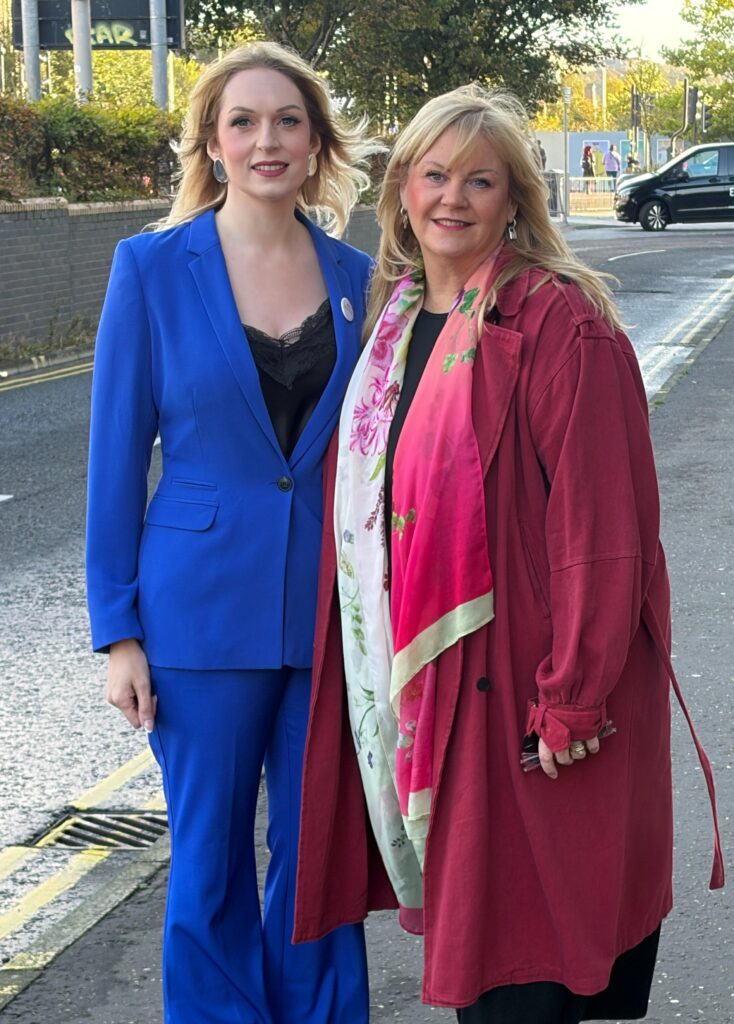
Dodsworth’s willingness to help suddenly cooled. The two women had a meeting which Hutchison described as “slightly unpleasant to begin with”. Hutchison described Dodsworth as “quite upset. Basically I got a telling off for sharing the letter with the media. From what Sarah said to me it sounded like she had been reprimanded within the RCN… She told me she RCN had thought she had shared [the letter] and that the comms department were furious, because they weren’t prepared for something like that”.
After the Supreme Court ruling in April 2025, Dodsworth allegedly told Hutchison that “the majority of people within the RCN were for the ruling and there was a small minority who weren’t and they had to be cautious about how they presented themselves.”
Cunningham asked Hutchison to clarify who had to be cautious. “Gender critical people”, replied the nurse.
“Why?” asked Cunningham.
“People were afraid of trans activists”, she replied.
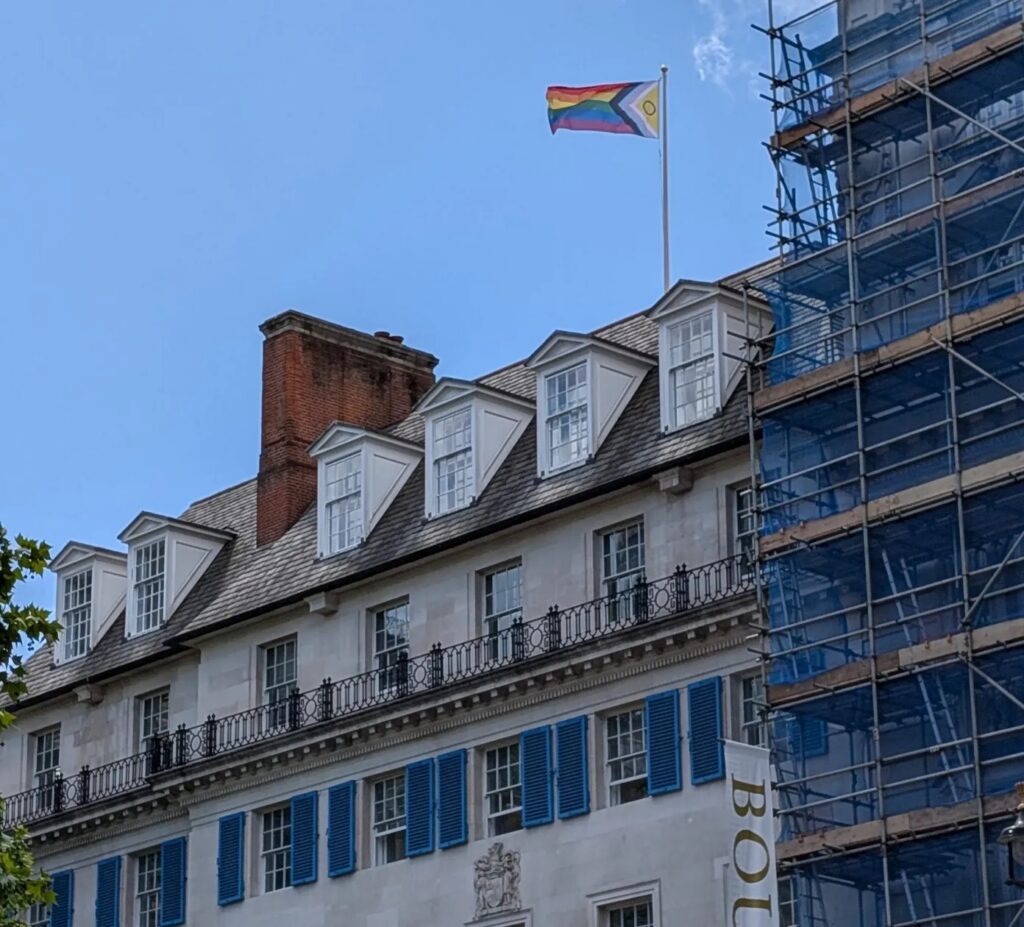
Just before the end of her evidence, Cunningham took Hutchison to a letter the nurse had sent in May this year to Professor Ranger about the RCN’s decision to fly the Progress Pride Flag above its HQ in London.
Hutchison wrote:
“Many frontline nurses, whose dedication sustains the profession, are increasingly concerned about what this public display represents. In particular, I must ask how hard-working nurses such as Jennifer Melle with whom you met… are expected to interpret this action. Miss Melle has received little meaningful support from the RCN throughout her well-publicised ordeal, and the decision to permanently fly this flag risks being perceived by her and many others as a signal of disregard for her position and experiences.
More broadly, the flag has to come to be associated, right or wrongly, with a set of political positions that many nurses do not share. These include those who hold Christian beliefs or gender critical views. For such members, that display of the flag from the RCN HQ may appear not as a neutral act of inclusivity, but as an endorsement of a particular ideological stance that stands in direct opposition to their deeply health convictions.
The concern is not theoretical. As well as Jennifer Melle and despite the landmark Employment Tribunal victory in January, four Darlington nurses continue to face investigation, via the Nursing and Midwifery council, after raising legitimate concerns about their treatment in the workplace.
They perceive their situation as shaped by precisely the ideological environment that the flag is seen to represent. Alongside the RCN’s absence of support for these nurses, the public alignment, real or perceived, with that ideology risks undermining confidence among members that they will receive fair and a partial support.
Inclusivity, if it is to carry real meaning, must extend all members. It cannot be selectively applied or come the expensive of those who hold law for protective beliefs. The current situation risks conveying an image not of abroad and representative professional body, but of an organisation that’s been captured by a narrow contested political perspective.
In addition to the above, I would be grateful if you could clarify whether the RCN has obtained or necessary permissions, including any relevant planning consent, for the display of this flag from its headquarters building.
In light of these concerns, I urge the RCN to reflect carefully on how its actions are perceived by the full breath of its membership. I further call upon the organisation to demonstrate genuine inclusivity by ensuring that female nurses, who form the majority of your members, and those with gender critical or religious beliefs are supported with the same commitment and seriousness of afforded to all others.
I would welcome your response to these points and an outline of the steps. The RCN intends to take to restore confidence among members. You’re currently continue to be marginalised under your leadership.“
“Did you get a response?” asked Cunningham
“No”, replied Hutchison.
Cunningham asked if she or any of her colleagues were being represented by the Royal College of Nursing in their ongoing NMC investigations, which once more include fitness to practice allegations over “misgendering”, submitted by members of the public.
“No”, said Hutchison. “I think they have abandoned their members, particularly their female members.”
Peggie v RCN preview interview
Peggie v RCN Day 1: Getting Taken Seriously
Peggie v RCN Day 2: Trans-Organisational Madness
Peggie v RCN Day 3: unProvan
Day 1 Live Tweets Collated
Day 2 Live Tweets Collated
Day 3 Live Tweets Collated
Day 4 Live Tweets Collated
Fair Care For Trans Patients 2nd Edition – RCN
Thanks to everyone who has contributed to help fund my reporting of this court case. I am live-tweeting each day in court and publishing reports after each day’s proceedings. Subscribers get a special subscriber-only newsletter after each day’s hearing (once I’ve got a report up on the website).
If you would like to receive the GenderBlog newsletter and blog posts in your email inbox for a small monthly or one-off donation you can sign up here. Your email address will be stored securely and confidentially, never given to a third party and will only be used to inform you about things I think are interesting. If you have a story, please use the contact form. All messages go directly and securely to my email inbox and will be dealt with in the utmost confidence.
Leave a Reply