
“We apologise for the failures in our reporting.”
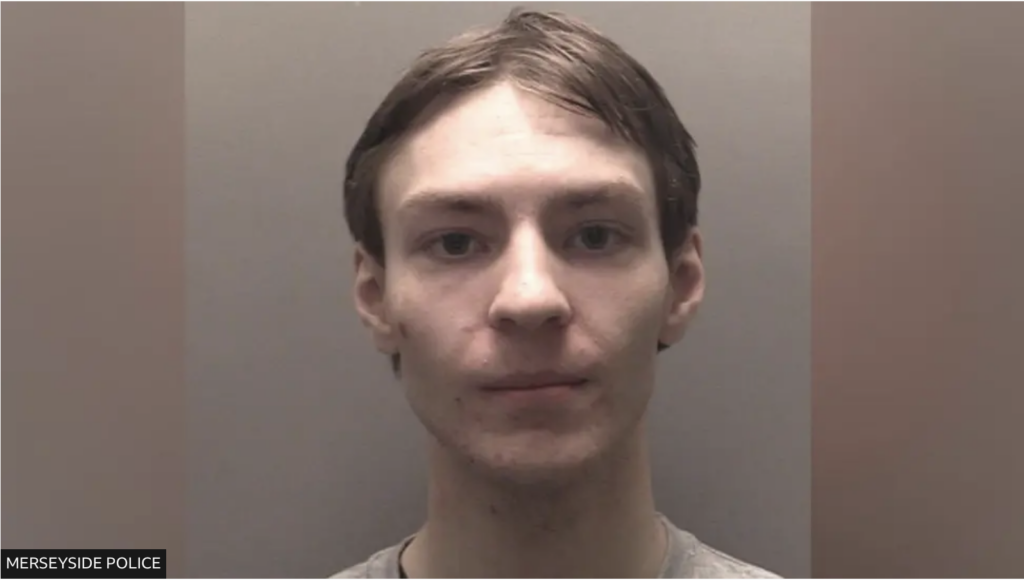
On 1 June a man called Darren Rigby was sentenced to two years and four months in prison for sending threats to three all-girls schools on Merseyside.
In emails sent across the space of a week in January this year, Rigby told one school he was already “inside… hiding with a sword and crossbow”, claiming his intention was “to injure and kill as many girls as I can”. He said anyone who “tries to stop me will also be shot”.
In another email he wrote: “I am on my way to the school with a revolver and a machete and I’m going to shoot and stab all of your girls. You terfs are going to learn to stop mocking, deadnaming and misgendering transwomen like me. If anyone attempts to stop me, they will be shot and I will release a blood agent into the school which will poison you.”
In an email to the third school, Rigby said he was “going to kill every girl and woman staff member I come across”.
His threats were hoaxes, but they had to be taken seriously. Security protocols were implemented. Teachers reported distress amongst pupils and parents, some of whom were asked to come and collect their children.
After a police investigation, Rigby pleaded guilty to three counts of sending communications threatening death or serious harm. On the day of his sentencing at Liverpool Crown Court, Merseyside police sent out a press release neatly omitting Rigby’s stated trans identity, his “misgendering” animus and the fact his proposed victims were all female. Although the BBC apparently had more than one reporter in court, its online write-up dutifully followed the police’s lead.
Lopez is Seen
We might have been none the wiser, had journalist Jamie Lopez not been at the same sentencing hearing. Lopez reported the content of Rigby’s emails in his 3 June article for the Southport Lead, titled “Hoax attacker threatened violent assault on school attended by child survivors of Southport murders“.
The disparity between the Southport Lead’s report and the BBC effort was immediately picked up by SEEN in Journalism, who noted Rigby had committed a “crime of extreme misogyny in the cause of ‘fighting trans oppression’ but any mention of ‘trans’ has been erased… In addition the BBC report hides the fact that it was a crime against women and girls.”
SEEN’s highlighting of the BBC’s omissions crossed the Atlantic. Rigby’s Merseyside Police mugshot was published by Reduxx, the US news site, in a piece called “UK: Trans Activist Jailed for Sending Death Threats to Schools for Women and Girls“. SEEN’s thread also motivated a number of people in the UK to complain directly to the BBC. One wrote:
“It is an inconvenient truth that there’s a sector of trans rights activism that hates and targets woman and girls for harassment and aggression. I believe the BBC lies by omission about the actions of trans-identifying men because it has taken a side in the debate about what rights these men claim, and does not want these men to look ‘bad’. If I’m wrong, and you’re not biased, and it’s just sloppy journalism, please amend the article to tell the whole story.”
Another wrote:
“The link between terrorism and violence against women and girls is well known now, and the focus of this story should surely have been the man’s targeting of girls, and the police’s decision to erase that aspect from their report. Women and girls will continue to suffer if police and the media make such effort to erase the sex-based choice of victim in cases of male violence and threats like this one. It is also a growing scandal that both the police and the BBC, as captured institutions, conceal so many instances of trans-identified men’s criminal activities.”
She finished with an appeal: “There needs to be an enquiry into the influence of an extremist fringe belief system on the BBC’s news output and lack of journalistic rigour in this area, and the disproportionate involvement of representatives of that belief system in editorial decisions.”
Thanks to the Southport Lead and SEEN in Journalism, the BBC’s journalists were busted.
JK Rowling Gets Involved
On 17 June, a lengthy apologia was quietly added to an “updated” BBC report on Rigby’s crimes.
The BBC told its readers: “This article was originally published without including key details about this case, due to miscommunication between BBC reporters in court and the writers. We have updated the article to explain that these threats were directed at three all-girls’ schools, related to the “misgendering” of trans girls and that Darren Rigby identified in one threat as a trans woman. We have also included further details from these communications which referred to TERFs, targeting female pupils and staff and included threats to use bladed weapons, a crossbow, a revolver, and poison.”
It concluded: “We apologise for the failures in our reporting.”
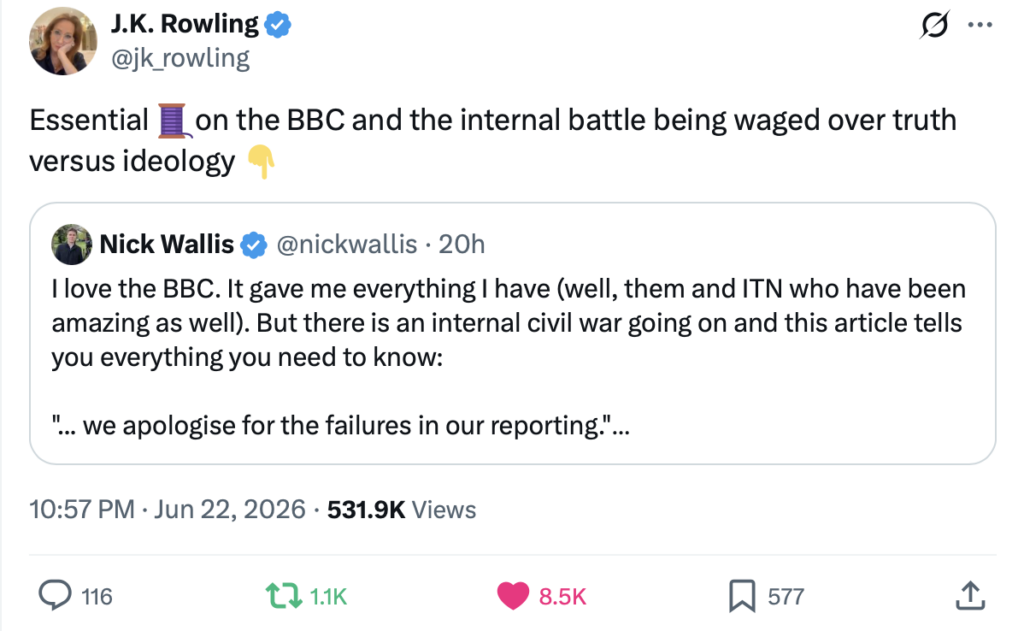
I saw the apology for the first time yesterday evening and tweeted it out, adding my own commentary as I went. This was amplified by a number of people, including JK Rowling, who called it “An essential thread on the BBC and the internal battle being waged over truth versus ideology”.
Thank you, Jo.
The story might now be out there, but the explanation provided by the BBC doesn’t add up. The apology said the “failures” occurred “due to miscommunication between BBC reporters in court and the writers”. So there was more than one BBC reporter in court? What had they been instructed to do? What did they do?
Bluntly, Mr Burke
Two of the individual complainants to the BBC kindly shared their correspondence with me. Both received an email from Tim Burke, the Head of Complaints “for BBC Local across England”. Burke told his correspondents that by the mere act of “writing to you, you might appreciate the gravity with which I take your complaint”.
Burke offered a little more than the published explanation for the BBC’s decision to leave out newsworthy details about Rigby’s crimes. “The omission of this information from the original version was a reporting failure”, he wrote. “It arose because relevant material heard in court was not incorporated into the first published version of the story, which was written from a police press release and a court check… Having asked the team for a full explanation I do not believe information was deliberately withheld. Without going into the full detail there were a series of communication failures which should never have happened, but which I believe were made in good faith.”
So now we know BBC online got their info from a distorted and misleading police press release, but we still don’t know what the “BBC reporters” (plural) were doing in court, nor do we know where the BBC got its “updated” information from. An agency/external news source? The Southport Lead? A BBC reporter’s notebook which had been lying around for two weeks?
The mystery deepens when we consider the bulletins running on Radio Merseyside on the afternoon of 1 June, which, whilst ignoring the trans/misgendering elements of the story, quoted Rigby as saying “I’m going to kill and injure as many girls as I can” – a phrase which did not appear in the police press release, and was only reported by the Southport Lead two days later. This suggests that at least one of the BBC reporters inside court was filing for broadcast or there was some, as yet, unidentified agency copy floating about somewhere. I have not yet seen how North West Tonight‘s evening bulletin on 1 June dealt with the story as it’s no longer on iPlayer.
Back to Burke. Last week he told his correspondents: “Frankly, and bluntly, you make many valid points in the issues you raise. The original article fell materially short because it omitted important details concerning the grievous nature of the threats, the fact the schools were all girls’ schools, Rigby’s references to the alleged mistreatment and misgendering, in his view, of trans women, and the considerable impact the threats had on pupils, parents and staff. Those details were relevant to understanding the case and should have been included in the original report… we accept that the omissions were misleading by their absence. We are very sorry for that.”
Burke also said there had been an “unacceptable delay” in changing the report and that the BBC “will be carrying out a further review into how those failures happened.”
(UPDATE: This evening the BBC press office has told me that on 1 June they had one reporter in court in the morning, one in the afternoon (hence the plural “BBC reporters” in the 17 June update) and it was from their notes that the changes to the article were made three weeks later. Unfortunately they won’t give any more details on the “internal processes” which caused the alleged balls-up, but assured me the matter was being “taken very seriously”. They stressed the failure was a result of “genuine, unintentional mistakes” and made themselves hostage to fortune by telling me “we will be taking action to ensure these mistakes are not repeated.”)
It’s In The Culture
Both complainants who contacted me noted the BBC’s “corrected and expanded” (in Burke’s words) Rigby report has not yet been tagged as a “Trans” story. They consider this to be further evidence the BBC only put stories in its trans category if they are good news about trans people, rather than unpalatable ones.
Nonetheless, without evidence of a positive decision to elide crucial details from the Rigby story, we may have to accept the BBC’s incomplete explanation of what went wrong.
Unfortunately the BBC has form in lying to its audience on trans issues, or making “omissions… misleading by their absence”. That is an organisation-wide cultural problem. If the concerns of women or the dangers of trans ideology were considered sufficiently important within the BBC, it would be investing resources in making damn sure it gets their stories right first time. Time and again the BBC has failed to report the truth, preferring instead to report trans activists’ idea of the truth, because it can’t or won’t confront the issue.
This sits within a wider cultural willingness to gloss over the misogyny which drives a lot of trans-identifying men along with a general lack of interest in female safety. As Jo Bartosch wrote, Rigby “threatened schoolgirls in the language of trans activists, with the same complaints about misgendering and exclusion that still pepper the policies of many British institutions. Is it any surprise that, from the BBC to Merseyside Police, there was such reluctance to join the dots? To do so would have meant confronting the uncomfortable possibility that an ideology they regard as inclusive had supplied a misogynist with both his grievance and his justification.”
Reading about the experiences of Cath Leng or Rob Burley – two former long-term BBC staffers who are now free to talk – it is almost unarguable the BBC has gone deep into a phase of incredibly damaging institutional capture over gender ideology. To paraphrase Sall Grover – if an organisation is prepared to lie (or mislead its audience) about the reality of something as fundamental as sex, why should you trust it to tell the truth about anything else? No institution is immune to reality. Those which seek to deny it will eventually crumble.
There are hopeful signs. The very fact the BBC was prepared to offer an almost unreserved apology about its reporting of the Rigby case suggests that it understands this is a hotly-contested matter of significant cultural importance. Indeed, a BBC journalist contacted me today to assure me “things are definitely changing. Pro gender/trans stories come under scrutiny now. They have to be run past editors. Things are really improving. The tide is turning.”
Let’s hope so. The BBC still leads the national conversation. It has a responsibility to get things right. With Rigby, it got it badly wrong.
My work on this website is entirely funded by donation. If you would like to make a one-off or regular monthly contribution and receive the Gender Blog newsletter and blog posts in your email inbox you can sign up here. Your email address will be stored securely and confidentially, never given to a third party and will only be used to inform you about things I think are interesting. If you have a story, please use the contact form. All messages go directly and securely to my email inbox and will be dealt with in the utmost confidence.


Leave a Reply