
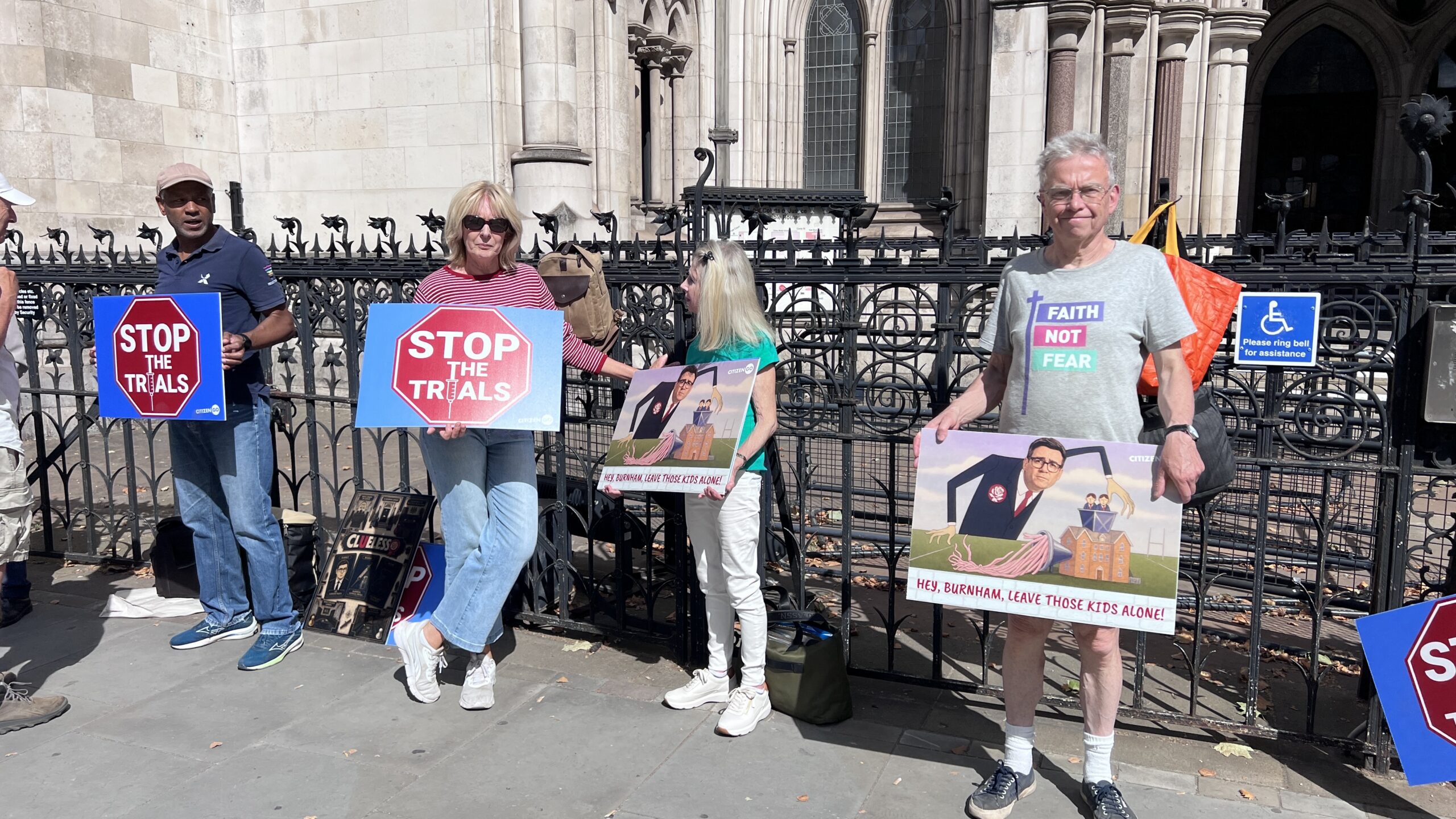
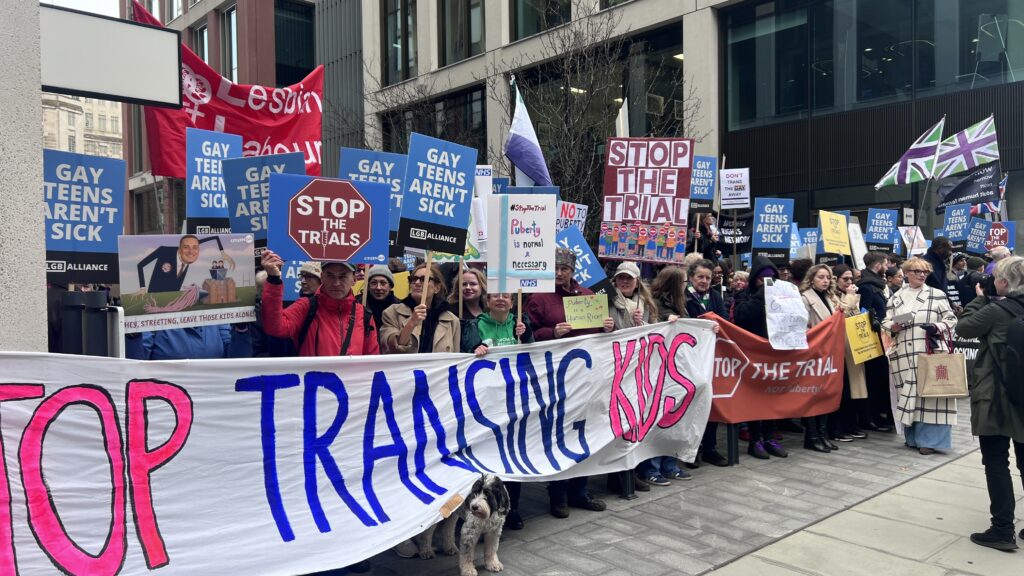
A decision on whether a judicial review into the government’s Pathways puberty blocker trial can go ahead will be handed down at the High Court in London tomorrow at 2pm. The judicial review applicants are seeking permission to have the trial stopped, claiming the decisions which led to its approval were made unlawfully and the trial itself is unlawful.
The judgment follows a two day hearing at the High Court earlier this week. The puberty blocker trial, if it goes ahead, will study the effects of puberty-suppressing hormones on 226 pre-pubescent children. Half will be given a six monthly dose for two years (over a three and a half year rolling recruitment programme) and half will get a six monthly dose over one year. The purpose of the trial is to see if puberty blockers really a) are reversible or harmful b) give gender dysphoric children time to think c) assuage or contribute to their distress d) put them on an inevitable pathway to cross-sex hormones, or as the NHS prefers to call them nowadays – Masculinising and Feminising hormones (MAF).
Consequences
The puberty blocker trial was Dr Hilary Cass’s idea. In 2022, whilst working on her final review, Cass sent a letter to John Stewart, the National Director Specialised Commissioning at NHS England saying:
“To date, there has been very limited research on the short-, medium- or longer-term impact of puberty-blockers on neurocognitive development. In light of these critically important unanswered questions, I would suggest that consideration is given to the rapid establishment of the necessary research infrastructure to prospectively enrol young people being considered for hormone treatment into a formal research programme with adequate follow up into adulthood, with a more immediate focus on the questions regarding puberty blockers.”
She also said: “brain maturation may be temporarily or permanently disrupted by puberty blockers, which could have significant impact on the ability to make complex risk-laden decisions, as well as possible longer-term neuropsychological consequences.”
That is playing with fire. The NHS duly picked up the ball and four years later there is an approved trial ready to go, with 17 of the eventual 226 children already identified as potential candidates.
No idea
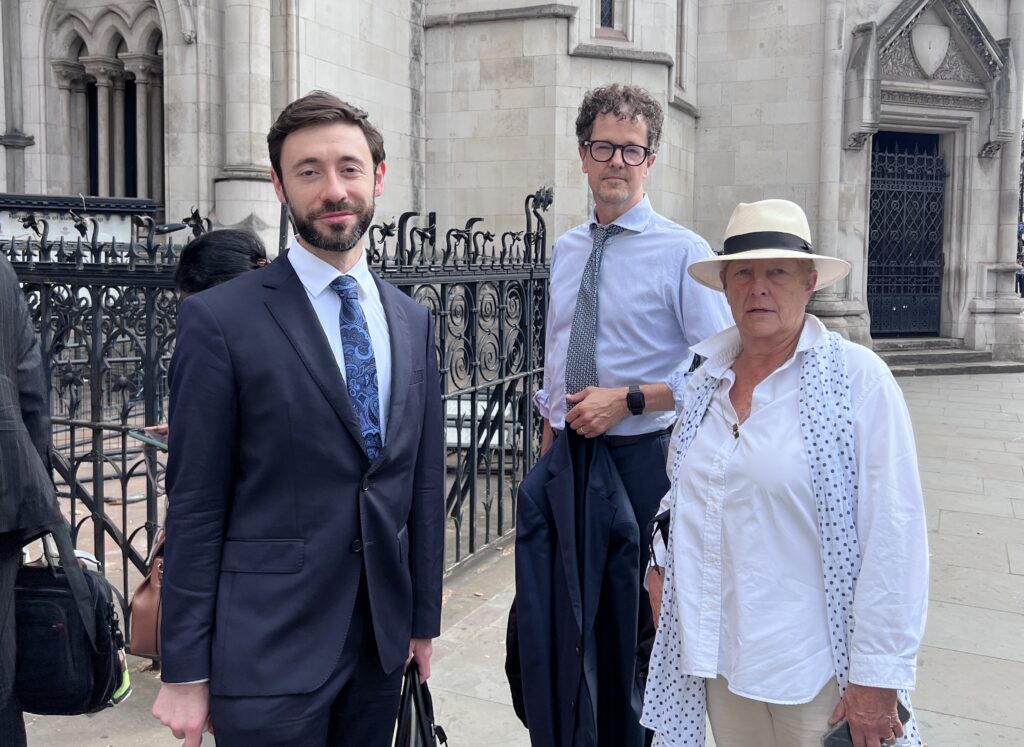
The idea of pumping our children with powerful off-label drugs in order to see what happens does not sit well with a number of people. The Bayswater Group (parents of transitioners), James Esses (psychotherapist) and Keira Bell (detransitioner) are seeking to stop it on the grounds that decisions made whilst putting together and approving the trial were unlawful. One of the key arguments made at length on Monday by Angus McCullough KC was that a clinical trial involving children had to be of “direct benefit” to the participants, and yet the Defendants themselves could not say the trial reached that bar because the evidence was not there. He also quoted the Pathways recruitment leaflet, which says “We do not know whether the treatment may help you”.
The Defendants in this application are the Department of Health and Social Care (DHSC) and the Health Research Authority (HRA) with King’s College London (KCL) and South London And Maudsley Nhs Foundation Trust (SLAM) – who will operate the trial – joining as Interested Parties.
The Defendants do not think the Claimants have good grounds to bring the judicial review, and on Monday and Tuesday they were given the opportunity to explain why in open court. You can read my real time tweets from Day 1 and Day 2 here.
In essence the government and the HRA say the trial proposals have been through vast numbers of expert processes and bodies, starting with NHS England, moving to the Medicines and Healthcare products Regulatory Agency (MRHA), who met with KCL, who put a protocol together which went back to the MHRA’s Clinical Investigation and Trials (CIT) team, consisting of the Head of Clinical Trials, the Head of Pharmaceutical Assessment, and the Head of Medical Assessment, supported by a team of four Assessors, under the oversight of the MHRA’s Deputy Director. In addition, the Interim Executive Director of Innovation and Compliance was involved, together with three assessors; and four members of the Safety and Surveillance Team (led by the Deputy Director of Risk Evaluation).
It then went to the to the National Institute for Health and Care Research (NIHR) for approval and funding before making its way to the HRA who looked at it again, gave it to an independent Research Ethics Committee who also evaluated it twice, the second time after external concerns were raised by Professor David Curtis from the UCL Genetics Institute and the Clinical Advisory Network on Sex and Gender (CAN-SG) .
Over the course of this rather lengthy discussion, we found out that those proposing the trial considered having a cohort of children on placebo, but that it would soon become obvious who was on the placebos as they would go through puberty.
This clinical trial therefore is not a gold standard randomized, double-blind, placebo-controlled trial. It will not produce falsifiable results. It is, instead described as a “pragmatic” trial. The judge wondered if a pragmatic trial was a formal subspecies of a full clinical trial. He was told it wasn’t. It was just a “term of art”.
In a sweltering un-airconditioned court, the DHSC barrister Julian Milford KC was at pains to point out the further protections to the children involved, at selection for the trial. This will involve blood tests, x-rays, scans, a tanner stage investigation (ie examining what stage of puberty the child might be at) their gender doctor’s assessment of suitability, the child’s informed consent, at least one parent’s informed consent and a subsequent review of the child’s suitability by an independent National MultiDisciplinary Team (NMDT) who will provide final scrutiny (including looking at whether there is disagreement between parents) before allowing a child to participate.
So Many Experts
Milford was adamant there is no question that the trial has been carefully and lawfully approved by experts in their field. In fact, so many experts in the field were consulted or worked on the trial protocol the government wasn’t able to find a single independent witness to provide expert evidence to back up their position.
The Claimants, said Milford, just disagree with the experts. That is not enough to force a judicial review.
On top of the intense clinical scrutiny which brought the trial into being, the judge, Mr Justice Chamberlain, was asked to note that the delay caused by the judicial review application was causing genuine harm. Fiona Scolding KC for SLAM told him that candidates for the trial are children so “distressed about the development of secondary sexual characteristics” they were “not leaving the house… not socialising” and “not going to school, because of the scale of their gender distress”. Scolding repeated the words of Professor Emily Simonoff, Chief Investigator of the Pathways trial, who said of the children – “if they do not get these drugs it is the end of the road for them”. They will hit puberty.
Going Psycho-Social
The Claimants make two arguments against the immediate implementation of the puberty blocker trial. They believe an animal study should be considered and that the government should wait until the Cass-recommended “data linkage” study into the 2,000 people given puberty blockers by the Tavistock is complete. Jenni Richards KC from the HRA pooh-poohed the value of both, noting Cass herself had said that puberty blockers had been used for years on humans and therefore the need for animal trials was “long since passed”. The judge seemed to agree, given that part of the reason for the proposed trial was to study the psycho-social effect of the drugs.
As for the data linkage study, the argument here seemed to be that a) there was so much water under the bridge and so much had happened since the people had been given puberty blockers, it would be impossible to understand what effect they had and b) the PBs were administered “under treatment pathways criticised by Cass” – ie the Tavistock.
Andrew Sharland KC, representing KCL, said “what is coming is so different to the Tavistock in so many ways” and that everything was going to be just fine. Who was it who actually had the best interests of the children involved in this trial at heart – the experts? Or the Claimants “a group that doesn’t accept gender incongruence as a real thing?” Sharland made the observation that the judicial review application was “unique” in that the Claimants were seeking to have the trial halted to protect the children involved, but the children themselves “don’t want to be protected”. He said there was no evidence that any children of the Bayswater group of parents would be eligible for the trial and attitude of the Claimants was “we know better than you, your parents and the doctors and those there to protect you”.
Sharland emphasised the expertise of the people who designed the trial and the measures put it place to monitor and protect the children on it. He said “the purpose of this trial and all its safeguards is to stop situations happening like Keira Bell. It’s not the Claimants who are able to determine what is in the interest of public health”.
Having heard all the points raised by the Defendants, Angus McCullough was allowed the final hour of the day to respond. He chose to spend much of it drilling down into the “direct benefit” argument. Unlike clinical trials on adults, which may be conducted for the benefit of future wider society, clinical trials on children must be of “some direct benefit for the group” of children taking the drugs. This, said McCullough, was a test, not a consideration
Balancing Harms
Working out what “group” meant seemed to get McCullough and the judge to a point where they agreed that it was more than 25% but could be less than 50% to allow for the use of placebos in other trials. The point was it didn’t have to be all the group. The judge pointed out that “expected benefit” could work within the formulation of “some direct benefit”, but McCullough didn’t like the idea of a “reasonable prospect” being a benefit – it had to be concrete. He return to his point that there had to be some benefit – “not “hopefully, not plausibly”. There has to be an “expectation”. McCullough again said the Defendants resiled from that and Professor Simonoff could only say the children being experimented on “will include” those who “may well” benefit. That, he said, was not good enough. The rule for children “is a key safeguard. And that’s why it’s there. And that’s why, in our submission [the trial] cannot meet the threshold, no matter the scientific interest nor the information it might yield.”

McCullough pointed out the reason Professor Simonoff and the Defendants had no reasonable expectation that the trial would benefit the triallists is because they didn’t have any data to call it one way or another. They were stabbing in the dark. This, again, he said, was against the rules for clinical trials on humans. There had to be some to some data that the human trial was attempting to validate. McCullough said this was another key safeguard – “the protection it provides – you’re not acting in a vacuum. You have to have underlying data”. Even if a data linkage study or an animal trial was impossible (“which we don’t accept”) you “still need data from somewhere”.
Earlier in the day, Sharland had taken a pop at the credibility of Professor Jovanna Dahlgren, an endocrinologist hired by the Claimants who is the only clinician to prepare an independent expert report for the court. McCulloch started questioning the credibility of Professor Indraneel Banerjee, who had prepared a witness statement relied on by the Defendants. The judge stopped him. He wanted to discuss a “more principled question about the function of the court in granting an injunction stopping people from getting a treatment they want.”
McCullough replied “the function of a court is balancing harms” and whilst the Claimants case was “unprecedented” in what they were trying to achieve it was an “issue of principle” which the court should give them permission to attempt to resolve.
The hearing concluded with the judge telling the (by that stage roasting) courtroom that there were three potential outcomes:
- Judicial Review allowed, and Interim Relief (the temporary stopping of the trial) approved.
- Judicial Review allowed, but preparations for the trial can begin (the first injection in the first child will not happen before November even if preparations for the trial are allowed to go ahead tomorrow).
- Neither the Judicial Review nor Interim Relief is granted.
All those outcomes could of course be appealed. The judge told the court he had already put the Court of Appeal on notice that a very urgent case might be coming their way.
I will be in court tomorrow for the handing down of the decision. Please consider supporting public interest journalism by making a small monthly contribution which will allow me to keep attending these court hearings and various other dispatches from the gender world’s parallel universe. I am deeply grateful to everyone who has contributed so far. It allowed me to spend two days at the hearing this week.
My work on this website is entirely funded by donation. If you would like to make a one-off or regular monthly contribution and receive the Gender Blog newsletter and blog posts in your email inbox you can sign up here. Your email address will be stored securely and confidentially, never given to a third party and will only be used to inform you about things I think are interesting. If you have a story, please use the contact form. All messages go directly and securely to my email inbox and will be dealt with in the utmost confidence.
Leave a Reply