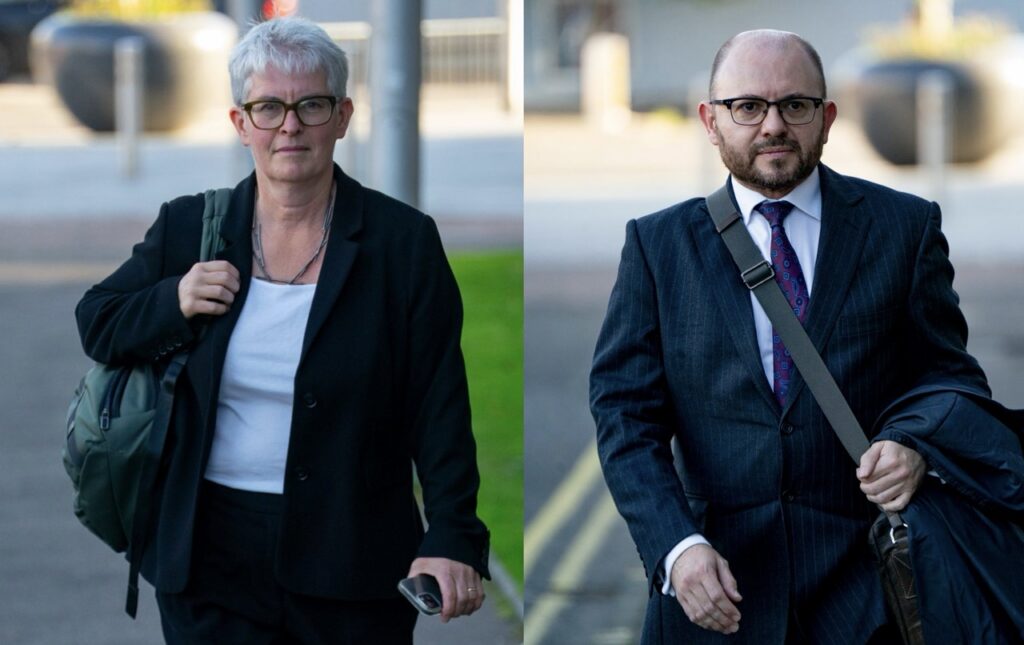
Today was the final day of the Peggie v RCN employmeny tribunal in which Nurse Sandie Peggie is making three claims against her union, the Royal College of Nursing. Peggie believes:
- her union rep Stuart Fraser did not advise her properly nor act according to his duties in Jan 2024
- her union failed to give her the legal support they could and should have done in Jan 2025
- a senior union rep – Gillian Tait – failed to represent Peggie properly to her employer and ignored an important request in Sep 2025
Peggie says the reason for the above is because of her gender critical views. Therefore her union – which she submits is in the grip of gender ideology – discriminated against her.
After six days of witness evidence, the legal representatives for both parties were given the opportunity to make closing submissions to the judge. Naomi Cunningham, Sandie Peggie’s barrister spoke first. After lunch David Hay KC, the RCN’s advocate, made his case, and then Cunningham was able to answer Hay’s submissions.
Holding Court
Naomi Cunningham started with a peroration about the reaction to the Supreme Court ruling – calling it “extraordinary” that what she called “a model of clarity and good writing” about the importance of mapping sex categories to biology was met with a “tsunami of obfuscation and denial and in many cases out right defiance”. Cunningham suggested there was a very deliberate campaign by activists, lawyers and HR professionals to label the outcome “all terribly confusing”.
Cunningham told the court “legal historians looking back on this period will describe it as a quite extraordinary moment for the attitude to the rule of law” and society’s apparent unwillingness “to comply with what the law clearly is”.

Cunningham then brought up the “most telling” piece of evidence in the whole trial. This was Patricia Marquis’s response to 2017 RCN guidance which instructed nurses to put patients into wards based on what sex they said they were and how they presented. Marquis said the guidance had been put in place because everyone else across the health care sector was doing the same thing. “She was trying to defend or resist the contention” said Cunningham “that the respondent [the RCN] had adopted gender ideology as its institutional position, and her answer to that was that everybody had adopted gender ideology, in essence, and that of course is no answer.”
Cunningham developed her point: “The respondent’s witnesses were wholly unable to tell you anything about the process in which NHS Fife had started to let Dr Upton use the women’s changing room. They showed a puzzling lack of concern at the spectacle of an employer introducing such a radical and dangerous change which affected all of its staff.” Cunningham said this was “an astonishingly high-handed thing to have done. It is something that ought to have enraged any trade union worth its salt, but it doesn’t seem to have… generated the outrage in hindsight which you might think it ought to have generated.”
Then Cunningham approached each of Peggie’s claims against the RCN, dealing first with the RCN’s alleged adoption of gender ideology or gender identity belief (GI):
“The motives of the decision-makers do not matter”, she said. “It is not suggested that any of those who took relevant decisions did so with a conscious determination to frustrate or punish the claimant because of her protected belief. They acted as they did because the gender ideology in which their employer had been steeped, and had been enthusiastically promoting for many years, made it impossible for them to act vigorously, and especially publicly, in the best interests of a member whose manifestation of her protected belief was in direct opposition to that ideology.”

Cunningham drew a contrast between GI and being gender critical (GC) or a sex realist (SR):
“The whole subject of GC belief, the expressions of GC and SR, is a curiosity. No one had ever heard of GC belief before a few years ago. That’s not because it’s only a recent notion. That’s not because human beings have only recently noticed that mammals come in two sexes and whether they are male or female is something that cannot change and has significant consequences. That is true not merely of humans but other mammals too, all other mammls. Only female mammals can bear young and only male mammals can beget young. Until a very few years ago no one would have thought that knowing that and recognising it has practical and social consequences was something you had to call a belief system… any more than anyone had to believe they were a Darwinist, a round earther or in the nitrogen cycle. We all grew up knowing that sex is real and mattered and you couldn’t literally change sex. Being gender critical has only come into existence as a result of being forged by the heat and pressure of a new new ideology which has taken hold of our institutions.”
And, said Cunningham, the court would have seen “it has taken hold with extraordinary speed, partly because its not by argument or evidence, but by bullying, threats to livelihood and threats of violence… bound up in GI is the belief that the reality and materiality of biological sex is counterfactual and bigoted. Not merely opposed in an intellectual sense to GC and SR – it is profoundly hostile to it.”
Cunningham reminded everyone why we were in Dundee. Sandie Peggie’s first tribunal was scheduled to sit in Edinburgh, but a decision was taken “at short notice” to hold it in the apparently more secure Dundee Employment Tribunal building. This was because trans activists had made “a threat… to make a citizen’s arrest of both me and the judge… in my case for misgendering Dr Upton, and in the judge’s case of not preventing me from doing so. So the violence and bullying nature of GI is something that has come home to the tribunal in this very case. And this new ideology has been promoted with bullying, threats of violence, cancelling smearing, no-platforming – that’s what gave rise to GC beliefs.”

Cunningham then cantered through the evidence we have now seen multiple times in the trial – the Progress Pride merch, the Progress Pride flag flying above RCN HQ since May, the “moral paralysis” displayed by Patricia Marquis, initially unable to agree that anyone affirming a eunuch identity in a child was guilty of “shocking abuse”, not care. Cunningham touched on the chaos of the online sessions to discuss the Supreme Court ruling, the lack of training for officers around Forstater, the resolute failure to publicly say or do anything which supported, marked or celebrated gender critical women and their achievements.
Cunningham addressed Stuart Fraser’s failure to correctly recognise that Peggie had suffered a detriment by being punished (suspended) for objecting to a man in the female changing room, Cunningham dismissed the RCN contention that it was Peggie’s job to spell out her gender critical views and know they were protected characteristics.
“Stuart Fraser agreed that he would have been likely to spot the issue and ask for prompt legal advice if a member had been subjected to trumped up charges in retaliation for raising concerns about lax infection control protocols. So that, in my submission cuts off the knees what Mr Hay may have been foreshadowing in his suggestion to the claimant that she didn’t mention her gender critical views. There’s no earthly reason why she should have. It wasn’t her job. Her role was analogous to a patient with symptoms. It’s a doctor’s job to diagnose. If a trade union member goes to her union officer…and tells a story [about] a man being present in the women’s changing room…it is the officers job to stick on the labels. And if it raises issues about discrimination… it was incumbent on him to refer promptly and not wait to hear the other side of the story or to see how the disciplinary developed.”
Cunningham thought Fraser’s description of Upton as “she” in his notes told us everything we needed to know:
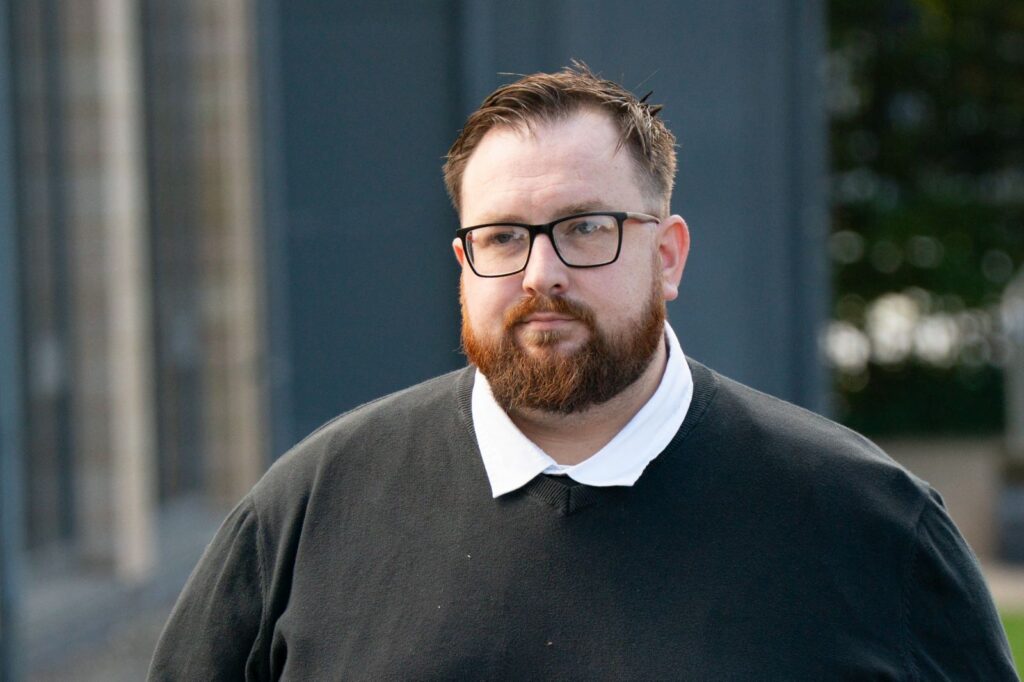
“That little substitution simply would not be made by an officer of a union that had not taken the position that trans women are women. You only use female pronouns for men who say they are women as an acknowledgment that they are women. If your member is complaining he shouldn’t be there because he is a man…that her union officer would rewrite her language to make it acceptable to GI that “she” was…rather than a sex realist complaint that he was somewhere he shouldn’t be.”
Of Norman Provan’s refusal to give Sandie Peggie legal support, Cunningham said Provan “swung in his evidence between insisting… that he had no discretion to grant it, because to do so would “go beyond our legal offer,” and saying that even if he had a discretion, it was a discretion he had only exercised against the member unless he was persuaded, exceptionally, that the member was not aware of the rules about external legal advice.”
This was, according to Cunningham, incorrect. The RCN had discretion to do what it wanted, and therefore made a “positive choice not to represent her…a decision which the respondent has never properly explained. Norman Provan’s suggestion that he could make a better assessment of whether her new claim should be brought by amendment of her existing claim (less than 3 weeks before it was due to be heard over 10 days) or by presenting a fresh claim was, as was suggested to him in cross-examination, preposterous.”
Finally she addressed the three requests sent by Peggie to the RCN’s Gillian Tait in the hope Tait would send them on to NHS Fife and circulate the letter to all RCN members within NHS Fife. (The three requests Tait’s reframing of them can be read in my report of her witness evidence here). Cunningham called the requests “uncontroversial matters which any union should have been willing to press on any employer for the benefit of all or a large class of its members”.
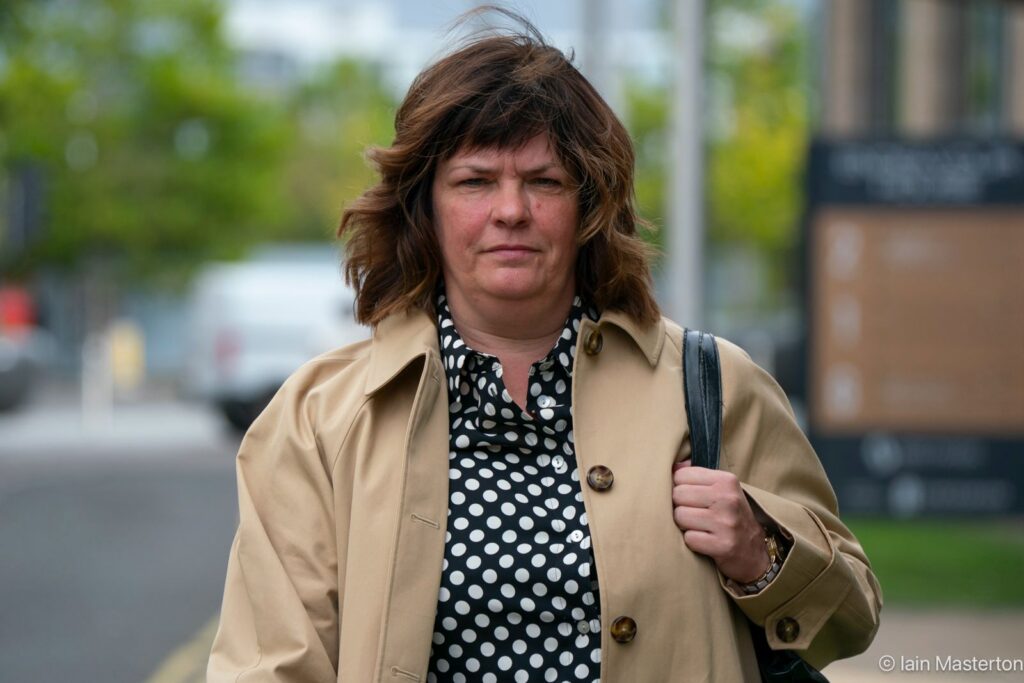
Tait’s massaging of Peggie’s demands and failure to circulate her letter to other members was described by Cunningham as “mystifying but for the stultifying effects of the gender ideology which the respondent has imbibed. Gillian Tair was willing to press Sandie Peggie’s demands (albeit softened in some respects) on an individual basis, behind the scenes; but it was unthinkable to make those demands publicly on behalf of all its female members. It was unthinkable because insisting… on its female members’ right to genuinely single-sex workplace facilities would have run counter to the respondent’s “values,” which is to say its profound commitment to gender ideology.”
Making Hay
Hay began with a short preamble in which he told the judge, “there have been on occasions for you to consider as part of the factors in determining this case invitations to consider matters of shock, hope and morals. As I am sure you aware this is not a court of morals. It is a court of law which makes decisions on the evidence placed before it. I am sure Judge you will be astute to recognise the boundaries and matters which may stray somewhat beyond it as juries are reminded… it is not the questions from counsel which amount to the evidence in a case it is the witness’s answers in conjunction with the documentary evidence and agreed facts.”
Then he dived into what I am calling:
Witness Reviews
Hay called Sandie Peggie “generally credible” as a witness, though “some contradictions” emerged “affecting the reliability” of her evidence. He said Peggie had been “keen” to stress that discussions about a second legal claim against NHS Fife had only been knocked about by Dec 2024, but had to “adjust her position” when shown an email from her solicitor written on 23 Dec 2024 “which went into some detail as to advice on legal claims and tactical considerations arising from the inclusion of the further allegation of misgendering by NHS Fife.”
Hay said that when Peggie was asked how much support she got from Gillian Tait she replied that Tait contacted her “two or three times just to check in” and that there “did not seem to have been any push from RCN in respect of the issue of provision of single-sex facilities.” Hay said this was “irreconcilable” with the evidence which showed Tait had contact Peggie on “numerous” occasions seeking a meeting with Peggie. Hay also went over the evidence which showed Tait advocating on Peggies behalf to NHS Fife. He suggested a lot of Peggie’s recollection of how her union treated her was based on “impression somewhat at odds with the facts”.
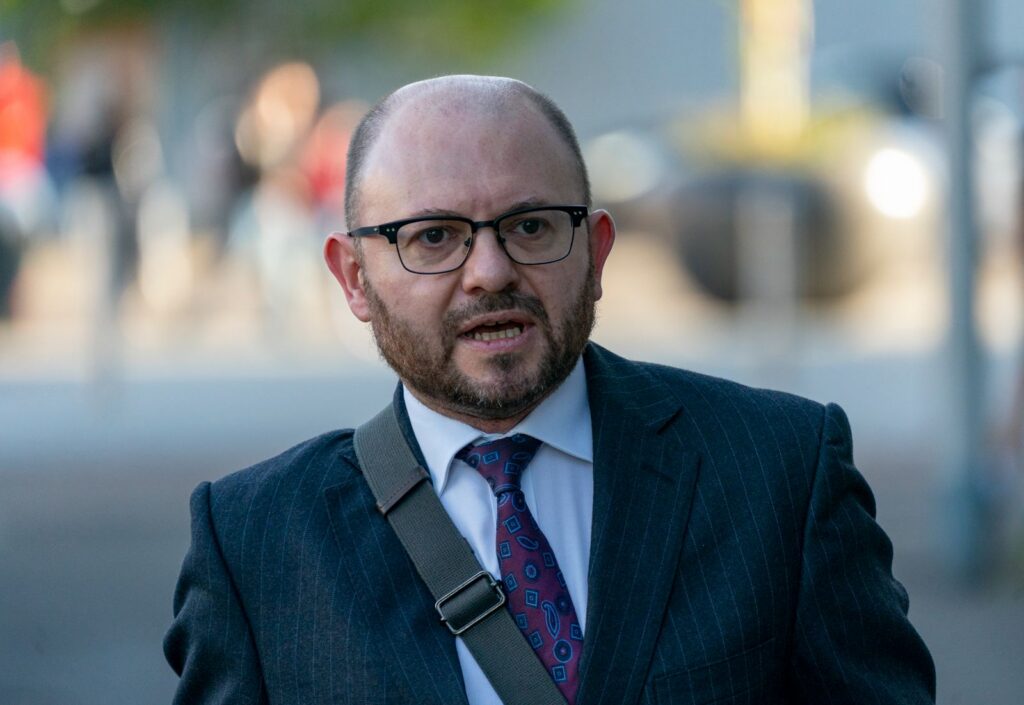
Neale Hanvey, the former MP, “did stray into opinion and impression of support to be expected from a union”. This evidence, said Hay “is of no probative value to the issues in this case”.
Lisa Mackenzie from Murray Blackburn McKenzie was acknowledged by Hay to be “measured, credible and reliable”. Mackenzie felt she was forced out of the RCN for expressing gender critical views, though Hay did remind the court “the extent to which her evidence in this tribunal can reliably extract the impact of her workplace situation (not tested in evidence in contemporaneous proceedings) as distinct from those other, discrete factors, after the elapse of considerable time is questionable.”
Jenny Wilmot and Pauline Fox both have claims against the RCN for the way they were treated during two online sessions to discuss the Supreme Court ruling. Wilmot was described as “engaging” with a “no-nonsense manner” whose evidence didn’t actually criticise any member of RCN staff beyond they way she was “thanked for the polite and respectful way she expressed her gender critical view” and the facilitator’s decision not to admonish “Hazel” for his forthright views on the ruling. As for Fox, Hay noted she was “upset at the very outset of her evidence” and then “surprisingly dismissed expressions of upset of her other members on the session as ‘tears and snotters’.” Her description of the session was one “in which control by the facilitators was lost. The most noticeable feature of both these chapters of evidence was the absence of Mr Fraser, Mr Provan or Ms Tait in the accounts.” The point being – what has this got to do with the case before this tribunal?
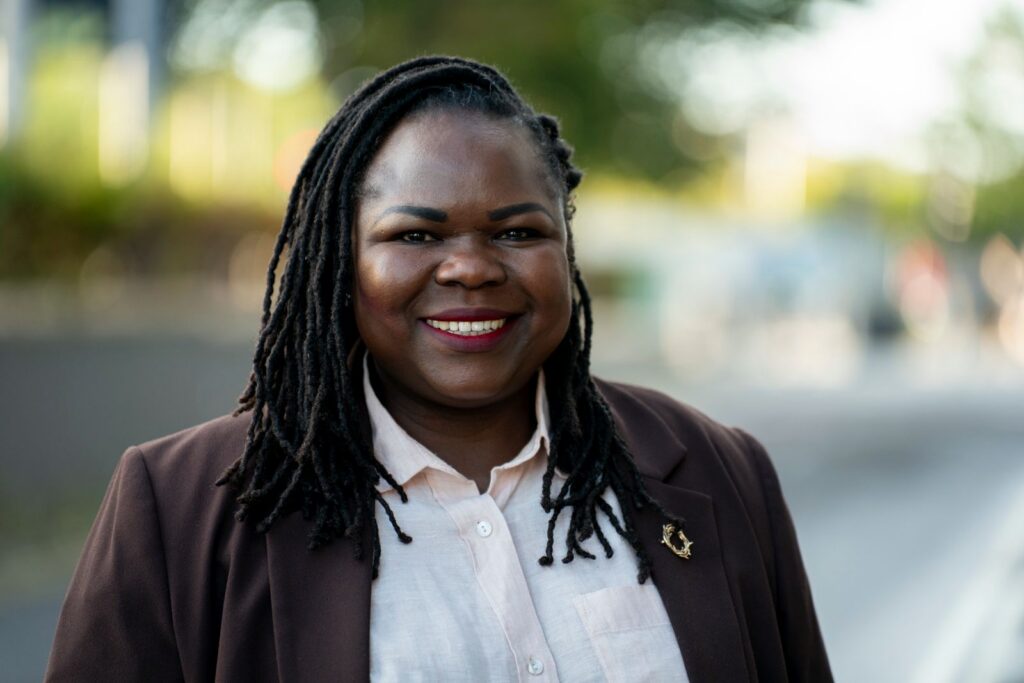
Nurse Jennifer Melle was described as “an entirely unsatisfactory witness, giving imprecise, hyperbolic and on occasions clearly wrong oral evidence at odds with contemporaneous documentation, including her own emails.” Hay drew attention to Melle’s “incredulity” at being asked to write a “reflection” on misgendering a patient, yet Hay noted it was a request only made “if she feels able to do so”.
Melle’s was “an account”, said Hay, “exaggerated, and on occasions embellished, in various respects and the tribunal should have no regard to any testimony not supported by contemporaneous documentation.” By contrast, Darlington Nurse Bethany Hutchison “gave measured evidence on an even keel. She appeared to commend various aspects of support provided to her by the RCN’s Ms Dodsworth in a number of respects.”
What of the RCN witnesses? RCN Scotland exec Norman Provan “was a clear and impressive witness, considered in his answers…. he made concessions where appropriate in cross-examination, occasionally elaborating on answers when doing so.” Provan was the RCN exec who refused Sandie Peggie’s request for legal support, which Hay said Provan gave a “clear rationale” for this as he “spoke of the detail of his experience in the decision-making for the provision of legal assistance to members and the approach to those who take their own independent legal advice. Nothing in that was contradictory to the wording of the On the Case leaflet [which sets out the union’s policy on providing legal support for members].”

RCN officer Stuart Fraser, said Hay, was a “straightforward” witness who could not reasonably be expected to see Peggie had a potential legal case against NHS Fife and Dr Beth Upton after Peggie was suspended for confronting Upton (a man) in the female changing rooms. Hay dismissed Fraser’s decision to call Upton “she” in his notes of his first call with Peggie (now finally agreed to be on 5 Jan 2024, it seems), saying it had nothing to do with unconscious bias or hostility to gender critical views. It was rather “a note taken in haste whilst on the call and then uploaded to the system. That it was undertaken in haste is obvious from other typographical errors within it. It is a piece of casual note-taking which has been in this respect subjected to the scrutiny of a conveyancing document.”
Gillian Tait, a more senior RCN officer, who took over from Fraser as Peggie’s rep was, said Hay, “an impressive witness”. Her evidence demonstrated she was “doing her best to understand what was being asked of her, and to implement that… Her reasons for approaching matters as she did was clearly from her perspective of being asked to provide workplace representation of the kind typically provided, as opposed to making a special case”.
Finally, RCN executive director for England, Patricia Marquis, was also “impressive”, and Hay felt her evidence “that the Respondent [the RCN] has not picked a side of gender ideology over that of gender critical beliefs; rather she gave evidence of the intention of the RCN to attempt to achieve a balance of approach to its members”, should be accepted.
Inapt and Offensive

As for the case itself – Hay again went back to Stuart Fraser’s not in which he advised Sandie Peggie she probably got suspended because she likened Dr Upton to Isla Bryson, a rapist. Hay said:
“Whatever views an individual may have on questions of gender identity or sex realism, and the propriety of the presence of Dr Upton within a female changing and toilet area, an analogy between the presence of a medical professional in a female changing room and a convicted violent rapist in a female prison is obviously inapt and offensive. There was nothing surprising in Stuart Fraser offering that view to the claimant at that time, from the information that he had.”
He then made the assertion “It is also clear that at the time the claimant was not obviously connecting her objections to
the presence of a trans person in the changing and toilet facilities with a broader philosophical belief.” Either way, Stuart Fraser” is not a lawyer. The heart of the claimant’s case on this point is that it was obvious what was being conveyed by the claimant. It could have been far more obvious. People tend to know what they believe. It can be dangerous to make assumptions. Union officers and advisors should not be encouraged to assume.”
As for Norman Provan’s refusal to give legal support to Peggie for her second claim against NHS Fife, Hay expanded on his review of Provan’s evidence. “Mr Provan refused the request for two reasons, as set out in his email of 17 Jan 2025 and again in his letter of 24 Feb 25. Those were that the second claim was inextricably linked with the first claim [which went to trial last year and became national news]; and that the Claimant had already obtained legal advice and representation on the second claim.”
Hay wondered what would happen if legal support had been provided to Peggie by the union for her second claim. “Is it seriously to be suggested that the claimant… would have proceeded with separate solicitors acting for her interests in a claim concerning discrete charges within the same disciplinary process? What if the solicitors provided advice that disagreed with the assessment of prospects of success? Would those solicitors have been present in some form or capacity at the first claim to ensure that the conduct of it, in particular in its approach to scrutiny of the disciplinary hearing, conformed to its views on how scrutiny of the same disciplinary hearings was to be conducted in the Second Claim? Or would those solicitors have been expected to follow the approach of the claimant’s solicitor and counsel? How would that accord with the professional independence of the solicitors in the second claim if they disagreed with the approach taken?”
Kay finally dealt with Peggie’s third claim. “As conceded by the claimant in cross-examination, the rub of this head of claim is that Ms Tait did not copy [her] correspondence to all [RCN] members employed by Fife [Health Board – used interchangeably with NHS Fife, but the formal name of Peggie’s employer]. This element of the case proceeds on the repeated assertions made by counsel [Naomi Cunningham] that there must have been a number of women in Fife Health Board concerned about this matter waiting to see encouraging noises. Counsel’s questions to witnesses are not evidence. The witness’s answers are evidence.”
A point made throughout this trial by the RCN was made again: “The evidence of Ms Tait was that she was unaware of any concerns being raised by members through RCN Direct or local stewards. A crucial difficulty for the claimant on this element of her case is, whilst she has brought a number of witnesses from across the country to this tribunal in support of her claim, she has brought not one witness from [NHS] Fife to speak to sharing the claimant’s concerns, even now. There is no evidence to base the assertion that disaffected and fearful members were waiting in the wings for Ms Tait to take this action.”
Hay finished by reiterating RCN’s position – “the entirety of the claim” should be dismissed.
Cunningham’s Last Word

Cunningham took David Hay’s points in turn. One area she was most exercised by was Hay’ characterisation of Jennifer Melle and her “incredulity” at being asked to write a reflection on her behaviour after 6′ male paedophile on release from a nearby men’s prison repeatedly called her “n*gger” for misgendering him.
“As if there was something discreditable about [Melles] incredulity”, said Cunningham. It was in fact the “single most important aspect of her evidence”. What the RCN took from her interaction, she said “was not that she had repeatedly been called the N-word, but that she had referred to the aggressor in that interaction by correct sex pronouns, and that was something that she should write a reflection of – that is manifest some contrition.”
Cunningham also raised Hay’s contention that Peggies words about Isla Bryson to Upton in the changing room were inapt and offensive.
“A nurse, at midnight in a changing room, was [faced] with a man in there standing his ground. She shouldn’t have had to argue her case with him. She was suffering a menstrual flood and she needed to sort herself out. He was standing his ground and arguing back and what came to mind was what was Isla Bryson, which is perfectly understandable because he was in the news.” Cunningham said it didn’t mean Peggie was making a comparison between Dr Upton and Isla Bryson because Isla Bryson was a rapist. It was simply because Dr Upton was a man in a woman’s space and Isla Bryson was a man in a woman’s prison. “It is a perfectly reasonable comparison to make.” Cunningham noted Peggie was a woman who had been sexually abused and “she should not be expected to chose her words with care or tact, when she was trying to defend a violation of her boundaries.”
their ordinary everyday knowledge of biology and social norms…millenia…have been redefiend whilst they weren’t paying attention
Peggie, said Cunningham “grew up knowing men are men and women are women, and women need privacy whilst undressing. Then she finds herself in a situation where… her ordinary belief has suddenly been redefined behind her back whilst no one was paying attention and now she’s a bigot for expressing those views. Sandie Peggie learned the hard way what being gender critical meant”

Cunningham finished by addressing what Hay had said at the beginning of his submissions that she had invited the judge on a number of occasions to take account of “shock, hope and moral” issues in the course of the evidence, and that wasn’t really the judge’s job. “You do of course have to determine the claim on the basis of the evidence”, said Cunningham, but “inevitably part of what any judge brings to bear on his or her judicial function is their own moral compass… mucch of your function is to assess the credibility – is this the sort of thing that would happen? Is it plausible? If you hear a witness unable to say, venture an opinion that affirming the eunuch identity of a little boy is abuse, you are allowed to rely upon that. I say that extraordinary answer is a telling piece of evidence and it is extraordinary because it is morally repugnant. It is aboultely part of your judicial function to take account of the fact that affirming the eunuch identity is morally repugnant… If someone like Patricia Marquis cannot say “god knows how that got in there”, something has come very badly unstuck and that something is GI, and it’s the vice like grip that GI has had, not only on the Respondent but also on the whole healthcare sector.”
That was that. The judge thanked the parties, told us she was off to review the evidence and whilst should couldn’t tell the parties when “I will let you have a written judgment as soon as I am able to do so.”
And the trial came to an end.
Peggie v RCN preview interview
Peggie v RCN Day 1: Getting Taken Seriously
Peggie v RCN Day 2: Trans-Organisational Madness
Peggie v RCN Day 3: unProvan
Peggie v RCN Day 4 Pt 1: Nurses Assemble
Peggie v RCN Day 4 Pt 2: Stuart Fraser
Peggie v RCN Day 5: Gillian Tate
Peggie v RCN Day 6: Patricia Marquis
Day 1 Live Tweets Collated
Day 2 Live Tweets Collated
Day 3 Live Tweets Collated
Day 4 Live Tweets Collated
Day 5 Live Tweets Collated
Day 6 Live Tweets Collated
Final Day Live Tweets Collated
Fair Care For Trans Patients 2nd Edition – RCN
Let’s talk… inclusion: Being the Change – RCN
If you would like to receive the GenderBlog newsletter and blog posts in your email inbox for a small monthly or one-off donation you can sign up here. Your email address will be stored securely and confidentially, never given to a third party and will only be used to inform you about things I think are interesting. If you have a story, please use the contact form. All messages go directly and securely to my email inbox and will be dealt with in the utmost confidence.


Leave a Reply